

Beyond the Rankings: What Four Decades of KIDS COUNT Have Taught Me About Why Data Matter
For more than three decades, through the Annie E. Casey Foundation’s KIDS COUNT® project, decisionmakers and communities have had access to reliable national, state, and local data to improve outcomes for all children, young people, and families in this country. KIDS COUNT comprises the foundation’s national KIDS COUNT publications—the annual KIDS COUNT Data Book and periodic reports such as Race for Results; the KIDS COUNT Data Center, a resource for year-round national, state, and local data; and the KIDS COUNT Network of state-based partner organizations that help policymakers, advocates, journalists, and community leaders understand and use data to make informed decisions.

Opioid Use Disorder in Pregnancy: Countering Bias and Promoting Care
Most pregnancy-related deaths in North Carolina are preventable. Yet mental health conditions, including overdose and suicide, remain the leading cause of pregnancy-related death. For health care leaders, that reality demands a closer look at how we identify, treat, and support pregnant and postpartum patients with opioid use disorder.

Preventing Domestic Violence by Reaching People Who Cause Harm
The research involved a landscape scan of Cook County, Illinois’ policies, funding, and services for people who cause harm with a goal of engaging the stakeholders and providers doing this work as well as survivors and those who receive services to identify barriers, challenges, and strengths of domestic violence prevention programs. The research examined Partner Abuse Intervention Programs (PAIP) in particular, a standard intervention for people who cause harm that is overseen by the Illinois Department of Human Services.
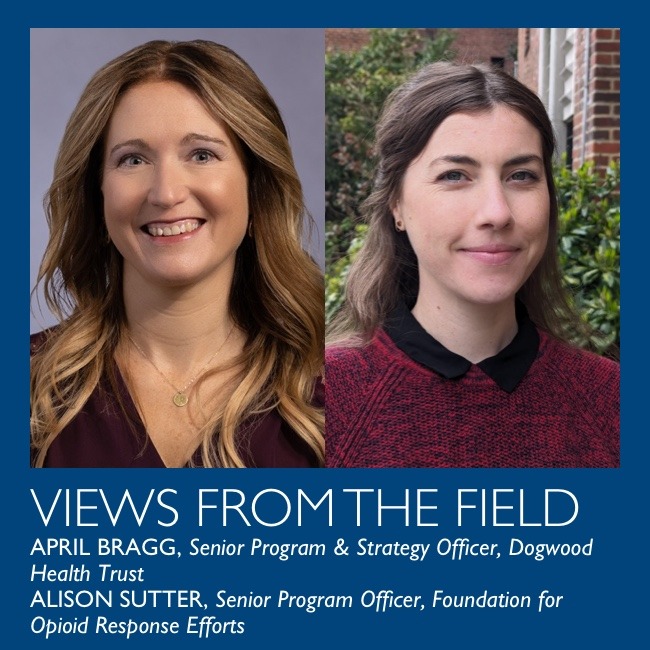
Post-Overdose Response Teams: A Community-Based Approach to Public Safety
Recent changes in the federal policy landscape have created new questions for communities working to address substance use disorder (SUD), mental health needs, and housing instability. In this evolving environment, philanthropy, in collaboration with community-based organizations and local governments, has an important role to play in supporting evidence-based responses to overdose and mental health emergencies that improve access to care, strengthen community wellbeing, and uplift public health while avoiding unnecessary criminal legal outcomes.
GIH Health Policy Update Newsletter
The Latest
An Exclusive Resource for Funding Partners
The Health Policy Update is a newsletter produced in collaboration with Leavitt Partners and Trust for America’s Health. Drawing on GIH’s policy priorities outlined in our policy agenda and our strategic objective of increasing our policy and advocacy presence, the Health Policy Update provides GIH Funding Partners with a range of federal health policy news.
GIH Celebrates 30 Years of Helping Grantmakers Improve the Health of All People
In 2012 GIH celebrates its 30th anniversary. Ever since our modest beginnings as a three-year trial program of the Foundation Center, our charge has been straightforward: serve the field of health philanthropy to improve the health of all people. Today, GIH continues to carry out this challenging and rewarding mission, thanks in no small part to the ongoing support of our Funding Partners.

Making the Connection with HIT
Health information technology (HIT) is now widely regarded as a promising tool for improving the quality, safety, and efficiency of the health care delivery system – largely due to a major influx of federal funding and the Affordable Care Act. Despite its newfound prominence, the benefits of HIT were only championed by a small cadre of health care professionals a mere six year ago.
The One that Got Away: Emerging Leaders in Health Philanthropy on Moving up and Moving on
Does philanthropy in the 21st century offer a viable career path for rising leaders with fresh visions and several decades of potential contributions before them, or is it a significant, yet temporary stop on what is sure to be a varied career journey?
GIH President and CEO Lauren LeRoy to Step Down October 2012
Lauren LeRoy, who since 1998 has led Grantmakers In Health through a period of transformative growth and change, will step down as president and CEO in October 2012.