

Grantmakers In Health’s strategic plan elevates leadership and influence as one of four strategic pillars for our work. GIH seeks to take a more active role in defining the key issues that will advance better health for all, including by supporting health philanthropy to create lasting impact by influencing advocacy, policy, and funding in targeted areas.
To deliver on this, GIH has partnered with Leavitt Partners, a leading health care policy consultancy, to develop a set of policy, advocacy, and legal strategy resources that aim to inform funders about the important health policy trends in the White House and Congress.
Additionally, GIH has a policy agenda that identifies our public policy priorities. Informed by health funders, these priorities guide our programming, influence decisions related to issuing public statements on timely policy issues, and focus our advocacy efforts.

GIH joined organizations filing an amicus brief for the case brought by NY and other states seeking to stop the administration’s attempt to expand citizenship verification requirements under the Personal Responsibility and Work Opportunity Reconciliation Act of 1996 for programs administered by the Departments of Health and Human Services, Agriculture, Education, Housing and Urban Development, Labor, and Justice.
Read More
On March 2, Grantmakers In Health (GIH) and 39 co-signers submitted a joint letter to the U.S. Department of Education commenting on a proposed rule that would narrow the definition of which graduate programs qualify as “professional degrees” for federal student loan purposes, affecting how much students in certain health fields may borrow.
“Finalizing this rule could make graduate education less affordable and disrupt health workforce pipelines, potentially discouraging students from entering essential health and human-services professions,” GIH President and CEO Cara V. James wrote in the letter. “Excluding these degrees could limit access to advanced training, exacerbate workforce shortages, and increase health inequities across the country.”
GIH Health Policy Update Newsletter
An Exclusive Resource for GIH Funding Partners
In an effort to help our Funding Partners better understand the changing health policy landscape in the new administration and Congress, Grantmakers In Health (GIH) is expanding the GIH Health Policy Update newsletter to three issues per month. Working in collaboration with Leavitt Partners, a leading health care policy consultancy, we are adding new installments of the newsletter on the first and third Wednesdays of the month, while we will continue to partner with Trust for America’s Health on the installment released on the second Wednesday of the month.
Policy and Advocacy Resources
Regulatory Comment Writing
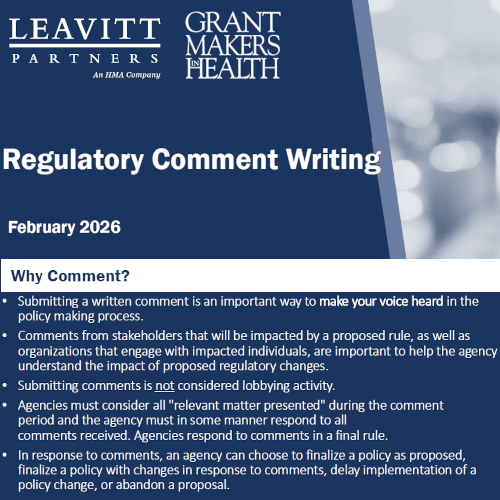
This resource provides an overview of how to write and submit a regulatory comment to the federal register.
2026 Federal Health Policy Timeline
This timeline previews expected regulatory and legislative health policy events in 2026.
Funding Partners interested in state legislative sessions should visit NCSL’s State Legislative Session Calendar.
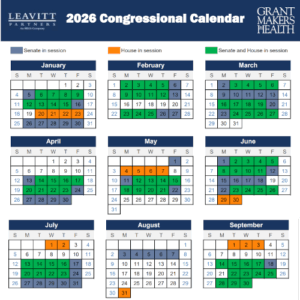
2026 Congressional Calendar
When each house of congress will be in session in 2026.
Department of Health and Human Services Reorganization and Reductions: Explaining the State of Play
Make Our Children Healthy Again Strategy Report

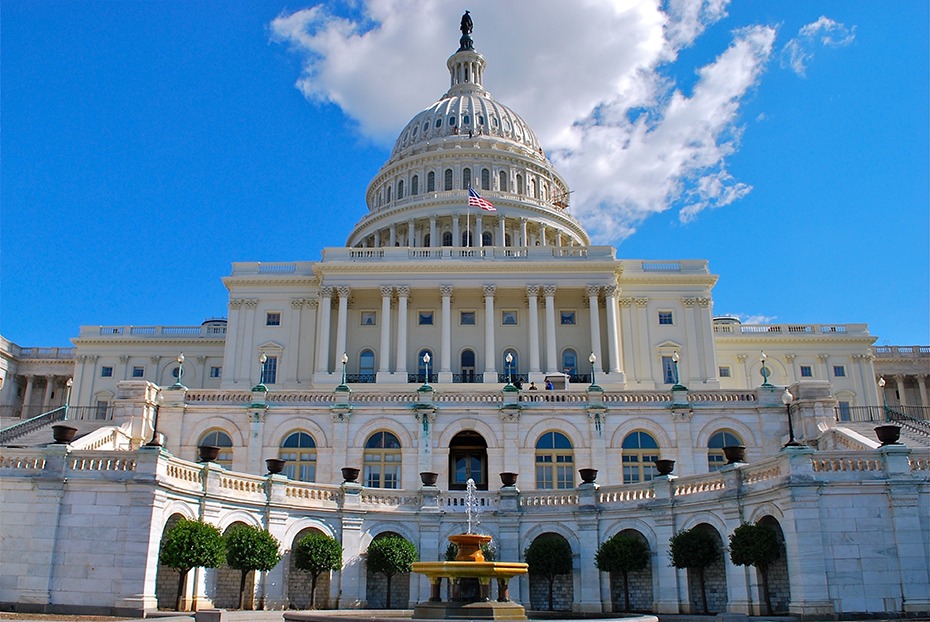
Overview of the 119th Congress
A detailed overview of the U.S. House of Representatives and Senate, including leadership in both houses and key committee and subcommittee members.
Congressional Staff and Member Outreach
A detailed overview of how congressional offices, committees, and leadership are staffed. In addition, it provides recommended best practices for meeting with Members of Congress and their staff.
Upcoming Policy & Advocacy Events
Legal Strategy Resources
Administration Actions Targeting Domestic Terrorism and Their Implications for Nonprofits
This resource provides an overview of the legal implications of the September 22, 2025 executive order designating certain groups as engaging in domestic terrorism.
U.S. Attorney General Issues New Guidance on DEI Programs and Policies
This resource provides an overview of a Department of Justice memorandum from the Attorney General on the application of federal antidiscrimination laws to Diversity, Equity, and Inclusion (DEI) programs the administration alleges involve “discriminatory practices.”
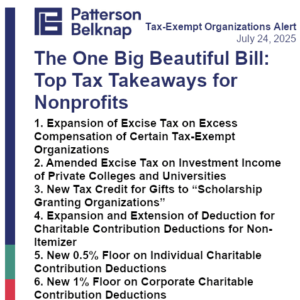
The One Big Beautiful Bill: Top Tax Takeaways for Nonprofits
This resource provides a rundown on the top tax takeaways for nonprofits from the July 4, 2025, budget reconciliation bill.
Recently Featured
Health Advocacy: Yes, No, or Maybe So?
Although engagement in public policy is viewed as a mission-critical strategy by an increasing number of health funders, many foundations are still considering whether and how they should support health advocacy efforts. This Issue Focus article briefly addresses some of the key questions foundations are likely to confront as they determine what role, if any, they should play in the public policy arena.
Public Policy Engagement During an Election Year
Political elections create both challenges and opportunities for foundations seeking to inform and influence the public policy process. Philanthropic organizations have broad latitude to conduct or sponsor a variety of policyrelated activities, and this flexibility includes the ability to promote civic engagement and encourage informed participation in democratic elections.
Grant Agreements and Lobbying
Have you read your grant agreement or grant award
letter recently? Not just scanned it to make sure the
reporting dates have been updated, but read every
paragraph or clause to make sure the agreement says what you
think it says…and what you want it to say? If not, it is time to
do it now.
Cultivating the Next Generation of Philanthropic Leadership
Fellows from the inaugural Terrance Keenan Institute for Emerging Leaders in Health Philanthropy share their thoughts on how the field of philanthropy can help cultivate the next generation of leaders.
2011 Terrance Keenan Award Acceptance Speech
Read the acceptance speech of Drew Altman, head of The Henry J. Kaiser Family Foundation, upon receiving the 2011 Terrance Keenan Leadership Award in Health Philanthropy. He shares his thoughts on what foundations should be, concerns about the field, the theory of change, and his experience transforming Kaiser into what it is today.
Building Capacity for Health Advocacy at the State and Local Level
This paper was prepared in conjunction with a strategy session convened by GIH and sponsored by the Missouri Foundation for Health and The California Endowment last fall. It examines philanthropy’s role in advocacy, the various sectors that constitute the field of health advocacy, capacities required to effectively engage in advocacy efforts, ways health funders have facilitated advocacy capacity development, and key issues for future action.