
Grantmakers In Health Joins Amicus Brief Challenging Medicaid Work Requirement Rule
Grantmakers In Health (GIH) has joined an amicus curiae brief filed September 10 in Commonwealth of Massachusetts v. Oz, supporting a challenge to a federal rule that the brief argues would strip Medicaid coverage from millions of people with serious health conditions. GIH joined the American Public Health Association, the Jacobs Institute of Women’s Health…
Health-Related Executive Orders and Presidential Memoranda
This Grantmakers In Health policy resource summarizes health-related executive orders and presidential memoranda issued since 2015, highlighting implications for health funders. It tracks directives on behavioral health, Medicaid, prescription drugs, federal grantmaking, DEI, gender-affirming care, child welfare, vaccines, and related litigation affecting implementation.
August 2026 Executive Order on Childhood Vaccines: Overview, Implications, and Stakeholder Reactions
This Grantmakers In Health policy resource provides an overview of the August 2026 executive order on childhood vaccines, including the restructuring of the federal immunization schedule, the directive to split the MMR vaccine, implications for insurance coverage, family costs, and state exemption laws, and reactions from stakeholders.

Beyond the Rankings: What Four Decades of KIDS COUNT Have Taught Me About Why Data Matter
For more than three decades, through the Annie E. Casey Foundation’s KIDS COUNT® project, decisionmakers and communities have had access to reliable national, state, and local data to improve outcomes for all children, young people, and families in this country. KIDS COUNT comprises the foundation’s national KIDS COUNT publications—the annual KIDS COUNT Data Book and periodic reports such as Race for Results; the KIDS COUNT Data Center, a resource for year-round national, state, and local data; and the KIDS COUNT Network of state-based partner organizations that help policymakers, advocates, journalists, and community leaders understand and use data to make informed decisions.
GIH Health Policy Update Newsletter
An Exclusive Resource for Funding Partners
The Health Policy Update is a newsletter produced in collaboration with Leavitt Partners and Trust for America’s Health. Drawing on GIH’s policy priorities outlined in our policy agenda and our strategic objective of increasing our policy and advocacy presence, the Health Policy Update provides GIH Funding Partners with a range of federal health policy news.

Our Accomplishments—and the Challenges Ahead
In November 2012, I was named president and CEO of GIH. Shortly afterward, I described the opening phases of what I called GIH 3.0, a term I chose because I was GIH’s third president. GIH 3.0 built on the past accomplishments of the organization, while positioning it to continue being a relevant and high-quality resource for the field.
WebMD/John A. Hartford Foundation Survey Finds Older Adults and Their Caregivers are Misinformed
Care of older adults is mired in misinformation, with most older patients and caregivers mistakenly believing that sharp declines in quality of life are inevitable, according to a new survey from The John A. Hartford Foundation (JAHF) and WebMD.

Creating Effective Health Care Markets
Disagreement about the role of markets lies at the root of many of our fiercest health care controversies. One side believes that unleashing market forces will rescue our health care system. From this viewpoint, government involvement is inherently destructive, except in rare circumstances. Many opponents of the Affordable Care Act share this opinion.
Creating an Age-Friendly Public Health System: Challenges, Opportunities, and Next Steps
National, state, and local public health officials; aging experts, advocates, and service providers; and health care officials came together to discuss how public health could contribute to an age-friendly society and improve the health and well-being of older Americans.
Health Affairs: Community Care for High Needs Patients
Almost everyone wants to live in their own home and community as they age. Yet for many, later age brings frailty and the accumulation of chronic conditions. This month’s issue of Health Affairs examines how we can best provide care in the community for people with advanced illness.
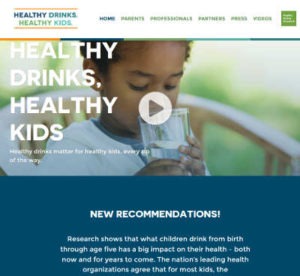
New Recommendations for What Young Kids Should Drink
Research shows that what children drink from birth through age five has a big impact on their health – both now and for years to come. The nation’s leading health organizations agree that for most kids, the recommendations can help to set children on a path for healthy growth and development.