Grantmakers In Health Joins Amicus Brief Challenging Medicaid Work Requirement Rule
Grantmakers In Health (GIH) has joined an amicus curiae brief filed September 10 in Commonwealth of Massachusetts v. Oz, supporting a challenge to a federal rule that the brief argues would strip Medicaid coverage from millions of people with serious health conditions. GIH joined the American Public Health Association, the Jacobs Institute of Women’s Health…
Health-Related Executive Orders and Presidential Memoranda
This Grantmakers In Health policy resource summarizes health-related executive orders and presidential memoranda issued since 2015, highlighting implications for health funders. It tracks directives on behavioral health, Medicaid, prescription drugs, federal grantmaking, DEI, gender-affirming care, child welfare, vaccines, and related litigation affecting implementation.
August 2026 Executive Order on Childhood Vaccines: Overview, Implications, and Stakeholder Reactions
This Grantmakers In Health policy resource provides an overview of the August 2026 executive order on childhood vaccines, including the restructuring of the federal immunization schedule, the directive to split the MMR vaccine, implications for insurance coverage, family costs, and state exemption laws, and reactions from stakeholders.
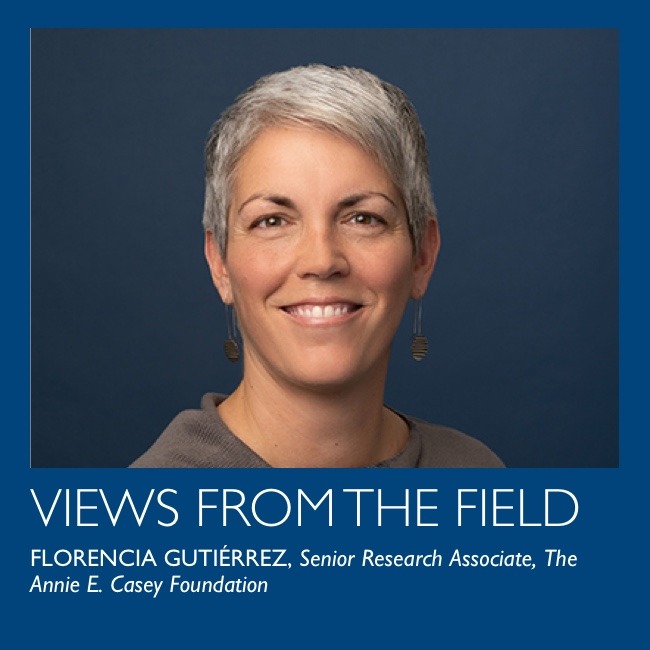
Beyond the Rankings: What Four Decades of KIDS COUNT Have Taught Me About Why Data Matter
For more than three decades, through the Annie E. Casey Foundation’s KIDS COUNT® project, decisionmakers and communities have had access to reliable national, state, and local data to improve outcomes for all children, young people, and families in this country. KIDS COUNT comprises the foundation’s national KIDS COUNT publications—the annual KIDS COUNT Data Book and periodic reports such as Race for Results; the KIDS COUNT Data Center, a resource for year-round national, state, and local data; and the KIDS COUNT Network of state-based partner organizations that help policymakers, advocates, journalists, and community leaders understand and use data to make informed decisions.
GIH Health Policy Update Newsletter
An Exclusive Resource for Funding Partners
The Health Policy Update is a newsletter produced in collaboration with Leavitt Partners and Trust for America’s Health. Drawing on GIH’s policy priorities outlined in our policy agenda and our strategic objective of increasing our policy and advocacy presence, the Health Policy Update provides GIH Funding Partners with a range of federal health policy news.
2018 Call for GIH Board Nominations
Grantmakers In Health (GIH), an educational organization serving staff, executives, and trustees of foundations and corporate giving programs working in the health field, is seeking nominations for its board of directors for terms beginning in March 2019.

Reflections on the 2018 Annual Conference
Health philanthropy is a complex, ever-evolving sector. New health foundations continue to emerge, bringing additional assets to communities across the country. Established health foundations continue to experiment, exploring new strategies to address the root causes of health problems, stimulate delivery system change, and build equitable working relationships with community partners.
Call for Nominations: 2018 Terrance Keenan Leadership Award in Health Philanthropy
The Terrance Keenan Leadership Award in Health Philanthropy is presented each year to an outstanding grantmaker whose work is distinguished by leadership, innovation, achievement, creativity, and boldness. GIH invites you to nominate individuals for the 2018 award.
Sustaining a Statewide Coalition to Improve Access to Care and Coverage
2013 was a year like no other for coverage advocates in the United States. With the Affordable Care Act’s (ACA) first year of open enrollment nearly upon us, Vitalyst Health Foundation initially convened a small group of key Arizona partners to discuss how to most effectively deal with an incredible coverage opportunity amidst an uncertain landscape.
Older Adults are a Critical Asset to Building Healthy Communities – A Call for an Intersectional Approach
St. David’s Foundation considers the well-being of older adults as a fundamental aspect to our goal of building the healthiest community in the world. However, for many donors, supporting older adults is not a funding priority.
Riding Wild Horses: Philanthropic Strategy in An Era of Unpredictable Health Policy
In 2015, Montana passed bipartisan legislation to expand Medicaid for low-income adults. The new coverage went into effect in January 2016. Within a year, Montana’s uninsured rate dropped from 15 to 7.4 percent and more than 30,000 thousand newly-insured people had already obtained preventive services.