
GIH Joins Amicus Brief Opposing New Citizenship Verification Requirements
GIH joined organizations filing an amicus brief for the case brought by NY and other states seeking to stop the administration’s attempt to expand citizenship verification requirements under the Personal Responsibility and Work Opportunity Reconciliation Act of 1996 for programs administered by the Departments of Health and Human Services, Agriculture, Education, Housing and Urban Development, Labor, and Justice.

Remembering Patricia Mathews, Founding President and CEO of Northern Virginia Health Foundation
Grantmakers In Health (GIH) is saddened to learn of the recent passing of Patricia Mathews, a longtime fixture in health philanthropy and a former member of the GIH board of directors. Please join us in celebrating Patricia Mathews’ memory, as well as her many contributions to the field of health philanthropy and GIH.
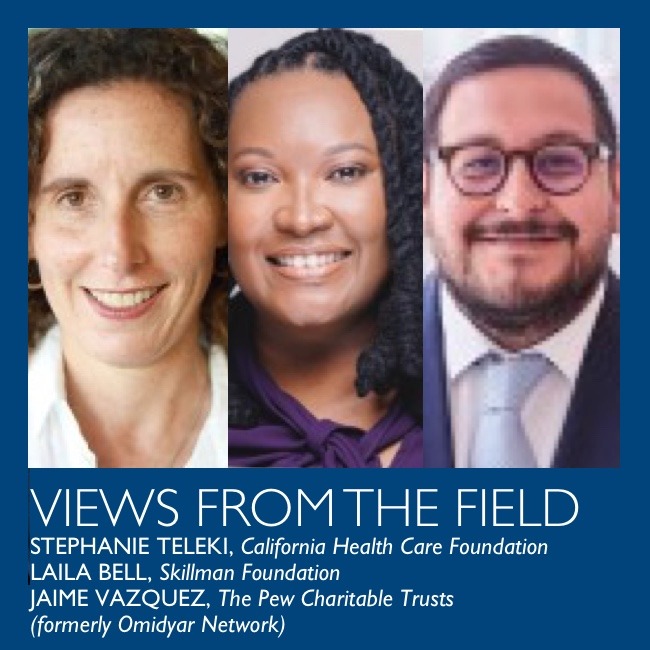
Responsible Exits: Insights from Three Funders
Grantmakers In Health’s Maya Schane spoke with Stephanie Teleki of The California Health Care Foundation, Laila Bell of The Skillman Foundation, and Jaime Vazquez of The Pew Charitable Trusts about their recently published article in The Foundation Review, “When Shift Happens: Navigating Toward a Framework for Responsible Philanthropic Exits.”
GIH Health Policy Update Newsletter
The Latest
An Exclusive Resource for Funding Partners
The Health Policy Update is a newsletter produced in collaboration with Leavitt Partnersi and Trust for America’s Health. Drawing on GIH’s policy priorities outlined in our policy agenda and our strategic objective of increasing our policy and advocacy presence, the Health Policy Update provides GIH Funding Partners with a range of federal health policy news.


North Carolina Healthcare Foundation: January 2026
North Carolina Healthcare Foundation launched two major initiatives: the Social Impact Playbook and the Social Impact Hub. The Playbook captures its framework for creating meaningful, community-led solutions—from concept to sustainability. The Hub is a forum for connection, dialogue, and shared learning, supporting individuals and organizations on their social impact journey
Georgia Health Initiative: January 2026
The Georgia Health Initiative recently released the second annual edition of Insights on Medicaid in Georgia: Data & Trend Analyses, which provides an updated, comprehensive view of Georgia’s Medicaid program. It offers easily digestible information designed to educate and inform state decision-makers, non-profit organizations, health care providers, and other stakeholders engaged in health coverage.
Blue Cross Blue Shield of Massachusetts Foundation: January 2026
Blue Cross Blue Shield of Massachusetts Foundation released a chart pack which provides an overview of the public coverage programs in Massachusetts, explains the key Medicaid and Marketplace provisions in H.R.1, and elevates what is known about how these provisions will impact the coverage landscape and the health care delivery system in Massachusetts.

Philanthropy @ Work – Grants and Programs – January 2026
The latest on grants and programs from the field.