
Health-Related Executive Orders and Presidential Memoranda
This Grantmakers In Health policy resource summarizes health-related executive orders and presidential memoranda issued since 2015, highlighting implications for health funders. It tracks directives on behavioral health, Medicaid, prescription drugs, federal grantmaking, DEI, gender-affirming care, child welfare, vaccines, and related litigation affecting implementation.
August 2026 Executive Order on Childhood Vaccines: Overview, Implications, and Stakeholder Reactions
This Grantmakers In Health policy resource provides an overview of the August 2026 executive order on childhood vaccines, including the restructuring of the federal immunization schedule, the directive to split the MMR vaccine, implications for insurance coverage, family costs, and state exemption laws, and reactions from stakeholders.

Beyond the Rankings: What Four Decades of KIDS COUNT Have Taught Me About Why Data Matter
For more than three decades, through the Annie E. Casey Foundation’s KIDS COUNT® project, decisionmakers and communities have had access to reliable national, state, and local data to improve outcomes for all children, young people, and families in this country. KIDS COUNT comprises the foundation’s national KIDS COUNT publications—the annual KIDS COUNT Data Book and periodic reports such as Race for Results; the KIDS COUNT Data Center, a resource for year-round national, state, and local data; and the KIDS COUNT Network of state-based partner organizations that help policymakers, advocates, journalists, and community leaders understand and use data to make informed decisions.
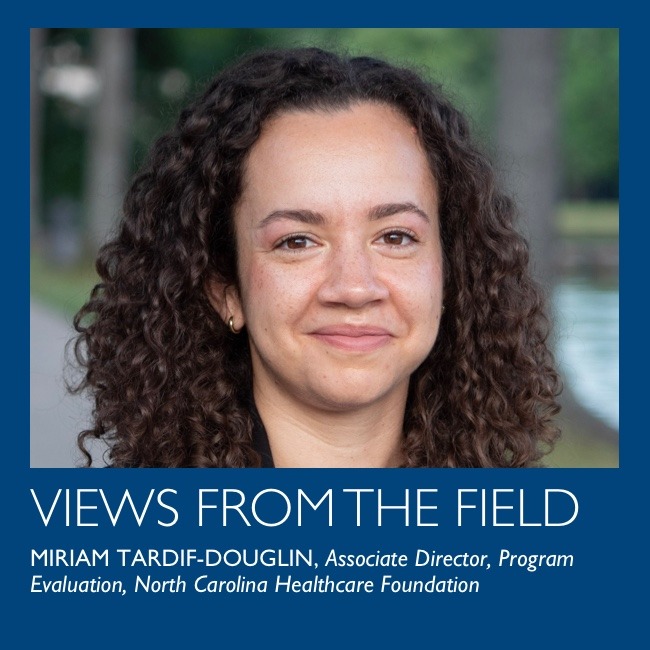
Opioid Use Disorder in Pregnancy: Countering Bias and Promoting Care
Most pregnancy-related deaths in North Carolina are preventable. Yet mental health conditions, including overdose and suicide, remain the leading cause of pregnancy-related death. For health care leaders, that reality demands a closer look at how we identify, treat, and support pregnant and postpartum patients with opioid use disorder.
GIH Health Policy Update Newsletter
An Exclusive Resource for Funding Partners
The Health Policy Update is a newsletter produced in collaboration with Leavitt Partners and Trust for America’s Health. Drawing on GIH’s policy priorities outlined in our policy agenda and our strategic objective of increasing our policy and advocacy presence, the Health Policy Update provides GIH Funding Partners with a range of federal health policy news.
HHS Launches New Food is Medicine Virtual Toolkit
The Toolkit was developed in response to the National Strategy on Hunger, Nutrition, and Health and to support communities design and implement effective Food is Medicine interventions.

Biden-Harris Administration Announces $75 Million Investment in Rural Health Care
The Health Resources and Services Administration (HRSA), an agency of the U.S. Department of Health and Human Services (HHS), announced nearly $75 million to support health care services in rural America. Funding will launch new opioid treatment and recovery services in rural communities, strengthen maternal health care in the South, and help rural hospitals stay open.

Developing an Equitable Nonprofit Ecosystem: A New Funding Framework for Emerging, BIPOC-Led Grantees
In philanthropy, it is standard due diligence practice to vet potential grantees on their list of current, past, and future funders as a way to mitigate our perceived risk. However, this approach can put many emerging, grassroots, and BIPOC-led organizations out of contention for initial funding. The John Muir Community Health Fund has shifted the way we fundamentally see risk, and instead, have embraced the opportunity to fund emerging organizations that address social determinants of health by providing monetary support, capacity building, and ultimately a proof of concept that propels grantees to long-term sustainability.

Advancing Health Equity and Fostering Collaboration through Black Maternal and Child Health Initiatives
When basic social needs go unmet, they become the principal drivers of health disparities. Recognizing this, the Health Foundation of South Florida has been advancing a collaborative approach that brings together health systems and community-based organizations and paves the way for implementing promising social interventions. Through this approach, the Health Foundation seeks to drive improved health outcomes and greater coordination to address unmet health-related social needs within clinical care settings.

Building Strong Foundations: Addressing the Needs of Diverse Families in New Hampshire
When families have the conditions they need to thrive, children thrive. In 2020, the Endowment for Health, Child Trends, and people in communities across New Hampshire began work that would become the Early Childhood Equity Movement (ECEM). Research in this movement is paving the way for greater equity in family services, services like early care, education, and health care. All families should have access to these services. Too many do not.

Bridging the Gap: How Philanthropy Can Help Public Agencies to Engage Equitably with Underserved Communities
Local public agencies are at a crossroads. Over the last few years, in response to racial justice protests and inequities made more visible by the Covid-19 pandemic, many local public agencies have worked to improve their engagement with low-income and underserved communities—especially communities of color. By adopting equity-centered approaches to community engagement, public agencies can better ensure their policies and programs lead to improvements for communities facing disproportionate health burdens.