
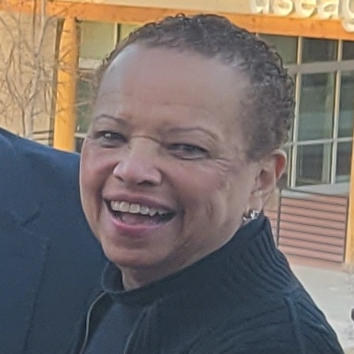
Remembering Patricia Mathews, Founding President and CEO of Northern Virginia Health Foundation
Grantmakers In Health (GIH) is saddened to learn of the recent passing of Patricia Mathews, a longtime fixture in health philanthropy and a former member of the GIH board of directors. Please join us in celebrating Patricia Mathews’ memory, as well as her many contributions to the field of health philanthropy and GIH.
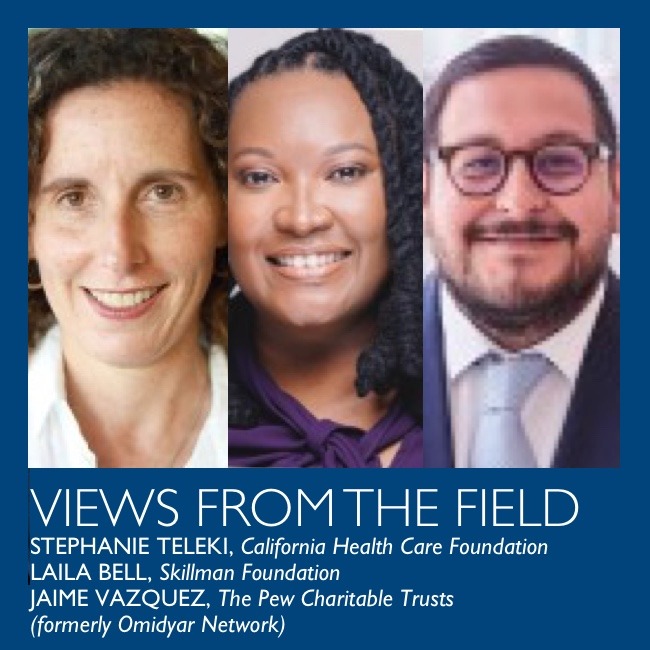
Responsible Exits: Insights from Three Funders
Grantmakers In Health’s Maya Schane spoke with Stephanie Teleki of The California Health Care Foundation, Laila Bell of The Skillman Foundation, and Jaime Vazquez of The Pew Charitable Trusts about their recently published article in The Foundation Review, “When Shift Happens: Navigating Toward a Framework for Responsible Philanthropic Exits.”
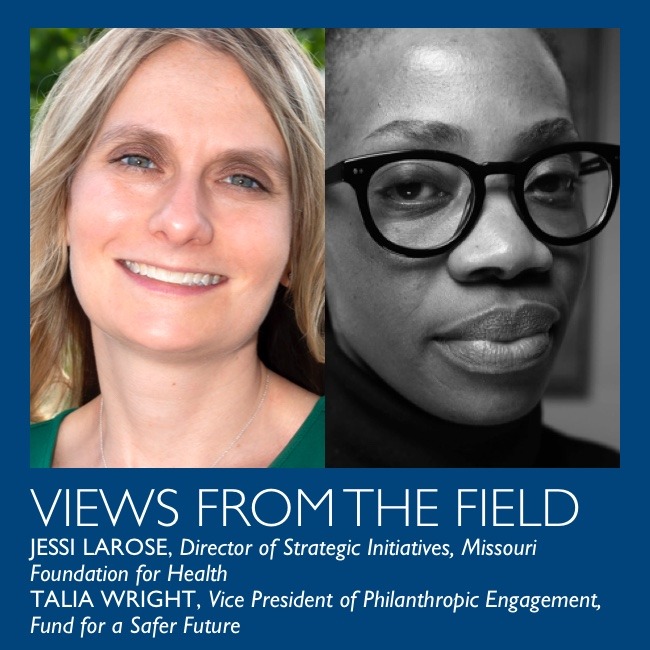
The Keys to Successful Collaboration Between a State-based Health Foundation and a National Funder Collaborative
Discussions about firearms in the US are often focused on urban gun violence and mass shootings. But firearm injury and death is a public health crisis that touches every community—urban and rural, red states and blue—and it intersects with issues many health funders care about: mental health, suicide prevention, and health equity.
GIH Health Policy Update Newsletter
The Latest
An Exclusive Resource for Funding Partners
The Health Policy Update is a newsletter produced in collaboration with Leavitt Partnersi and Trust for America’s Health. Drawing on GIH’s policy priorities outlined in our policy agenda and our strategic objective of increasing our policy and advocacy presence, the Health Policy Update provides GIH Funding Partners with a range of federal health policy news.
Philanthropy @ Work – Grants and Programs – May 2024
The latest on grants and programs from the field.
Cara V. James and Lindsay Goldman in The Well News: The Older Americans Act Is Not Keeping Pace With Today’s Older Adults
Grantmakers In Health President and CEO Cara V. James and Grantmakers In Aging Chief Executive Officer Lindsay Goldman cowrote a commentary on the need to renew and modernize the Older Americans Act for The Well News, which was published on Monday, May 13, 2024: “We have known for years that the Older Americans Act and…

Exploring the Tides Foundation’s Efforts to Support Civic Engagement and Protect Reproductive Health
Funders can play a major role in promoting a healthy democracy, and increasingly, grantmakers like the Tides Foundation are investing in civic engagement. To learn more about Tides’ work in this area, along with their support of ballot initiatives on reproductive health, Grantmakers In Health’s Miranda Wesley spoke with the Tides Foundation’s Program Officer of Civic Engagement and Democracy, Beth Huang.

Addressing the Heart of Inequity: Tackling Cardiovascular Disease in Underserved Communities
Cardiovascular disease (CVD) is the leading cause of death globally and in the United States, with a disproportionate impact on underserved communities. To discuss the Bristol Myers Squibb Foundation’s focused strategy on addressing these disparities and driving equitable access to cardiology care, Grantmaker In Health’s Miranda Wesley spoke with the Bristol Myers Squibb Foundation’s Senior Program Director, Adrienne Gonzalez.

Peterson Health Technology Institute: April 2024
Digital diabetes management tools do not deliver meaningful health benefits that justify their cost, according to a new report from the Peterson Health Technology Institute (PHTI). PHTI’s independent, evidence-based assessments fill a critical gap in the search for and adoption of high-value healthcare technologies. The first-of-its-kind report and PHTI’s forthcoming assessments help payers, providers, and innovators know what tools work and are worth it.