
Health-Related Executive Orders and Presidential Memoranda
This Grantmakers In Health policy resource summarizes health-related executive orders and presidential memoranda issued since 2015, highlighting implications for health funders. It tracks directives on behavioral health, Medicaid, prescription drugs, federal grantmaking, DEI, gender-affirming care, child welfare, vaccines, and related litigation affecting implementation.
August 2026 Executive Order on Childhood Vaccines: Overview, Implications, and Stakeholder Reactions
This Grantmakers In Health policy resource provides an overview of the August 2026 executive order on childhood vaccines, including the restructuring of the federal immunization schedule, the directive to split the MMR vaccine, implications for insurance coverage, family costs, and state exemption laws, and reactions from stakeholders.

Beyond the Rankings: What Four Decades of KIDS COUNT Have Taught Me About Why Data Matter
For more than three decades, through the Annie E. Casey Foundation’s KIDS COUNT® project, decisionmakers and communities have had access to reliable national, state, and local data to improve outcomes for all children, young people, and families in this country. KIDS COUNT comprises the foundation’s national KIDS COUNT publications—the annual KIDS COUNT Data Book and periodic reports such as Race for Results; the KIDS COUNT Data Center, a resource for year-round national, state, and local data; and the KIDS COUNT Network of state-based partner organizations that help policymakers, advocates, journalists, and community leaders understand and use data to make informed decisions.
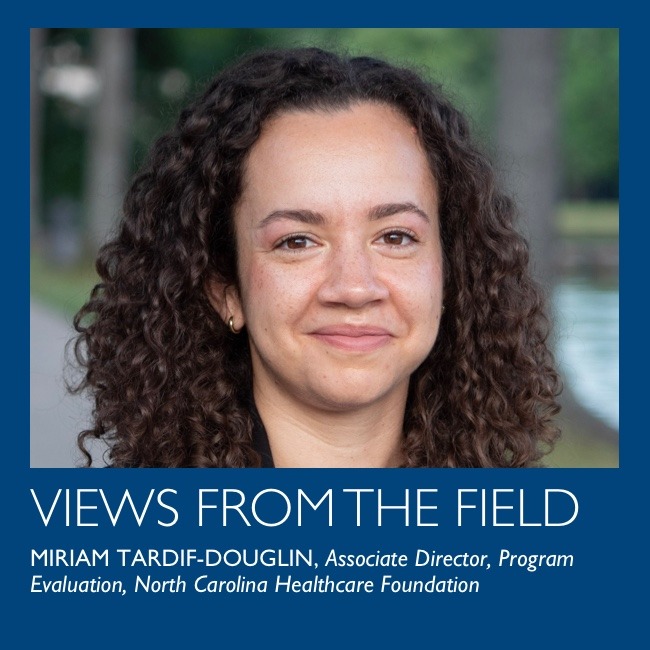
Opioid Use Disorder in Pregnancy: Countering Bias and Promoting Care
Most pregnancy-related deaths in North Carolina are preventable. Yet mental health conditions, including overdose and suicide, remain the leading cause of pregnancy-related death. For health care leaders, that reality demands a closer look at how we identify, treat, and support pregnant and postpartum patients with opioid use disorder.
GIH Health Policy Update Newsletter
An Exclusive Resource for Funding Partners
The Health Policy Update is a newsletter produced in collaboration with Leavitt Partners and Trust for America’s Health. Drawing on GIH’s policy priorities outlined in our policy agenda and our strategic objective of increasing our policy and advocacy presence, the Health Policy Update provides GIH Funding Partners with a range of federal health policy news.

GIH Comments on the NIH-Wide Strategic Plan Framework for FY27–FY31
GIH submitted a comment in response to a Request for Information from the National Institutes of Health (NIH) about the NIH-Wide Strategic Plan Framework for FY27–FY31. The Strategic Plan outlines NIH’s vision for biomedical research direction, capacity, and stewardship, and lays out NIH’s proposed priorities over the next five years.
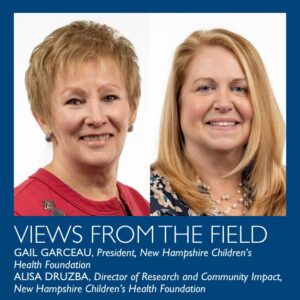
Taking the Risk to Shift Our Focus Upstream
For nearly three decades, we at the New Hampshire Children’s Health Foundation have operated with a clear and compassionate mission: to improve the health and well-being of vulnerable children from birth to five years old and their families throughout New Hampshire. Yet after 28 years, we have made a deliberate and strategic decision to evolve our approach—shifting our focus “upstream” to address poverty as a root cause of the challenges we have long sought to mitigate.

Surplus-to-Care: A Systems Approach to Expanding Insulin and Diabetes Supplies Access
Grantmakers In Health’s Maya Schane spoke with Svetlana Hutfles of Insulin for Life USA (IFL USA) about the organization’s model to improve diabetes supplies access across the country, and how philanthropy can engage on this issue. The interview has been edited for length and clarity.

Cultivating Health Through Shared Prosperity and Street Food
A native of Fresno, I was raised in California’s Central Valley where I have now worked for a few decades. As a first-generation college student, my lived experience is very common for the children of farmworkers. My extended Mexican family was big, poor, uninsured, and suffered many losses from violence and preventable illnesses.

Bridging the Gap: How the Collaborative Care Model is Transforming Maternal Mental Health in Los Angeles
In California, as in the rest of the United States, the statistics regarding maternal mental health are alarming. Approximately one in five mothers suffers from mood and anxiety disorders during the perinatal period, which extends from pregnancy through one year postpartum. Yet, despite this high prevalence, the overwhelming majority of these women do not receive treatment. The barriers are systemic and multifaceted, including but not limited to behavioral health workforce shortages; a lack of integration between primary, perinatal, and behavioral health care; inadequate training for maternity care providers; and stigma.

Funding Without Alignment Is Just Spending: Colorado’s Model for Alignment to Maximize Impacts on Youth Well-being
Public funding for youth well-being isn’t lacking in effort or investment. But when dollars move through disconnected systems, even the best intentions can fail to translate into meaningful outcomes. What if the challenge isn’t how much we fund, but how those investments work together? Colorado is testing a different approach: aligning funding, data, and strategy across agencies so that public dollars can operate as a more coordinated system rather than a collection of parallel but sometimes siloed efforts.