
Getting in Formation: Working Together to Build Healthy Communities
From breakout sessions to quick takes and wellness activities to two inspiring plenary sessions, every corner during day two of the Grantmakers In Health (GIH) Annual Conference on Health Philanthropy, Life, Liberty, and the Pursuit of Health was filled with conversation and connection. The day’s agenda focused on how funders can find and use their voices to stand up in this moment of change, including doubling down on their values; taking bigger, bolder risks alongside grantees; and seeking partnerships spanning the private and public sectors.

Life, Liberty, and the Pursuit of Health in Action
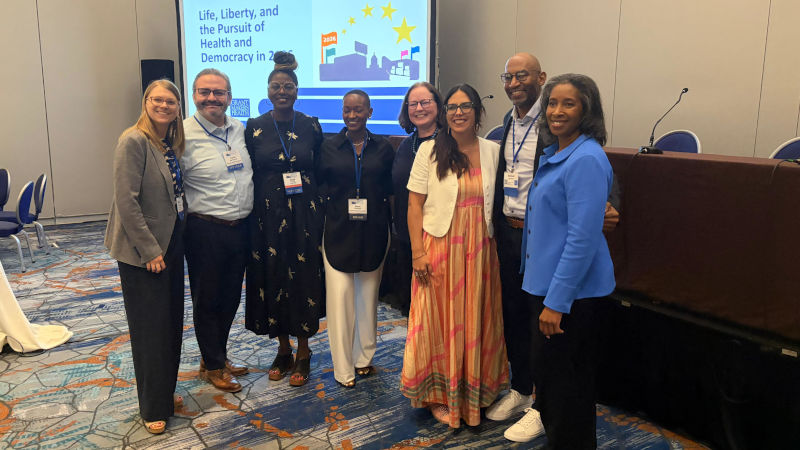
Life, Liberty, and the Pursuit of Health is more than this year’s Annual Conference on Health Philanthropy theme; it is the foundation for every planned session, unexpected learning moment, and conversation in Baltimore from June 8-11. The pre-conference kicked off with a range of discussions centered on the theme, including the state of Medicaid after H.R. 1, the connection between democracy and better health outcomes, and collaborations in public health funding.
Health Philanthropy Working at the Intersections Between Critical Issues
Life, Liberty, and the Pursuit of Health is more than this year’s Annual Conference on Health Philanthropy theme; it is the foundation for every planned session, unexpected learning moment, and conversation in Baltimore from June 8-11. The pre-conference kicked off with a range of discussions centered on the theme, including the state of Medicaid after H.R. 1, the connection between democracy and better health outcomes, and collaborations in public health funding.
GIH Health Policy Update Newsletter
The Latest
An Exclusive Resource for Funding Partners
The Health Policy Update is a newsletter produced in collaboration with Leavitt Partners and Trust for America’s Health. Drawing on GIH’s policy priorities outlined in our policy agenda and our strategic objective of increasing our policy and advocacy presence, the Health Policy Update provides GIH Funding Partners with a range of federal health policy news.
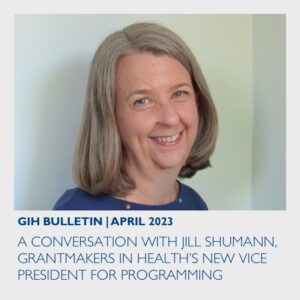
A Conversation with Jill Shumann, Grantmakers In Health’s New Vice President for Programming
This month, Grantmakers In Health (GIH) President and CEO Cara V. James sat down with Jill Shumann, GIH’s new Vice President for Programming, to learn more about Jill’s long career in health and how her experience applies to GIH’s mission of advancing better health for all through better philanthropy. Jill discussed her formative years as a Peace Corps Volunteer, her work on international public health in Africa, and her recent tenure at the National Alliance on Mental Illness.

Purpose-Driven Investments: Advancing Equity by Diversifying Foundations’ Asset Managers
In 2020, none of the Health Forward Foundation’s assets were managed by Black, Latina, or Latino managers. Struck by that stark reality, Health Forward began the process of diversifying the asset managers in its investment portfolio as part of a larger strategy to align the Foundation’s capital with its purpose.
Cara V. James in The Well News: As the COVID-19 Emergency Ends, We Must Not End Our Commitment to Advance Health Equity
Grantmakers In Health (GIH) President and CEO Cara V. James was quoted in a December 18, 2022 Politico Magazine article about the Black community’s distrust of the health care system.


Missouri Foundation for Health: May 2023
The Missouri Foundation for Health released a new report that examines the challenges Black and Latino Missourians faced during the early months of the pandemic. The report highlights how inequities in response efforts hampered their reach and effectiveness, further exacerbating the COVID-19 pandemic’s impact on Black and Latino communities.
Blue Cross Blue Shield of Massachusetts Foundation: May 2023
The Blue Cross Blue Shield of Massachusetts Foundation Massachusetts released a new report, “Closing the Coverage Gaps: Reducing Health Insurance Disparities in Massachusetts.” The foundation noted that Massachusetts has been exemplary in developing health insurance coverage policies to cover its residents.