Elevating Community Priorities to Shape Georgia’s Health Policy Agenda
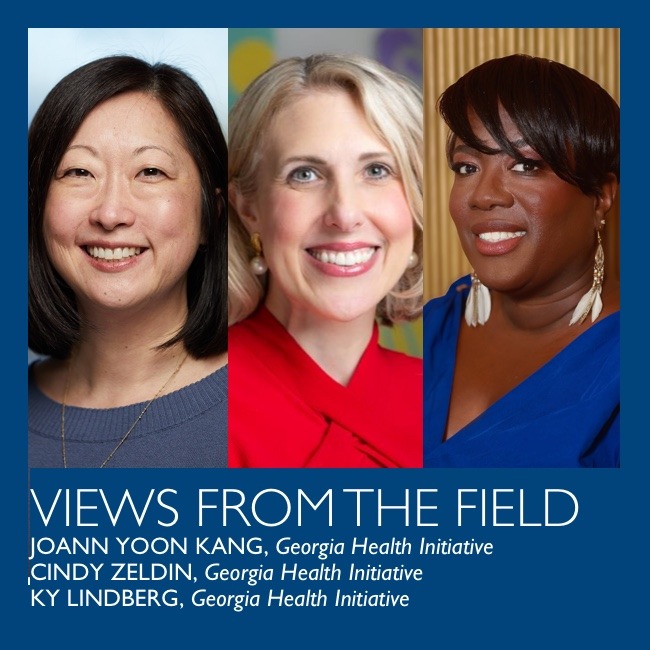
Georgia stands at a pivotal moment that will shape the direction of health policy in our state. With an open governor’s race in 2026, along with other open seats, we’re on the cusp of significant political transition. While new leadership introduces uncertainty, it also creates opportunity. This moment opens the door for nonpartisan, nonprofit, private foundations like our team at Georgia Health Initiative to play a constructive role in elevating community priorities to shape a health policy agenda designed to work for all Georgians.

Strengthening Health Care Access for People with Disabilities: Lessons for Philanthropy
In July, we recognize Disability Pride Month, marking the anniversary of the landmark Americans with Disabilities Act (ADA) and celebrating the contributions and diverse identities of people with disabilities. While the ADA prohibits discrimination on the basis of disability and establishes protections and requirements for employers, state, and local governments, and other areas of public life, many people with disabilities still face barriers.


UniHealth Foundation: July 2026
UniHealth Foundation recently launched its Healthy Neighbors Small Grants Program. The new initiative will fund nonprofits focused on enhancing community health and wellness in Pasadena, Altadena, Sierra Madre, and South Pasadena, California. Grant awards will range from $5,000 to $10,000, with decisions announced in late fall 2026.
GIH Health Policy Update Newsletter
The Latest
An Exclusive Resource for Funding Partners
The Health Policy Update is a newsletter produced in collaboration with Leavitt Partners and Trust for America’s Health. Drawing on GIH’s policy priorities outlined in our policy agenda and our strategic objective of increasing our policy and advocacy presence, the Health Policy Update provides GIH Funding Partners with a range of federal health policy news.
Philanthropy @ Work – Grants and Programs – March 2026
The latest on grants and programs from the field.
Thirty-nine Funders Join GIH in Support of Health Professionals
Grantmakers In Health (GIH) is urging funders to sign on to our comment letter on this proposed rule by Friday, February 27. Your voice matters—the Department of Education must consider all comments submitted before finalizing the rule.
Collaborative Comment Letter to the Department of Education in Support of Health Professionals
Grantmakers In Health (GIH) is urging funders to sign on to our comment letter on this proposed rule by Friday, February 27. Your voice matters—the Department of Education must consider all comments submitted before finalizing the rule.
39 Funders Collaborate on Comment Letter in Support of Health Professionals
The U.S. Department of Education recently published a proposed rule that would narrow the definition of which graduate programs qualify as “professional degrees” for federal student loan purposes, affecting how much students in certain health fields may borrow. Finalizing this rule will result in reduced access to care (especially in rural and other underserved communities), by making graduate education less affordable, disrupting health workforce pipelines, and creating obstacles for students to enter essential health and human-services professions.

What Do We Stand For?
One year ago, as we were just one month into the new administration, I wrote that “At a moment when so much has been described as ‘unprecedented,’ and so much of what we value is being attacked, we need to ask ourselves as individuals, organizations, and a field, what do we stand for? What values do we hold, and what will we do and say to defend them?” Today, the answers to these questions are needed more urgently than ever.

Medicaid and Community Violence: Pathways to Sustainable Care
American cities are witnessing historic declines in gun violence. In recent years, cities like Baltimore, Philadelphia, and Chicago have all seen precipitous drops in homicides, with some reaching multi-decade record lows (Washington Post 2025). While there are many causes of this decline, experts in the field point to community violence intervention as driving the trend.