Grantmakers In Health’s strategic plan elevates leadership and influence as one of four strategic pillars for our work. GIH seeks to take a more active role in defining the key issues that will advance better health for all, including by supporting health philanthropy to create lasting impact by influencing advocacy, policy, and funding in targeted areas.
To deliver on this, GIH has partnered with Leavitt Partners, a leading health care policy consultancy, to develop a set of policy, advocacy, and legal strategy resources that aim to inform funders about the important health policy trends in the White House and Congress.
Additionally, GIH has a policy agenda that identifies our public policy priorities. Informed by health funders, these priorities guide our programming, influence decisions related to issuing public statements on timely policy issues, and focus our advocacy efforts.
Sign on by: Friday, February 27
The U.S. Department of Education recently published a proposed rule that would narrow the definition of which graduate programs qualify as “professional degrees” for federal student loan purposes, affecting how much students in certain health fields may borrow.
Finalizing this rule will result in reduced access to care (especially in rural and other underserved communities), by making graduate education less affordable, disrupting health workforce pipelines, and creating obstacles for students to enter essential health and human-services professions.
GIH Health Policy Update Newsletter
An Exclusive Resource for GIH Funding Partners
In an effort to help our Funding Partners better understand the changing health policy landscape in the new administration and Congress, Grantmakers In Health (GIH) is expanding the GIH Health Policy Update newsletter to three issues per month. Working in collaboration with Leavitt Partners, a leading health care policy consultancy, we are adding new installments of the newsletter on the first and third Wednesdays of the month, while we will continue to partner with Trust for America’s Health on the installment released on the second Wednesday of the month.
Policy and Advocacy Resources
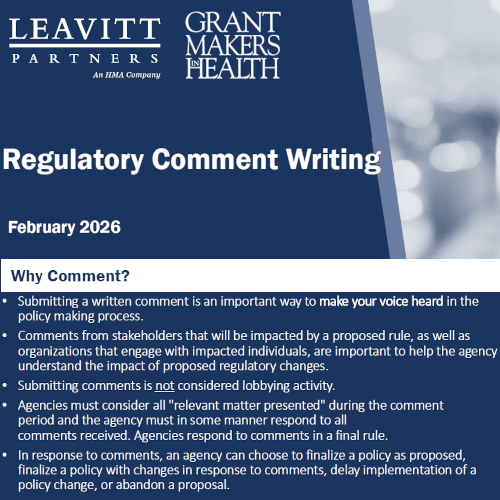
Regulatory Comment Writing
This resource provides an overview of how to write and submit a regulatory comment to the federal register.
2026 Federal Health Policy Timeline
This timeline previews expected regulatory and legislative health policy events in 2026.
Funding Partners interested in state legislative sessions should visit NCSL’s State Legislative Session Calendar.
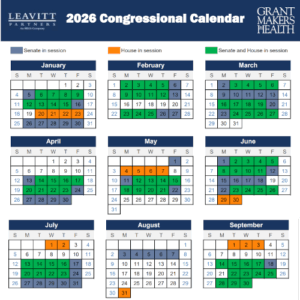
2026 Congressional Calendar
When each house of congress will be in session in 2026.
Department of Health and Human Services Reorganization and Reductions: Explaining the State of Play
Make Our Children Healthy Again Strategy Report
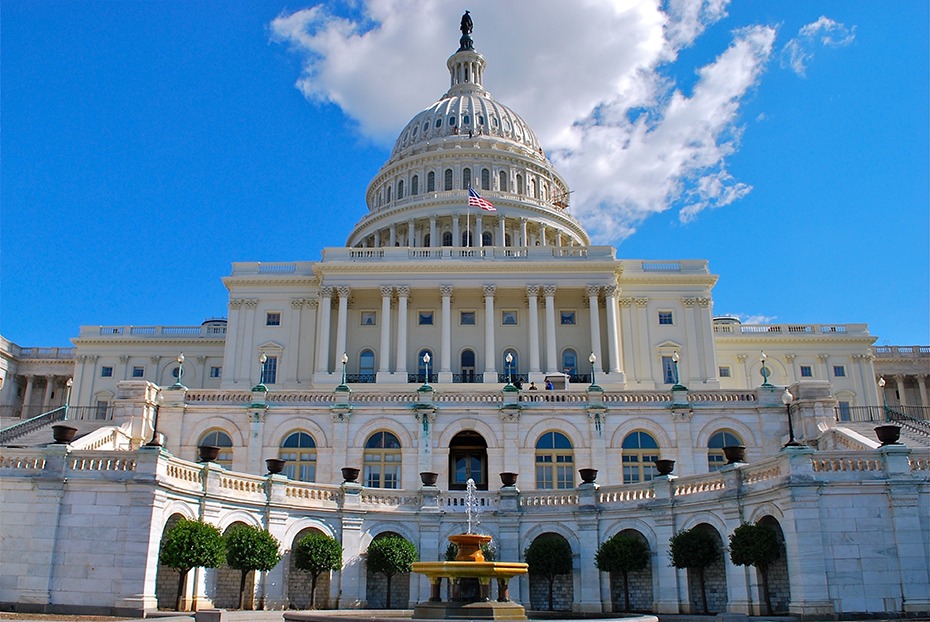
Overview of the 119th Congress
A detailed overview of the U.S. House of Representatives and Senate, including leadership in both houses and key committee and subcommittee members.
Congressional Staff and Member Outreach
A detailed overview of how congressional offices, committees, and leadership are staffed. In addition, it provides recommended best practices for meeting with Members of Congress and their staff.
Upcoming Policy & Advocacy Events
Legal Strategy Resources
Administration Actions Targeting Domestic Terrorism and Their Implications for Nonprofits
This resource provides an overview of the legal implications of the September 22, 2025 executive order designating certain groups as engaging in domestic terrorism.
U.S. Attorney General Issues New Guidance on DEI Programs and Policies
This resource provides an overview of a Department of Justice memorandum from the Attorney General on the application of federal antidiscrimination laws to Diversity, Equity, and Inclusion (DEI) programs the administration alleges involve “discriminatory practices.”
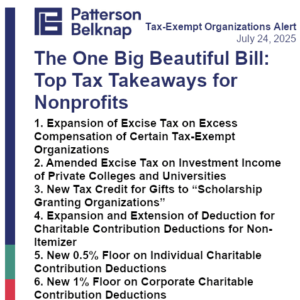
The One Big Beautiful Bill: Top Tax Takeaways for Nonprofits
This resource provides a rundown on the top tax takeaways for nonprofits from the July 4, 2025, budget reconciliation bill.
Recently Featured
ARPA Organizing Opportunities
This toolkit developed by Community Catalyst illustrates how advocates can leverage ARPA funds to spur transformative change and address the unique needs of communities. It includes examples of advocates’ innovation in organizing for ARPA funding in their respective states and communities and also outlines innovative tactics and best practices that may be particularly effective in this moment.
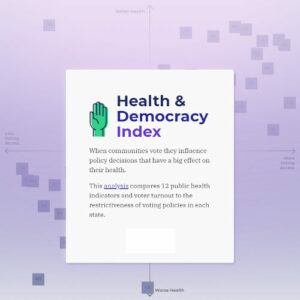
Health and Democracy Index
The Health and Democracy Index presents a wide range of health indicators and correlates these indicators to voting policies using the Cost of Voting Index. It’s designed to provide a shared health equity analysis of voting policy and serve as a tool to strengthen civic and voter participation.
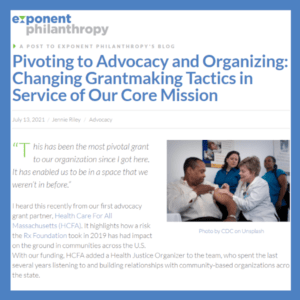
Pivoting to Advocacy and Organizing
This post to Exponent Philanthropy’s blog by Jennie Riley of the Rx Foundation describes the value and impact of the foundation’s shift toward funding advocacy, organizing, and citizen-engagement capacity.
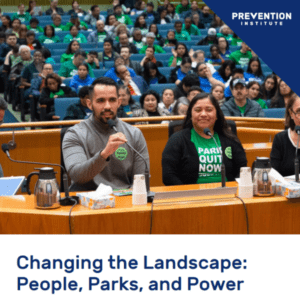
Changing the Landscape: People, Parks, and Power
Prevention Institute recently published this report which proposes an approach to addressing park and green space inequities that prioritizes building power among people closest to the problem so that they can drive policy and systems change solutions.
Investing in the Power of Young People: 20 Years of Philanthropic Support for Youth Organizing
Funders’ Collaborative on Youth Organizing (FCYO) has released its 2020 Funder Scan which evaluates the critical role philanthropy has played in shoring up a youth organizing field poised to meet the multiple challenges of this moment. This report is part of FCYO’s 2020 National Youth Organizing Field Scan, a series of four reports that together offer an in-depth look into a field that has grown in significant ways over the last two decades.
Why Redistricting Matters
Vitalyst Health Foundation has released a policy brief which describes the Arizona Independent Redistricting Commission (AIRC) and discusses which eight of Arizona’s 19 charter cities conduct their own local process. The brief also explores the multiple ways people can engage to provide input so that community well-being can get the representation and resources it deserves.