

“Our job is to show up, listen, and provide ‘helpful help.’” – Diane Hall, Director, Office of Rural Health, Centers for Disease Control and Prevention
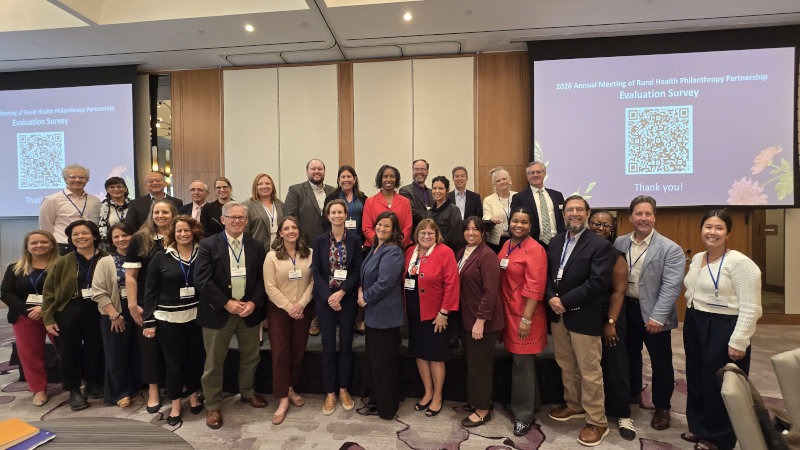
On Thursday, September 24, the Annual Meeting of the Rural Health Philanthropy Partnership kicked off in downtown Bethesda, MD.
The gathering, taking place since 2012, is a joint effort of the Federal Office of Rural Health Policy (FORHP), Grantmakers in Health (GIH), the National Rural Health Association (NRHA) and the Centers for Disease Control and Prevention Office of Rural Health (CDC ORH) that provides an annual forum for funders, federal staff, and select rural health partners to explore emerging rural health issues and opportunities to enhance health in rural America. What follows are selected highlights from the convening.
This year’s welcome and introductory remarks were shared by Tom Morris, Associate Administrator, Federal Office of Rural Health Policy Health Resources and Services Administration; Diane Hall, Director, Office of Rural Health, Centers for Disease Control and Prevention; Alan Morgan, Chief Executive Officer, National Rural Health Association; and Cara V. James, President and Chief Executive Officer, Grantmakers In Health. Their individual opening comments set the stage for a full day of sessions and networking opportunities centered on how collaboration can build on progress already underway in rural and tribal communities, including rural health transformation efforts.
Keynote
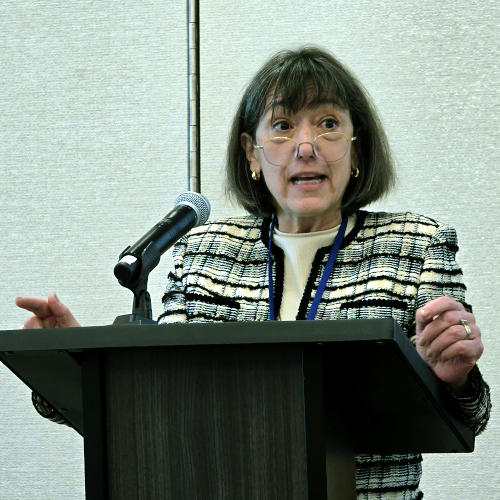
In her keynote address, “All Health is Local: Healing Health Care in Rural America,“ Dr. Monica M. Bertagnolli, President, National Academy of Medicine, shared her personal story of growing up on a ranch in southwestern Wyoming. She described how her experiences there helped shape her view of the challenges in rural health in America and the best ways to approach them.
Dr. Bertagnolli framed those challenges with statistics that underscore the crisis in rural health today:
- Rural poverty rate: Rural communities currently have a 15.5 percent poverty rate, while urban communities have a 12.2 percent poverty rate, a gap that has persisted since 1960.
- Rural vs. urban mortality: Rural mortality rates are 18 percent higher than the mortality rates in urban communities.
- Rural job losses: 5.5 million manufacturing jobs lost between 2000 and 2017, disproportionately impacting rural counties
- Rural hospital closures: Since 2005, more than 194 rural hospitals have closed. Over 200 more are at imminent risk
She then explored how these challenges in rural health care are compounded through the lens of the “prisoner’s dilemma,” the construct that two completely rational parties might not cooperate even when it is in their best interests to do so. She discussed how this dilemma plays out in rural health with insurers, clinicians, hospitals, and health service consolidators who are incentivized in ways that don’t necessarily benefit the broader communities they seek to serve.
The Path Forward
For Dr. Bertagnolli, the path forward in rural health rests in a Learning Health System, one in which science, informatics, incentives, and culture are aligned for continuous improvement and equity. It should include best practices and discovery seamlessly embedded in the delivery process, individuals and families actively participating in all elements, and new knowledge generated as an integral by-product of the delivery experience. She noted that advances in digital infrastructure, interoperable data, and artificial intelligence make such a system operationally achievable at a national scale. A powerful example was brought to life through the remarkable story of RiverPeak Health in Riverton, WY. Riverton had been struggling with a lack of basic and critical hospital services for years. To change that, the nonprofit RiverPeak Health was formed by volunteers who’ve worked over the last eight years to bring quality, full-service health care back to the community. Through multi-sector partnerships and the generous support of community members, including a donation of land by the Eastern Shoshone Tribe, a 13-bed inpatient hospital with 24/7 surgical availability and a pharmacy is set to open later this fall. The new hospital will provide essential services for 22,000 people in the greater Riverton area, including the Wind River Reservation, and is a true testament to what can be achieved when community members work together and are supported.
Reactions and Takeaways from the Keynote
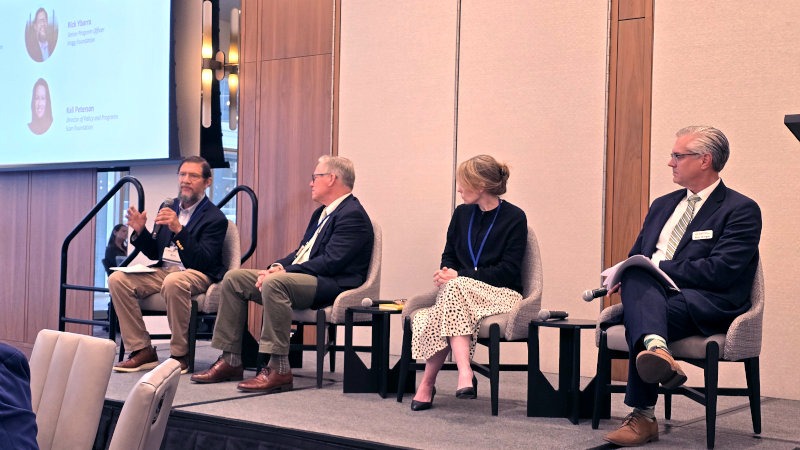
Thirty minutes of reflections followed the keynote with comments from Kali Peterson, Director of Policy and Programs, SCAN Foundation; Stewart Hudson, Executive Director, Leon Lowenstein Foundation; and Rick Ybarra, Senior Program Officer, Hogg Foundation.
- Peterson echoed the relevance of the Riverton example, noting that lived experience should be seen as evidence, not anecdote, and that local learning has to start with listening.
- Hudson noted that integrating efforts is key to addressing the “tyranny of distance” present in rural health. He called for broadening partnerships to involve more sectors in solving problems in rural health.
- Ybarra advocated for community members to be present when issues are discussed and solutions are ideated, encouraging people to know who the elders and people with influence are and bring them to the table.
Rural Health Transformation
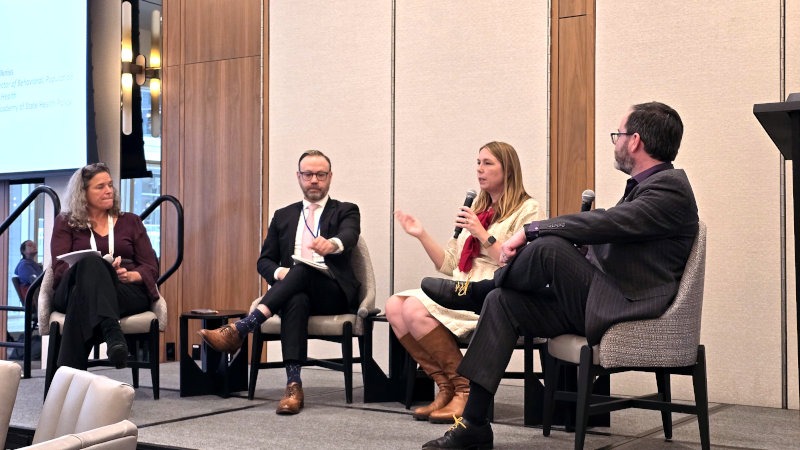
Following a lunch break, Kate Sapra, Deputy Director, Office of Rural Health Transformation, Centers for Medicare & Medicaid Services, led an informative session on the Rural Health Transformation Program (RHTP). The RHTP was authorized by H.R. 1, the 2025 budget reconciliation bill that made signficant cuts to federal programs, including Medicaid and SNAP. RHTP provides a $50 billion fund to assist states in transforming their health care delivery ecosystem to strengthen rural communities, with a focus on improving health care access, quality, and outcomes.
Now nine months into state implementation of the RHTP, Sapra and her team have visited 40 states over the last five months, building critical relationships between states and CMS. She highlighted a range of state initiatives currently underway that span population, workforce, payment, and service models; health system innovation; accessible care; technology; disease prevention and care; and health promotion. Within the workforce category, she highlighted how Delaware is using RHTP resources to expand its rural health workforce through a new medical school and how Vermont is implementing statewide learning networks and training programs focused on evidence-based care, patient education, and quality improvement.
Following Sapra’s presentation, there was a brief audience question-and-answer session and a panel discussion, moderated by Colin Pekruhn, Program Director, Grantmakers In Health, to delve deeper into the RHTP.
Through the discussion, Brandon Talley, Executive Vice President, Chief Impact and Innovation Officer (acting), CDC Foundation, noted how important it will be for philanthropy to begin to assess and determine the ways in which it can be a force for sustainability and durability so that the improvements and gains that are set in motion through the five-year RHTP are not lost come year six. He also emphasized that one key element philanthropy can bring is the ability to be flexible in service of the transformative goals of the RHTP.
Sandra Wilkniss, Senior Program Director, National Academy for State Health Policy, encouraged philanthropy to play a pivotal role in the success of communities as the RHTP is rolled out by supporting community-building organizations that often lack capacity and “backbone” entities that are a critical source of community-wide stability.
During the question-and-answer period, Sapra addressed a question about how Tribes are being engaged to participate in the RHTP. She noted that territories and Tribes were not eligible for federal funds available through the RHTP; however, states are engaging with Tribes to integrate them into their transformation plans, and CMS is encouraging this approach.
Building Investment Pathways for Rural and Native Communities
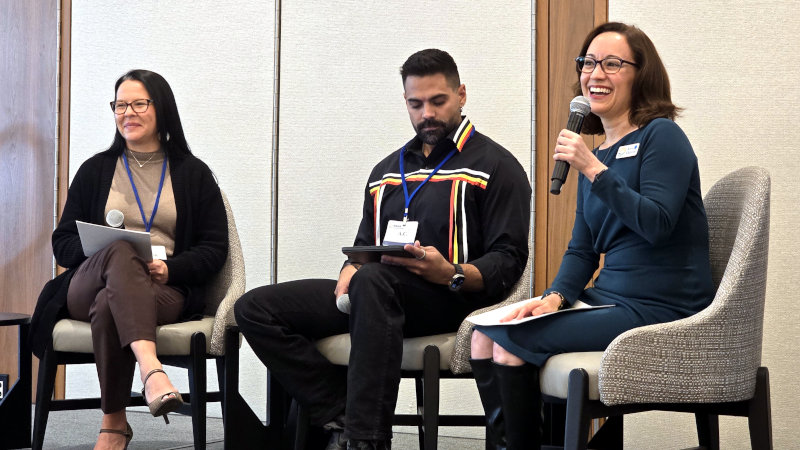
Day 1 wrapped up with a panel-style discussion focused on building investment pathways for rural and Native communities. Amy Elizondo, Chief Strategy Officer, National Rural Health Association, moderated the conversation with A.C. Locklear II, Chief Executive Officer, National Indian Health Board, and Tressie White, Program Director, Montana Healthcare Foundation.
One of the key themes that emerged from the conversation was, “If you know one Tribe, you know one Tribe,” as Locklear shared. The sentiment underscored the critical importance of taking the time to invest in relationships as foundational support to more extensive involvement and collaboration. It can be difficult and time-consuming work, but it’s necessary to build trust and understanding of needs, and to determine what solutions might make sense for those needs.
Both White and Locklear highlighted the lack of, and the need for, convening spaces to support advances in health in Indian country. They noted that investments that create opportunities for convening can be a highly effective way for philanthropy to impact rural health. Simply creating the space or facilitating travel for leaders can unlock discussion and knowledge transfer about which strategies and tactics have worked for one community, as well as those that may not be viable in another.
When asked what practical next step a funder could take to begin working with Tribes, White suggested starting by educating yourself about which Tribes might be in your area and what you might be doing that impacts them. If you are not engaging with them, start there and work to bring the Tribal leaders to the table for conversation. Locklear took the point a step further, asking people to go beyond whether Tribes have a seat at the table and ask whether they helped build the table in the first place.
Several useful resources from the National Indian Health Board (NIHB) were shared throughout the discussion, including:
In addition to the sessions detailed above, the meeting also including the following discussions:
- A look at the evolving role of technology and digital tools in rural health featuring moderator Alan Morgan, Chief Executive Officer, National Rural Health Association; Alycia Bayne, Associate Director for Public Health Research, NORC at the University of Chicago; Elizabeth Ruen, Program Officer, Helmsley Charitable Trust; and Amanda Reed Program and Systems Officer, Michigan Health Endowment Fund
- Case studies exploring how funders used partnerships to address two very different rural health challenges featuring moderator Ky Lindberg, Vice President of Community Engagement, Georgia Health Initiative; Alex Dunlop, Chief Business Development Officer, LOR Foundation; and Shao-Chee Sim, Executive Vice President for Health Policy, Research and Strategic Partnerships, Episcopal Health Foundation
- Day 1 reflections by Diane Hall, Director, Office of Rural Health, Centers for Disease Control and Prevention
Follow all the conference activities on GIH socials:
Facebook | LinkedIn | Instagram