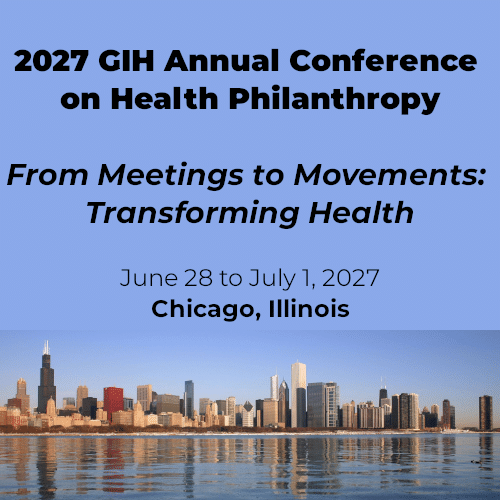
Submit a Session Proposal for the 2027 GIH Annual Conference on Health Philanthropy
We invite you to submit a session proposal for the 2027 Grantmakers In Health (GIH) Annual Conference on Health Philanthropy, From Meetings to Movements: Transforming Health, which will be held in person in Chicago, Illinois, from June 28 to July 1, 2027. From Meetings to Movements: Transforming Health Forty-five years ago, a small group of…
Make Connections to Create a Movement for Rural Health
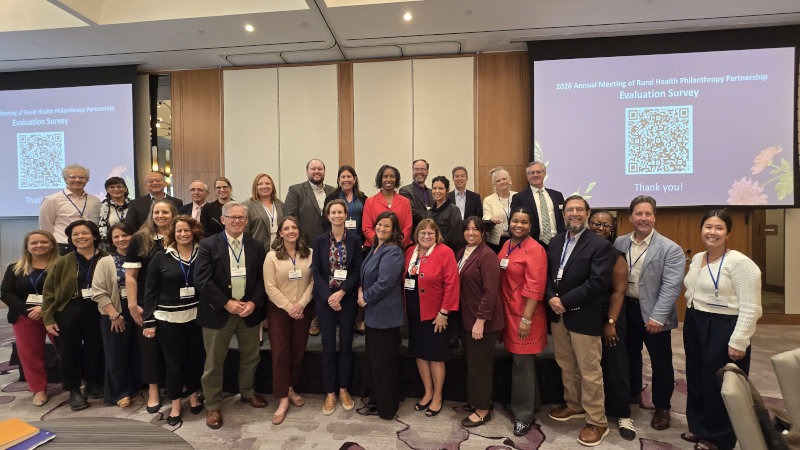
On Thursday, September 24, the Annual Meeting of the Rural Health Philanthropy Partnership kicked off in downtown Bethesda, MD. Selected highlights from the convening’s first day setting the stage for a full day of sessions and networking opportunities centered on how collaboration can build on progress already underway in rural and tribal communities, including rural health transformation efforts.

NJ SNIP: Supporting Behavioral Health Access Through Trust-based Grantmaking
Amid shifting federal health care funding, grants that enable health care safety net entities to respond to the changing landscape can unlock immense value. This form of grantmaking puts daily program-related decisions in the hands of people doing the work, allowing organizations to develop and sustain staff positions, workflows, and programs that reflect their priorities.

Leaning Into Radical Collaboration Will Advance Your Focused Mission
At this year’s GIH annual conference, I found myself surrounded by hundreds of philanthropic leaders deeply committed to improving the health and well-being of their communities. Again and again, I met funders whose work was grounded in a particular place, population, or issue. These funders know their communities intimately. They understand local history, relationships, and the needs of their communities. Their focus is one of their greatest strengths.
GIH Health Policy Update Newsletter
An Exclusive Resource for Funding Partners
The Health Policy Update is a newsletter produced in collaboration with Leavitt Partners and Trust for America’s Health. Drawing on GIH’s policy priorities outlined in our policy agenda and our strategic objective of increasing our policy and advocacy presence, the Health Policy Update provides GIH Funding Partners with a range of federal health policy news.
Robert Wood Johnson Foundation RFP: August 2019
Through this funding opportunity, RWJF seeks to support and engage black community members, persons of lower socioeconomic status, and rural residents in the South and Midwest in order to increase their ability to advocate for stronger, locally, or regionally driven tobacco-control and prevention policies and practices.
RCHN Community Health Foundation: August 2019
Building on estimates of coverage losses among Medicaid beneficiaries subject to work experiments, the new brief presents estimates of the potential impact of Medicaid work experiments on beneficiaries who are patients of health centers, and ultimately, the implications for health centers and the wider communities they serve.
Montana Healthcare Foundation: August 2019
These reports focus on Montana’s Medicaid program and recommend ways to strengthen the state’s benefit package as it relates to homelessness, detailing the business case for doing so.
Episcopal Health Foundation: August 2019
Texans say health care is the toughest living expense for them to afford. More than half (55 percent) of Texans say it’s difficult for them to pay for health care, including more than a quarter (27 percent) who say it’s “very difficult.”
Foundation for Opioid Response Efforts RFP: August 2019
Inaugural grants will fund projects at the national, state, and community levels focused on innovative and creative ways to remove barriers to treatments and improve services across the continuum of care.
Cone Health Foundation and Kate B. Reynolds Charitable Trust: August 2019
The analysis updates a 2014 report, providing a county-by-county look at the number of jobs, new Medicaid enrollees and economic growth that would result from the state expanding Medicaid.