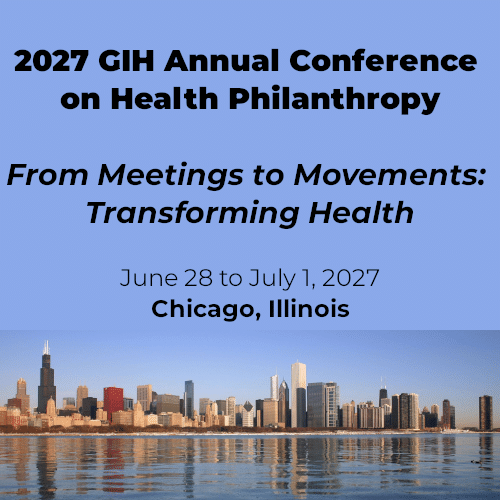
Submit a Session Proposal for the 2027 GIH Annual Conference on Health Philanthropy
We invite you to submit a session proposal for the 2027 Grantmakers In Health (GIH) Annual Conference on Health Philanthropy, From Meetings to Movements: Transforming Health, which will be held in person in Chicago, Illinois, from June 28 to July 1, 2027. From Meetings to Movements: Transforming Health Forty-five years ago, a small group of…
Make Connections to Create a Movement for Rural Health
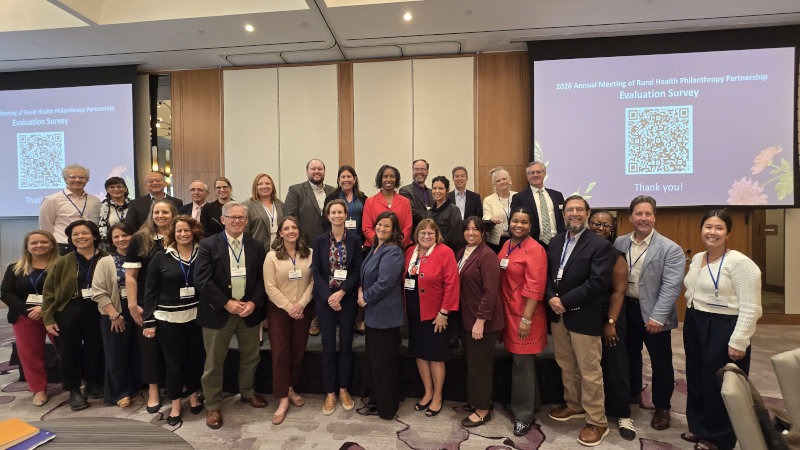
On Thursday, September 24, the Annual Meeting of the Rural Health Philanthropy Partnership kicked off in downtown Bethesda, MD. Selected highlights from the convening’s first day setting the stage for a full day of sessions and networking opportunities centered on how collaboration can build on progress already underway in rural and tribal communities, including rural health transformation efforts.

NJ SNIP: Supporting Behavioral Health Access Through Trust-based Grantmaking
Amid shifting federal health care funding, grants that enable health care safety net entities to respond to the changing landscape can unlock immense value. This form of grantmaking puts daily program-related decisions in the hands of people doing the work, allowing organizations to develop and sustain staff positions, workflows, and programs that reflect their priorities.

Leaning Into Radical Collaboration Will Advance Your Focused Mission
At this year’s GIH annual conference, I found myself surrounded by hundreds of philanthropic leaders deeply committed to improving the health and well-being of their communities. Again and again, I met funders whose work was grounded in a particular place, population, or issue. These funders know their communities intimately. They understand local history, relationships, and the needs of their communities. Their focus is one of their greatest strengths.
GIH Health Policy Update Newsletter
An Exclusive Resource for Funding Partners
The Health Policy Update is a newsletter produced in collaboration with Leavitt Partners and Trust for America’s Health. Drawing on GIH’s policy priorities outlined in our policy agenda and our strategic objective of increasing our policy and advocacy presence, the Health Policy Update provides GIH Funding Partners with a range of federal health policy news.
Philanthropy @ Work – Transitions – April 2019
The latest on transitions from the field.

Supporting Health Care and Community-Based Organization Partnerships to Address Social Determinants of Health
Increasingly, health systems, providers, and payers recognize the significant influence that social factors such as housing, food insecurity, employment status, and transportation have on well-being and health care spending.

A Grantmaker Affinity Group Informs the Field, Inspires Innovation, and Ignites Action
Early and often, health funders are asked to fund oral health. It has become clear, however, that equally, if not more essential, are investments to eliminate the systemic inequities that concentrate disease in specific populations.

Trends in Health Philanthropy: Leveraging Policy Change
Over the years, GIH has developed considerable programming to help funders learn from one another about effective policy change strategies, to increase awareness of what is legally possible, and to decrease anxiety about emerging strategies.
RIZE Massachusetts: March 2019
RIZE Massachusetts (RIZE) released a report by the University of Massachusetts Medical School’s Commonwealth Medicine division on recovery coaches, a peer support professional used in treatment for individuals with opioid use disorder (OUD). The report was commissioned to study the effectiveness of recovery coaches, define and examine their role in treatment, and understand current payment methods.
San Joaquin Valley Fund: March 2019
Survey results from San Joaquin Valley demographic experts show that the U.S. Department of Commerce’s decision to add a citizenship question to the 2020 Census would be likely to have a major impact in suppressing census response among San Joaquin Valley Latino immigrants and their social networks, who make up one-third of the region’s total population.