
GIH Joins Amicus Brief Opposing New Citizenship Verification Requirements
GIH joined organizations filing an amicus brief for the case brought by NY and other states seeking to stop the administration’s attempt to expand citizenship verification requirements under the Personal Responsibility and Work Opportunity Reconciliation Act of 1996 for programs administered by the Departments of Health and Human Services, Agriculture, Education, Housing and Urban Development, Labor, and Justice.
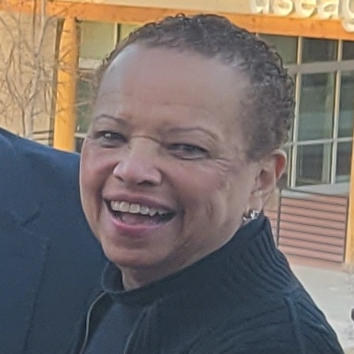
Remembering Patricia Mathews, Founding President and CEO of Northern Virginia Health Foundation
Grantmakers In Health (GIH) is saddened to learn of the recent passing of Patricia Mathews, a longtime fixture in health philanthropy and a former member of the GIH board of directors. Please join us in celebrating Patricia Mathews’ memory, as well as her many contributions to the field of health philanthropy and GIH.
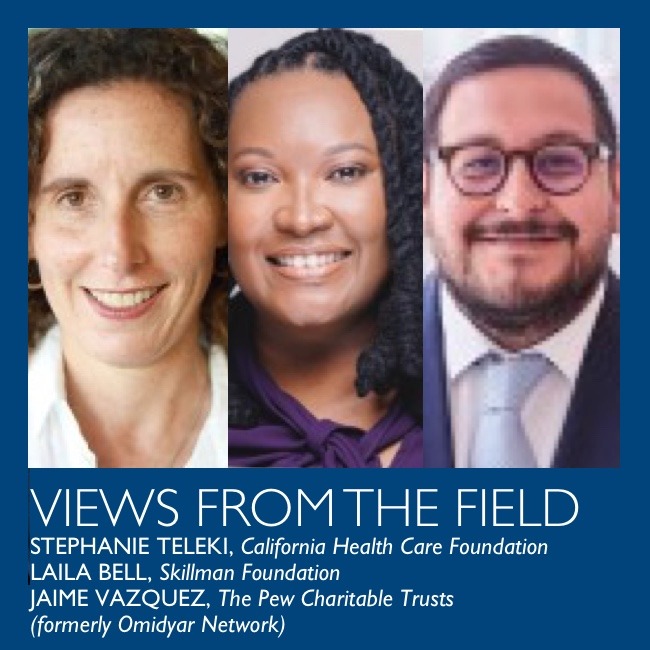
Responsible Exits: Insights from Three Funders
Grantmakers In Health’s Maya Schane spoke with Stephanie Teleki of The California Health Care Foundation, Laila Bell of The Skillman Foundation, and Jaime Vazquez of The Pew Charitable Trusts about their recently published article in The Foundation Review, “When Shift Happens: Navigating Toward a Framework for Responsible Philanthropic Exits.”
GIH Health Policy Update Newsletter
The Latest
An Exclusive Resource for Funding Partners
The Health Policy Update is a newsletter produced in collaboration with Leavitt Partnersi and Trust for America’s Health. Drawing on GIH’s policy priorities outlined in our policy agenda and our strategic objective of increasing our policy and advocacy presence, the Health Policy Update provides GIH Funding Partners with a range of federal health policy news.
Prison Diversion Programs: Compelling Social Investments for Foundations
As a relatively small, regional niche foundation, Staunton Farm Foundation reasoned that “improving behavioral health” was too broad an area for us to make a significant impact. Hence, the foundation chose to focus on criminal justice.
GIH Releases New Report on Funder and Advocate Response to Health Reform Implementation
Grantmakers In Health has released “Implementing Health Care Reform: Funders and Advocates Respond to the Challenge”, a report based on over 40 interviews with national and state grantmakers and advocacy organizations about their initial work around implementation.
Board Service: From in Perpetuity to Term Limits
Twenty-five years ago in 1985, The Health Foundation
of Greater Indianapolis was created with proceeds
from the sale of MetroHealth, one of the first
statewide, staff-model Health Maintenance Organizations
(HMOs). As an independent, not-for-profit grantmaker, the
foundation has been, and is still, dedicated to preserving and
enhancing the physical, mental, and social health of the
Greater Indianapolis community.
Building the Community Health Worker Field through Partnership and Innovation
Minnesota is home to the country’s largest Somali and
second-largest Hmong populations and has significant numbers of immigrants from Central and
South America, Asia, Africa, and Europe. It is also home to the
largest urban population of Native Americans. With many
cultures come many different beliefs on health and illness, and
treatment and prevention options.
Giving Voice to Oral Health in Kansas: Benefits of Long-Term Commitment
Someone recently used the term philanthropy du jour,
and it was not meant as a positive appellation. As a field,
we increasingly see longevity as virtue whether it comes
under the guise of general operating support, capacity building, or place-based or strategic grantmaking. The work of the
United Methodist Health Ministry Fund in a single field –
oral health – began in late 1998. My reflections attempt to
capture the results of this extended $11-million initiative.
Foundation Collaboration: Partnering to Improve Young Children’s Oral Health
Dental disease is the single most common chronic childhood disease and is so widespread and the health effects so significant that the U.S. Surgeon General has classified dental disease as a silent epidemic (HHS 2000).