Make Connections to Create a Movement for Rural Health
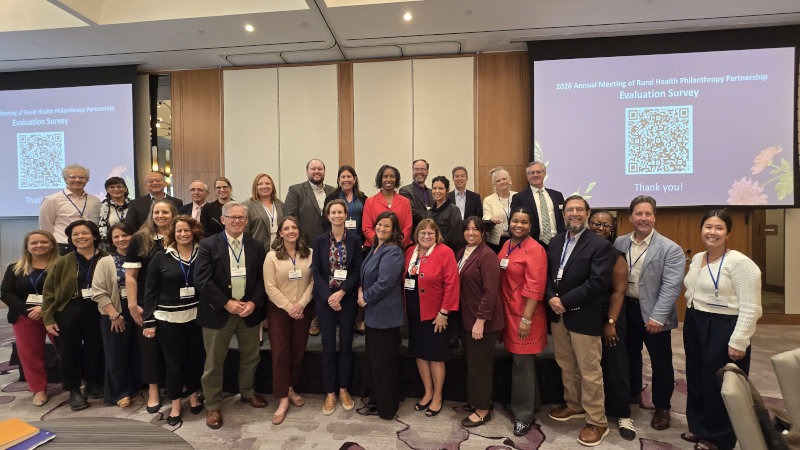
On Thursday, September 24, the Annual Meeting of the Rural Health Philanthropy Partnership kicked off in downtown Bethesda, MD. Selected highlights from the convening’s first day setting the stage for a full day of sessions and networking opportunities centered on how collaboration can build on progress already underway in rural and tribal communities, including rural health transformation efforts.

NJ SNIP: Supporting Behavioral Health Access Through Trust-based Grantmaking
Amid shifting federal health care funding, grants that enable health care safety net entities to respond to the changing landscape can unlock immense value. This form of grantmaking puts daily program-related decisions in the hands of people doing the work, allowing organizations to develop and sustain staff positions, workflows, and programs that reflect their priorities.

Leaning Into Radical Collaboration Will Advance Your Focused Mission
At this year’s GIH annual conference, I found myself surrounded by hundreds of philanthropic leaders deeply committed to improving the health and well-being of their communities. Again and again, I met funders whose work was grounded in a particular place, population, or issue. These funders know their communities intimately. They understand local history, relationships, and the needs of their communities. Their focus is one of their greatest strengths.

Changing the Vaccine Conversation Before It’s Too Late—What Can Philanthropy Do?
In July 2026, the United States reached a grim milestone when the number of confirmed cases of measles exceeded the total for all of 2025. On August 10, 2026, the White House issued an executive order directing changes to the federal childhood vaccine schedule and categories, and calls for availability of separate measles, mumps, and rubella vaccines. The science has not changed, but the new framework could significantly slow down the delivery of protective immunizations from these serious diseases.
GIH Health Policy Update Newsletter
An Exclusive Resource for Funding Partners
The Health Policy Update is a newsletter produced in collaboration with Leavitt Partners and Trust for America’s Health. Drawing on GIH’s policy priorities outlined in our policy agenda and our strategic objective of increasing our policy and advocacy presence, the Health Policy Update provides GIH Funding Partners with a range of federal health policy news.
Changing Expectations for Care at the End of Life
The culture and system of care at the end of life present unnecessary emotional, physical, and financial burdens for patients and their loved ones. Although this is what we have come to expect, other realities are possible.
Race to the Top: Is Children’s Health in the Running?
The Race to the Top-Early Learning Challenge (RTTELC), jointly administered by the U.S. Departments of Education, and Health and Human Services, is the latest federal opportunity for states to receive grants to transform education systems and improve achievement outcomes for children.
Effective Behavioral Health Funding in an Era of Health Care Reform
Health funders today operate in an environment of change and uncertainty as policy changes driven by federal health care reform affect health care at state and local levels – often in ways that are hard to predict. Meanwhile, health funders increasingly recognize that addressing behavioral health challenges is central to promoting healthy individuals, families, and communities.
Health Care Reform: Promises and Pitfalls for Maternal and Child Health
In 2009 health care spending in the United States reached an all-time high of nearly $2.5 trillion, representing an almost two-fold increase in spending on a per capita basis since 1997 (NIHCM Foundation 2011).