
Health-Related Executive Orders and Presidential Memoranda
This Grantmakers In Health policy resource summarizes health-related executive orders and presidential memoranda issued since 2015, highlighting implications for health funders. It tracks directives on behavioral health, Medicaid, prescription drugs, federal grantmaking, DEI, gender-affirming care, child welfare, vaccines, and related litigation affecting implementation.
August 2026 Executive Order on Childhood Vaccines: Overview, Implications, and Stakeholder Reactions
This Grantmakers In Health policy resource provides an overview of the August 2026 executive order on childhood vaccines, including the restructuring of the federal immunization schedule, the directive to split the MMR vaccine, implications for insurance coverage, family costs, and state exemption laws, and reactions from stakeholders.

Beyond the Rankings: What Four Decades of KIDS COUNT Have Taught Me About Why Data Matter
For more than three decades, through the Annie E. Casey Foundation’s KIDS COUNT® project, decisionmakers and communities have had access to reliable national, state, and local data to improve outcomes for all children, young people, and families in this country. KIDS COUNT comprises the foundation’s national KIDS COUNT publications—the annual KIDS COUNT Data Book and periodic reports such as Race for Results; the KIDS COUNT Data Center, a resource for year-round national, state, and local data; and the KIDS COUNT Network of state-based partner organizations that help policymakers, advocates, journalists, and community leaders understand and use data to make informed decisions.

Opioid Use Disorder in Pregnancy: Countering Bias and Promoting Care
Most pregnancy-related deaths in North Carolina are preventable. Yet mental health conditions, including overdose and suicide, remain the leading cause of pregnancy-related death. For health care leaders, that reality demands a closer look at how we identify, treat, and support pregnant and postpartum patients with opioid use disorder.
GIH Health Policy Update Newsletter
An Exclusive Resource for Funding Partners
The Health Policy Update is a newsletter produced in collaboration with Leavitt Partners and Trust for America’s Health. Drawing on GIH’s policy priorities outlined in our policy agenda and our strategic objective of increasing our policy and advocacy presence, the Health Policy Update provides GIH Funding Partners with a range of federal health policy news.

EEOC and DOJ Issue Guidance on ‘Unlawful DEI-Related Discrimination’ Under Title VII
This resource provides an overview of U.S. Equal Employment Opportunity Commission (EEOC) and U.S. Department of Justice (DOJ) guidance documents warning that employers’ Diversity, Equity, and Inclusion (DEI) policies, programs, and practices can violate Title VII of the Civil Rights Act of 1964.
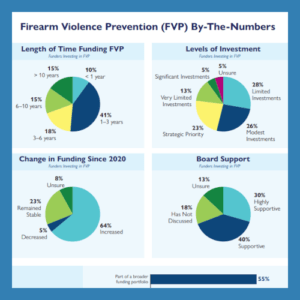
New Grantmakers In Health Survey Finds a Significant Growth in Firearm Violence Prevention Investments Among Health Funders
Washington, DC, March 14, 2025—At a time when firearm violence is a leading cause of death for children and teens, a new Grantmakers In Health survey of health funding organizations found that philanthropic investments in firearm violence prevention are growing in terms of both the number of funders supporting this work and the dollar amounts…

Celebrating Our Colleague Eileen Salinsky, a Grantmakers In Health Mainstay Since 2007
After 18 years at Grantmakers In Health, Eileen Salinsky, longtime Program Advisor and former Vice President for Program and Strategy, has announced her retirement. Her last day at GIH will be Friday, March 21, 2025. Eileen was recruited as GIH’s Vice President for Program and Strategy by former President and CEO Lauren LeRoy in 2007. Family obligations required Eileen to step back from her management position, but she stayed on part-time as a Program Adviser for almost two decades.

Maternal Health in American Indian/Alaska Native Communities: Challenges, Opportunities, and Pathways Forward
Maternal health is a cornerstone of any community’s well-being, yet American Indian and Alaska Native (AI/AN) women face disproportionate challenges in achieving safe and healthy pregnancies. Historical inequities, systemic barriers, and the enduring effects of colonization have resulted in significant maternal health disparities within Native communities. However, these same communities are also sources of resilience, creativity, and innovation. Maternal health programs aimed at centering community in tradition, culture, and resiliency can offer unique, cross-sectoral solutions to complex systemic health barriers for AI/AN families.

Investing in Civic Infrastructure: The Rise of a New Foundation in a Rural, Disinvested Community
When people hear about our work in Imperial Valley, they often exclaim, “How exciting to build a new foundation!” But I gently redirect them: We’re not building another institution— the last thing our communities need is another organization competing for resources. Instead, we’re building civic infrastructure to create the framework for lasting, community-led change.