
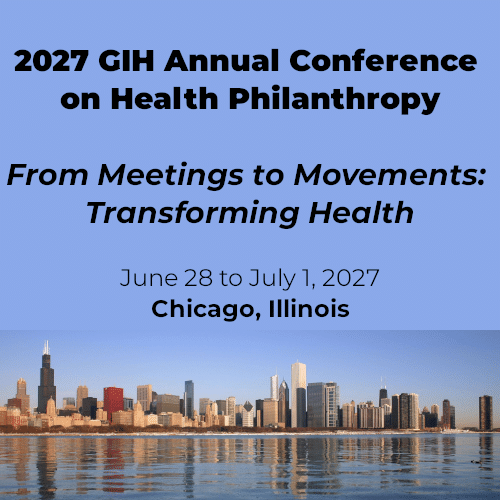
Submit a Session Proposal for the 2027 GIH Annual Conference on Health Philanthropy
We invite you to submit a session proposal for the 2027 Grantmakers In Health (GIH) Annual Conference on Health Philanthropy, From Meetings to Movements: Transforming Health, which will be held in person in Chicago, Illinois, from June 28 to July 1, 2027. From Meetings to Movements: Transforming Health Forty-five years ago, a small group of…
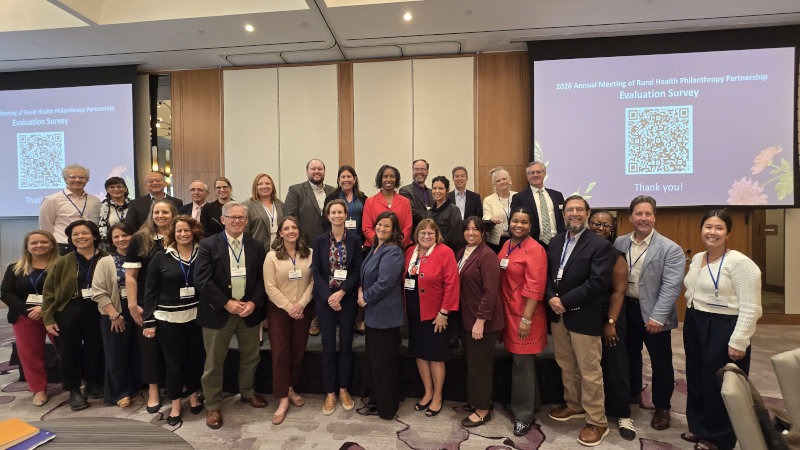
Make Connections to Create a Movement for Rural Health
On Thursday, September 24, the Annual Meeting of the Rural Health Philanthropy Partnership kicked off in downtown Bethesda, MD. Selected highlights from the convening’s first day setting the stage for a full day of sessions and networking opportunities centered on how collaboration can build on progress already underway in rural and tribal communities, including rural health transformation efforts.

NJ SNIP: Supporting Behavioral Health Access Through Trust-based Grantmaking
Amid shifting federal health care funding, grants that enable health care safety net entities to respond to the changing landscape can unlock immense value. This form of grantmaking puts daily program-related decisions in the hands of people doing the work, allowing organizations to develop and sustain staff positions, workflows, and programs that reflect their priorities.

Leaning Into Radical Collaboration Will Advance Your Focused Mission
At this year’s GIH annual conference, I found myself surrounded by hundreds of philanthropic leaders deeply committed to improving the health and well-being of their communities. Again and again, I met funders whose work was grounded in a particular place, population, or issue. These funders know their communities intimately. They understand local history, relationships, and the needs of their communities. Their focus is one of their greatest strengths.
GIH Health Policy Update Newsletter
An Exclusive Resource for Funding Partners
The Health Policy Update is a newsletter produced in collaboration with Leavitt Partners and Trust for America’s Health. Drawing on GIH’s policy priorities outlined in our policy agenda and our strategic objective of increasing our policy and advocacy presence, the Health Policy Update provides GIH Funding Partners with a range of federal health policy news.
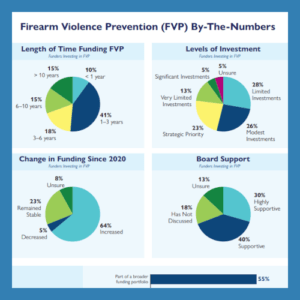
New Grantmakers In Health Survey Finds a Significant Growth in Firearm Violence Prevention Investments Among Health Funders
Washington, DC, March 14, 2025—At a time when firearm violence is a leading cause of death for children and teens, a new Grantmakers In Health survey of health funding organizations found that philanthropic investments in firearm violence prevention are growing in terms of both the number of funders supporting this work and the dollar amounts…
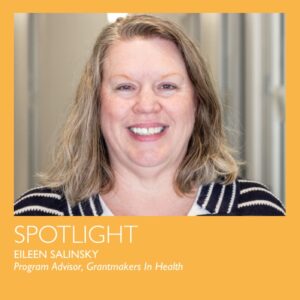
Celebrating Our Colleague Eileen Salinsky, a Grantmakers In Health Mainstay Since 2007
After 18 years at Grantmakers In Health, Eileen Salinsky, longtime Program Advisor and former Vice President for Program and Strategy, has announced her retirement. Her last day at GIH will be Friday, March 21, 2025. Eileen was recruited as GIH’s Vice President for Program and Strategy by former President and CEO Lauren LeRoy in 2007. Family obligations required Eileen to step back from her management position, but she stayed on part-time as a Program Adviser for almost two decades.

Maternal Health in American Indian/Alaska Native Communities: Challenges, Opportunities, and Pathways Forward
Maternal health is a cornerstone of any community’s well-being, yet American Indian and Alaska Native (AI/AN) women face disproportionate challenges in achieving safe and healthy pregnancies. Historical inequities, systemic barriers, and the enduring effects of colonization have resulted in significant maternal health disparities within Native communities. However, these same communities are also sources of resilience, creativity, and innovation. Maternal health programs aimed at centering community in tradition, culture, and resiliency can offer unique, cross-sectoral solutions to complex systemic health barriers for AI/AN families.

Investing in Civic Infrastructure: The Rise of a New Foundation in a Rural, Disinvested Community
When people hear about our work in Imperial Valley, they often exclaim, “How exciting to build a new foundation!” But I gently redirect them: We’re not building another institution— the last thing our communities need is another organization competing for resources. Instead, we’re building civic infrastructure to create the framework for lasting, community-led change.


Pottstown Area Health and Wellness Foundation: March 2025
The Pottstown Area Health and Wellness Foundation’s Spring 2025 grantmaking cycle opened March 1, 2025. All grant applications are submitted through AkoyaGo, the foundation’s grants portal. The foundation no longer requires a letter of intent for grant applications.