
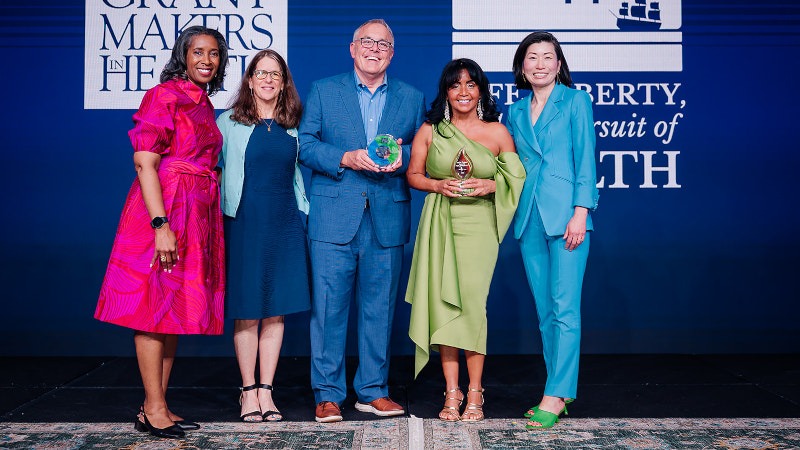
Getting in Formation: Working Together to Build Healthy Communities
From breakout sessions to quick takes and wellness activities to two inspiring plenary sessions, every corner during day two of the Grantmakers In Health (GIH) Annual Conference on Health Philanthropy, Life, Liberty, and the Pursuit of Health was filled with conversation and connection. The day’s agenda focused on how funders can find and use their voices to stand up in this moment of change, including doubling down on their values; taking bigger, bolder risks alongside grantees; and seeking partnerships spanning the private and public sectors.
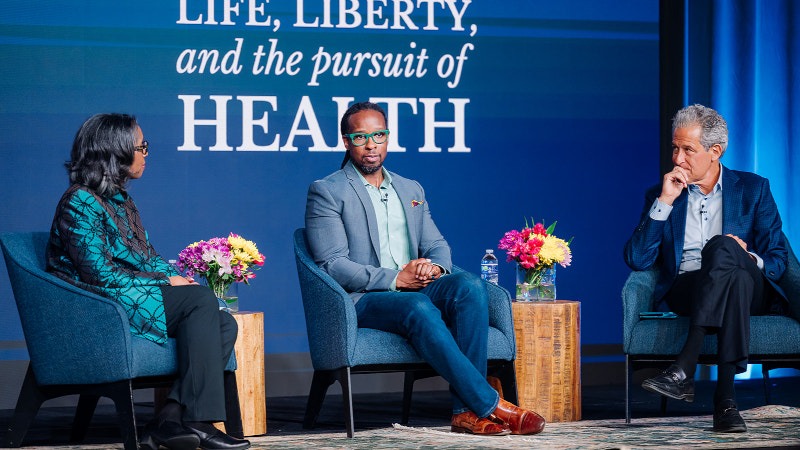
Life, Liberty, and the Pursuit of Health in Action
Life, Liberty, and the Pursuit of Health is more than this year’s Annual Conference on Health Philanthropy theme; it is the foundation for every planned session, unexpected learning moment, and conversation in Baltimore from June 8-11. The pre-conference kicked off with a range of discussions centered on the theme, including the state of Medicaid after H.R. 1, the connection between democracy and better health outcomes, and collaborations in public health funding.
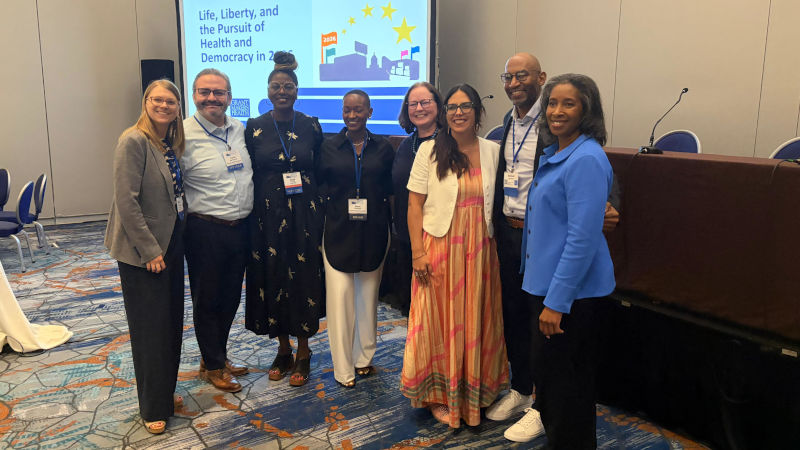
Health Philanthropy Working at the Intersections Between Critical Issues
Life, Liberty, and the Pursuit of Health is more than this year’s Annual Conference on Health Philanthropy theme; it is the foundation for every planned session, unexpected learning moment, and conversation in Baltimore from June 8-11. The pre-conference kicked off with a range of discussions centered on the theme, including the state of Medicaid after H.R. 1, the connection between democracy and better health outcomes, and collaborations in public health funding.
GIH Health Policy Update Newsletter
The Latest
An Exclusive Resource for Funding Partners
The Health Policy Update is a newsletter produced in collaboration with Leavitt Partners and Trust for America’s Health. Drawing on GIH’s policy priorities outlined in our policy agenda and our strategic objective of increasing our policy and advocacy presence, the Health Policy Update provides GIH Funding Partners with a range of federal health policy news.

CareQuest Institute for Oral Health: April 2024
CareQuest Institute for Oral Health released a report on oral health care among veterans, Oral Health Is Essential to Veteran Productivity and Well-Being, highlighting barriers veterans face when accessing dental care and the impact of dental disparities on their well-being.

Philanthropy @ Work – Grants and Programs – April 2024
The latest on grants and programs from the field.
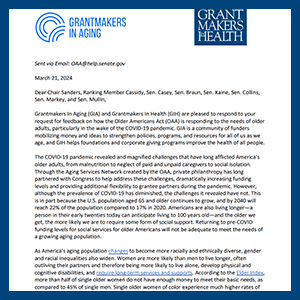
Grantmakers In Health and Grantmakers In Aging Release Policy Recommendations for Older Americans Act Renewal
On March 21, 2024, Grantmakers In Health (GIH) and Grantmakers In Aging (GIA) responded to a request for feedback about the reauthorization of the Older Americans Act (OAA) from the Senate Committee on Health, Education, Labor and Pensions (HELP).

Grantmakers In Health Announces 2024 Award Winners
Grantmakers In Health (GIH) is pleased to announce Billie Hall of the Sunflower Foundation in Kansas, as the 2024 recipient of the Terrance Keenan Leadership Award in Health, and Joan Alker of the Georgetown University Center for Children and Families in Washington, DC, as the 2024 recipient of the Andy Hyman Award for Advocacy.

Grantmakers In Health President and CEO Cara V. James Appointed to District of Columbia Commission on Health Equity
Cara V. James, President and CEO of Grantmakers In Health (GIH), has been appointed as a voting member of the District of Columbia Commission on Health Equity by Washington, DC, Mayor Muriel Bowser.