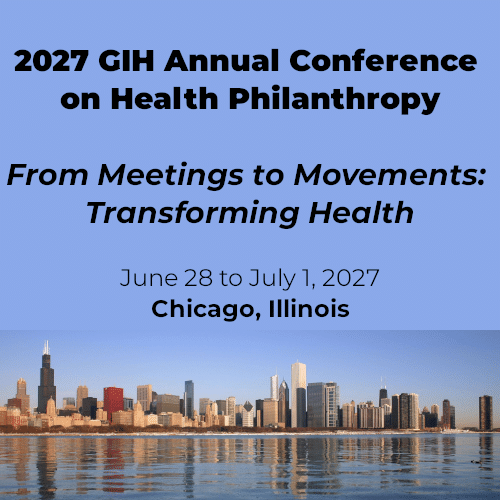
Submit a Session Proposal for the 2027 GIH Annual Conference on Health Philanthropy
We invite you to submit a session proposal for the 2027 Grantmakers In Health (GIH) Annual Conference on Health Philanthropy, From Meetings to Movements: Transforming Health, which will be held in person in Chicago, Illinois, from June 28 to July 1, 2027. From Meetings to Movements: Transforming Health Forty-five years ago, a small group of…
Make Connections to Create a Movement for Rural Health
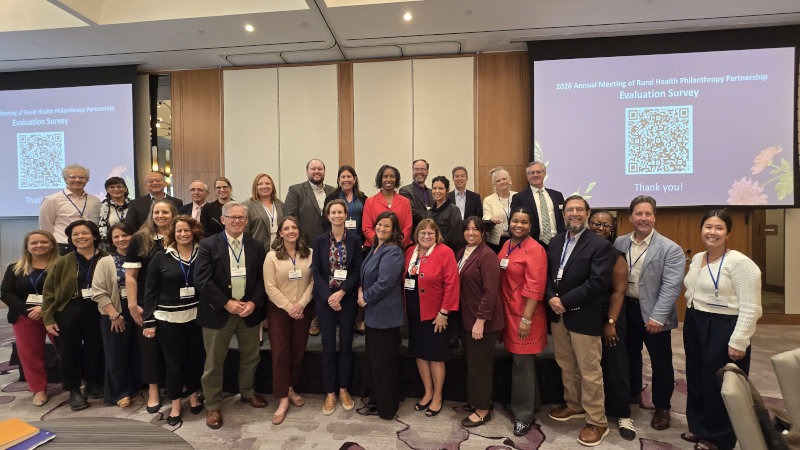
On Thursday, September 24, the Annual Meeting of the Rural Health Philanthropy Partnership kicked off in downtown Bethesda, MD. Selected highlights from the convening’s first day setting the stage for a full day of sessions and networking opportunities centered on how collaboration can build on progress already underway in rural and tribal communities, including rural health transformation efforts.

NJ SNIP: Supporting Behavioral Health Access Through Trust-based Grantmaking
Amid shifting federal health care funding, grants that enable health care safety net entities to respond to the changing landscape can unlock immense value. This form of grantmaking puts daily program-related decisions in the hands of people doing the work, allowing organizations to develop and sustain staff positions, workflows, and programs that reflect their priorities.

Leaning Into Radical Collaboration Will Advance Your Focused Mission
At this year’s GIH annual conference, I found myself surrounded by hundreds of philanthropic leaders deeply committed to improving the health and well-being of their communities. Again and again, I met funders whose work was grounded in a particular place, population, or issue. These funders know their communities intimately. They understand local history, relationships, and the needs of their communities. Their focus is one of their greatest strengths.
GIH Health Policy Update Newsletter
An Exclusive Resource for Funding Partners
The Health Policy Update is a newsletter produced in collaboration with Leavitt Partners and Trust for America’s Health. Drawing on GIH’s policy priorities outlined in our policy agenda and our strategic objective of increasing our policy and advocacy presence, the Health Policy Update provides GIH Funding Partners with a range of federal health policy news.
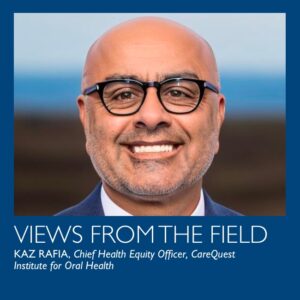
Thirty-Three Years Later: Oral Health Care Still Not Accessible for Individuals with Disabilities
The Americans with Disabilities Act (ADA), enacted on July 26, 1990, stands as one of the most significant civil rights laws in U.S. history. Designed to eliminate discrimination and ensure equal opportunities for Americans with disabilities, the ADA has had a profound impact on advancing health equity in various domains, including oral health. The ADA has been a transformative force in advancing health equity for Americans with disabilities by championing their rights to accessible health care services. Under Title II of the ADA, state and local governments, including public healthcare institutions, are mandated to offer equal access and reasonable accommodations to individuals with disabilities. This ensures that medical facilities, including dental offices, are equipped to cater to diverse patient needs, fostering an environment where disabled individuals can receive oral health services with dignity and equality

Episcopal Health Foundation’s Journey in Advancing Medicaid Non-Medical Drivers of Health in Texas
Access to affordable medical care is vitally important, but it is only 20 percent of what contributes to a person’s overall health. The remaining 80 percent is determined by social and economic status, health behaviors, community safety, physical environment, and much more. From grantmaking to working with community partners and congregations to providing research, EHF supports solutions that address underlying factors impacting health.


CareQuest Institute: August 2023
CareQuest Institute is offering 10 grants of up to $125,000 to fund projects that are working to address systemic barriers to oral health, including access to oral health, for people with disabilities.
Bristol Myers Squibb Foundation: August 2023
The Bristol Myers Squibb Foundation is issuing a special request for concepts focused on addressing lung cancer care disparities for Indigenous communities. They are currently seeking concepts for ideas for multiyear grants that pilot/test innovative models of community-based care to increase access to services and improve lung cancer outcomes across the lung cancer care continuum.

New York State Health Foundation: August 2023
A new data analysis from the Urban Institute finds nearly half of New Yorkers with medical debt owed $500 or more and may still have medical debt appear on their credit reports under current credit reporting practices. Last month, the New York State Legislature passed a bill, still under the Governor’s consideration, that would prevent all medical debt from being included in credit reports.