
Make Connections to Create a Movement for Rural Health
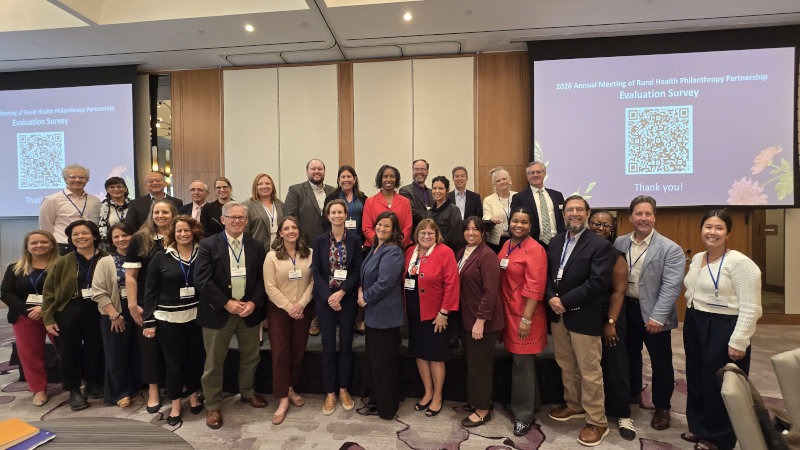
On Thursday, September 24, the Annual Meeting of the Rural Health Philanthropy Partnership kicked off in downtown Bethesda, MD. Selected highlights from the convening’s first day setting the stage for a full day of sessions and networking opportunities centered on how collaboration can build on progress already underway in rural and tribal communities, including rural health transformation efforts.

NJ SNIP: Supporting Behavioral Health Access Through Trust-based Grantmaking
Amid shifting federal health care funding, grants that enable health care safety net entities to respond to the changing landscape can unlock immense value. This form of grantmaking puts daily program-related decisions in the hands of people doing the work, allowing organizations to develop and sustain staff positions, workflows, and programs that reflect their priorities.

Leaning Into Radical Collaboration Will Advance Your Focused Mission
At this year’s GIH annual conference, I found myself surrounded by hundreds of philanthropic leaders deeply committed to improving the health and well-being of their communities. Again and again, I met funders whose work was grounded in a particular place, population, or issue. These funders know their communities intimately. They understand local history, relationships, and the needs of their communities. Their focus is one of their greatest strengths.

Changing the Vaccine Conversation Before It’s Too Late—What Can Philanthropy Do?
In July 2026, the United States reached a grim milestone when the number of confirmed cases of measles exceeded the total for all of 2025. On August 10, 2026, the White House issued an executive order directing changes to the federal childhood vaccine schedule and categories, and calls for availability of separate measles, mumps, and rubella vaccines. The science has not changed, but the new framework could significantly slow down the delivery of protective immunizations from these serious diseases.
GIH Health Policy Update Newsletter
An Exclusive Resource for Funding Partners
The Health Policy Update is a newsletter produced in collaboration with Leavitt Partners and Trust for America’s Health. Drawing on GIH’s policy priorities outlined in our policy agenda and our strategic objective of increasing our policy and advocacy presence, the Health Policy Update provides GIH Funding Partners with a range of federal health policy news.
Reforming ERISA to Help States Control Health Care Costs
The federal Employee Retirement Income Security Act (ERISA) preempts many state laws relating to employer-sponsored health insurance and thereby dilutes states’ ability to enact cost-control reforms. This Issue Brief from The Commonwealth Fund assesses past efforts and current opportunities for federal legislation on ERISA preemption to enable state cost-control reforms.

Announcing GIH’s 2023 Policy Priorities: Using Our Voice to Make Systemic Changes
When we launched our strategic plan, we noted that to achieve our vision of better health for all through better philanthropy we would need to use our voice to take a more active role to influence advocacy, policy, and funding in targeted areas that will advance health and make a lasting, measurable impact. Our current health “system” is not designed to promote health and wellness, but to provide care once a person is sick, and it is built on a foundation of inequity based on health coverage, or a lack thereof.

Let’s Close the Gap on Mental Health for Good in 2023
Before the COVID-19 pandemic, a mental health crisis was growing in America, with 1 in 10 adults reporting symptoms of anxiety or depression. Today, that number is 3 in 10. The recently launched 988 hotline—the mental health equivalent and alternative to 911—is a monumental step forward in changing how we acknowledge and respond to mental health needs nationally. It finally puts mental health on equal ground with physical health—a recognition long overdue—but it is only a first step in addressing the multitude of behavioral health needs.

SASH: Health Equity Begins at Home
A decade ago, primary care practices and housing non-profits in Vermont partnered to reduce chronic conditions among older adults and younger adults with a disability in collaboration with the state’s Blueprint for Health. Today, as an extender of the Blueprint, Support and Services at Home (SASH), which supports healthy aging in place, is helping to advance health equity in the state.

The Gun Violence Epidemic: Lessons From Newark, New Jersey
The Newark, New Jersey community has made remarkable progress improving community safety and reducing gun violence. This past June, a seminal report, The Future of Public Safety: Exploring the Power and Possibility of Newark’s Reimagined Public Safety Ecosystem, was released by Equal Justice USA, the City of Newark, and the Newark Community Street Team. Researchers utilized community participatory research to assess Newark’s impactful approaches to improving public safety.

What Can Be Done About Disparities in Birth Outcomes? Follow The BIPOC Leaders
There has long been a movement of Black, Indigenous, and People of Color (BIPOC) birth and reproductive justice leaders addressing the impact of racism and oppression on pregnant and birthing people and their families. Their work has galvanized funders and policymakers to focus their efforts on ending the inequities in birth outcomes, opening up a national conversation about advancing community driven solutions to our country’s perinatal health crisis as well as creating opportunity for change within philanthropy.