
Events
-
-
SNAP Funder Working Group: Strategy Check In
VirtualOne year after the passage of H.R. 1, analysis from the Center on Budget and Policy Priorities finds that at least 1.5 million fewer children — and more than 4.5 million fewer people overall — are receiving SNAP food assistance. SNAP participation has dropped in every state except Alaska, and by as much as 10 percent in some states. The harms to communities will continue to grow as states fully implement eligibility restrictions. This Working Group Call will provide a space for funders to share where they are focusing efforts, where they see the biggest funding gaps, and where there are opportunities to align with other funders. We will also use this time to gather input on future discussion topics and determine the Working Group meeting cadence going forward.
-
Roundtable Discussion for Health Funders’ Policy Staff
VirtualA growing number of health funders employ staff whose responsibilities focus exclusively or predominantly on public policy engagement. Do you lead your organization’s policy or government affairs work? During our roundtable discussion we connected with peers, explored pressing issues, and shared experiences to engage communities in setting funders’ policy priorities. Between calls, members interact with one another in GIH’s online learning community for policy staff.
-
-
From Intractable to Solvable: Narrative Change as a Strategy for Firearm Violence Prevention
VirtualFirearm violence is a public health crisis, but the story we hear often is of intractability, “too entrenched”, “politically frozen”, “too big to move”. That framing suppresses both public will and philanthropic investment because a problem believed to be unsolvable rarely attracts the resources to solve it. This two-part series makes a distinction that matters for how funders act. A story is a single account, but a narrative is the deeper frame that tells audiences what every story means. Changing that frame is slow, cumulative work, and it is a long-term strategy. Part I examines why narrative change is hard and long, and how solutions-focused journalism shifts public understanding of firearm violence and reframes the crisis as solvable. Part II shares examples of funder support around journalism, data infrastructure, and grantee stories as ways health funders can invest in the frame shift alongside their direct FVP grantmaking efforts.
-
From Intractable to Solvable: Narrative Change as a Strategy for Firearm Violence Prevention
VirtualFirearm violence is a public health crisis, but the story we hear often is of intractability, “too entrenched”, “politically frozen”, “too big to move”. That framing suppresses both public will and philanthropic investment because a problem believed to be unsolvable rarely attracts the resources to solve it. This two-part series makes a distinction that matters for how funders act. A story is a single account, but a narrative is the deeper frame that tells audiences what every story means. Changing that frame is slow, cumulative work, and it is a long-term strategy. Part I examines why narrative change is hard and long, and how solutions-focused journalism shifts public understanding of firearm violence and reframes the crisis as solvable. Part II shares examples of funder support around journalism, data infrastructure, and grantee stories as ways health funders can invest in the frame shift alongside their direct FVP grantmaking efforts.
-
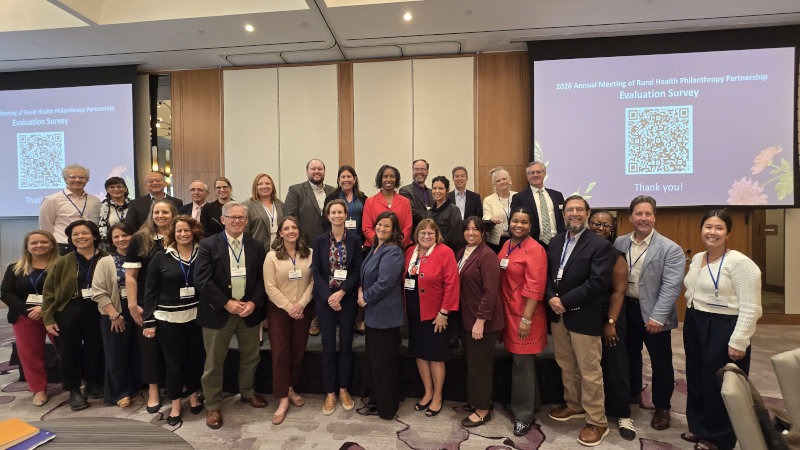
2026 Rural Health Philanthropy Partnership Meeting
Marriott Bethesda Downtown 7707 Woodmont Avenue, Bethesda, MD, United StatesGrantmakers In Health (GIH), the Federal Office of Rural Health Policy, the National Rural Health Association, and the Centers for Disease Control and Prevention’s Office of Rural Health are excited to announce the 2026 Rural Health Philanthropy Partnership Meeting: September 23 – 25, 2026 at the Marriott Bethesda Downtown at Marriot HQ. Registration link, meeting agenda, and information about lodging will be shared at a later date. For general questions about the Rural Health Philanthropy Partnership (RHPP) Meeting, please contact us at ruralhealthphil@hrsa.gov. If you are interested in being on the planning committee for the RHPP meeting, please email Alexa Ofori at aofori@hrsa.gov by Friday, March 20.
GIH Resources for Funding Partners
Interested in accessing hundreds of resources to enhance the impact of your work? Click below to learn more about becoming a GIH Funding Partner and joining the largest national network of health funders.