Events
-
-
From Intractable to Solvable: Narrative Change as a Strategy for Firearm Violence Prevention
VirtualFirearm violence is a public health crisis, but the story we hear often is of intractability, “too entrenched”, “politically frozen”, “too big to move”. That framing suppresses both public will and philanthropic investment because a problem believed to be unsolvable rarely attracts the resources to solve it. This two-part series makes a distinction that matters for how funders act. A story is a single account, but a narrative is the deeper frame that tells audiences what every story means. Changing that frame is slow, cumulative work, and it is a long-term strategy. Part I examines why narrative change is hard and long, and how solutions-focused journalism shifts public understanding of firearm violence and reframes the crisis as solvable. Part II shares examples of funder support around journalism, data infrastructure, and grantee stories as ways health funders can invest in the frame shift alongside their direct FVP grantmaking efforts.
-
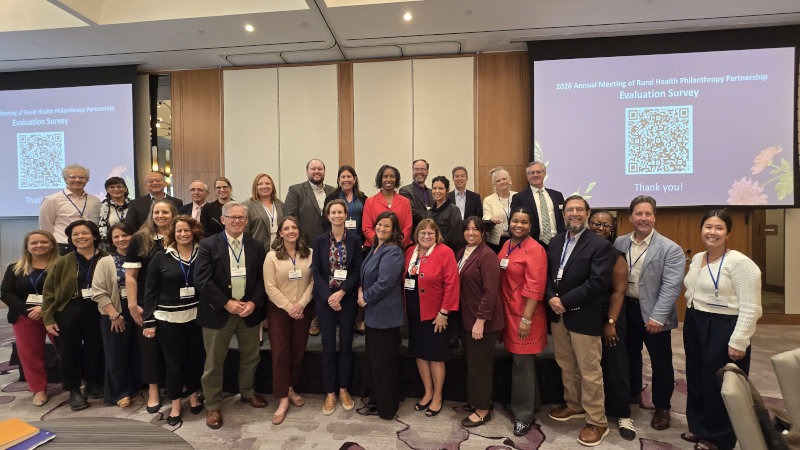
2026 Rural Health Philanthropy Partnership Meeting
Marriott Bethesda Downtown 7707 Woodmont Avenue, Bethesda, MD, United StatesGrantmakers In Health (GIH), the Federal Office of Rural Health Policy, the National Rural Health Association, and the Centers for Disease Control and Prevention’s Office of Rural Health are excited to announce the 2026 Rural Health Philanthropy Partnership Meeting: September 23 – 25, 2026 at the Marriott Bethesda Downtown at Marriot HQ. Registration link, meeting agenda, and information about lodging will be shared at a later date. For general questions about the Rural Health Philanthropy Partnership (RHPP) Meeting, please contact us at ruralhealthphil@hrsa.gov. If you are interested in being on the planning committee for the RHPP meeting, please email Alexa Ofori at aofori@hrsa.gov by Friday, March 20.
-
Environmental Health, Data Centers, and the Case for Equity in the Southeast
VirtualThis webinar opens with a grounding in the region's environmental health landscape and what the data center build-out means for community health. The conversation then turns to a community leader, whose work has reshaped national policy, followed by a funder with investment in environmental health, who will share what meaningful partnership and effective philanthropy look like on the ground.
-
-
Health Equity Roundtable: October Convening on Immigration and Philanthropy
VirtualGrantmakers In Health (GIH) is pleased to invite you to join us for a continued conversation on advancing health equity. This is a dedicated time for collaboration, learning, and action for program staff leading health equity efforts at their foundations and is only open to GIH Funding Partners.
-
When “Exempt” Isn’t Enough: Medicaid Work Requirements and Maternal Mental Health
VirtualInvitation: When "Exempt" Isn't Enough: Medicaid Work Requirements and Maternal Mental Health
Medicaid work requirements are set to take effect soon, creating a burdensome administrative process that most enrollees will need to navigate to keep their coverage. Certain populations are exempt from these requirements—including people who are pregnant or postpartum, and those parenting a child age 13 or under. But exemption doesn't mean automatic protection: in most cases, individuals must actively prove or attest to their exempt status, often through paperwork and verification processes that are easy to miss or misunderstand.
On paper, this should mean pregnant, postpartum, and parenting individuals face no risk to their health insurance. In practice, the complexity of federal rules—combined with the burden of proving an exemption rather than simply receiving one—will inevitably create confusion, fear, and unnecessary coverage loss for people who qualify.
For people who are pregnant, postpartum, or parenting, this could mean slipping through the cracks of a system that assumes they're protected but doesn't make that protection easy to keep—worsening maternal mental health in the process. For people of childbearing age more broadly, it could mean losing access to pregnancy and pre-pregnancy counseling that helps them achieve and maintain healthy pregnancies. Join Funders for Maternal Mental Health and Grantmakers In Health on October 14th from 2 pm - 3:15 pm ET / 11 am - 12:15 pm PT for a webinar on this timely topic.
GIH Resources for Funding Partners
Interested in accessing hundreds of resources to enhance the impact of your work? Click below to learn more about becoming a GIH Funding Partner and joining the largest national network of health funders.