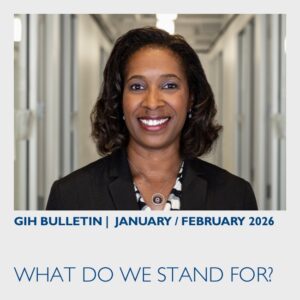

Cara V. James, PhD, President and CEO, Grantmakers In Health
One year ago, as we were just one month into the new administration, I wrote that “At a moment when so much has been described as ‘unprecedented,’ and so much of what we value is being attacked, we need to ask ourselves as individuals, organizations, and a field, what do we stand for? What values do we hold, and what will we do and say to defend them?” Today, the answers to these questions are needed more urgently than ever.
At the time, we were in the midst of administration attacks on federal programs and staff, and we were discussing the possibility of significant cuts to Medicaid and the Supplemental Nutritional Assistance Program (SNAP). Today, we are witnessing escalating attacks on federal programs and an abuse of power unlike any our country has experienced before.
Last weekend in Minneapolis, a Customs and Border Protection officer killed Alex Pretti, a nurse, while he was exercising his First Amendment right to peaceably assemble. His death came barely three weeks after an Immigration and Customs Enforcement agent killed Renee Good, a writer and poet, also in Minneapolis. In both cases, the federal government moved quickly to shut down investigations and provided misinformation about the victims and the circumstances of their deaths. It is clear the current administration believes it can say and do whatever it wants without accountability. The lack of due process for Pretti and Good, as well as the blatant lies and distortions of the facts surrounding both incidents from the highest levels of the administration, are further eroding public trust in government.
We must be clear-eyed about the moment we are in. What is happening in Minnesota could happen anywhere in the country, including in rural communities—if you don’t think so, think again. Our democracy is being threatened, our health is being threatened, and our freedom to act and to give in ways that align with our missions and visions are being threatened.
The federal government is not only attacking the citizens it was elected to represent, it is also walking away from its responsibility to provide essential services by dismantling programs that provide health coverage, promote educational opportunities, and support food and economic security for our most vulnerable populations. And we know there is much more to come.
We cannot stand by. We cannot be silent. And we cannot hope this will blow over. As Laleh Ispahani of Open Society Foundations said at our Health Policy Exchange in November, we need to get in formation. We cannot have healthy communities without a healthy democracy.
Philanthropy has not stood by nor been silent. During the past year, funders have stepped up to support communities across the country and developed a robust network to quickly move money where it was needed to fill funding gaps, to support organizations being threatened, and to organize around important issues. You can see these efforts on display in Minneapolis, Los Angeles, Chicago, Portland, Washington, DC, and beyond where communities have been endangered. While these efforts have been effective, they are not enough, and they raise the question of what would happen in communities with a smaller philanthropic footprint.
We must continue building our philanthropic network to ensure support is available to all communities across the country, which requires us to strengthen collaboration between national and place-based funders and to continue building trust and capacity in our communities.
Philanthropy must continue to speak up for our values, including talking to lawmakers about how policies are impacting their constituents. We should not normalize unlawful and immoral behavior through silence. There is strength in numbers. We’ve seen that when we stand together and push back, we can change policy and practice.
Our current situation is the culmination of decades of planning toward a shared vision to undo the gains made through the Civil Rights Movement and the Great Society programs. As daunting as it may seem in the midst of responding to daily threats, we must create our own shared vision for the future—one of better health for all—and we must develop a plan for its implementation. Having such a plan will provide hope for the future, allow us to be more strategic in our defense against attacks, and help organize our efforts going forward. Successful implementation of the plan will require us to find new ways to collaborate as a field and with other sectors.
One year later, we cannot deny what is happening, and we cannot stand idly by. We must find the courage to push ourselves to do things we have never done before and challenge ourselves to work differently because our health and our democracy depend on it. Together, we can turn the tide and build a future in which everyone thrives.