

Beyond the Rankings: What Four Decades of KIDS COUNT Have Taught Me About Why Data Matter
For more than three decades, through the Annie E. Casey Foundation’s KIDS COUNT® project, decisionmakers and communities have had access to reliable national, state, and local data to improve outcomes for all children, young people, and families in this country. KIDS COUNT comprises the foundation’s national KIDS COUNT publications—the annual KIDS COUNT Data Book and periodic reports such as Race for Results; the KIDS COUNT Data Center, a resource for year-round national, state, and local data; and the KIDS COUNT Network of state-based partner organizations that help policymakers, advocates, journalists, and community leaders understand and use data to make informed decisions.

Opioid Use Disorder in Pregnancy: Countering Bias and Promoting Care
Most pregnancy-related deaths in North Carolina are preventable. Yet mental health conditions, including overdose and suicide, remain the leading cause of pregnancy-related death. For health care leaders, that reality demands a closer look at how we identify, treat, and support pregnant and postpartum patients with opioid use disorder.

Preventing Domestic Violence by Reaching People Who Cause Harm
The research involved a landscape scan of Cook County, Illinois’ policies, funding, and services for people who cause harm with a goal of engaging the stakeholders and providers doing this work as well as survivors and those who receive services to identify barriers, challenges, and strengths of domestic violence prevention programs. The research examined Partner Abuse Intervention Programs (PAIP) in particular, a standard intervention for people who cause harm that is overseen by the Illinois Department of Human Services.
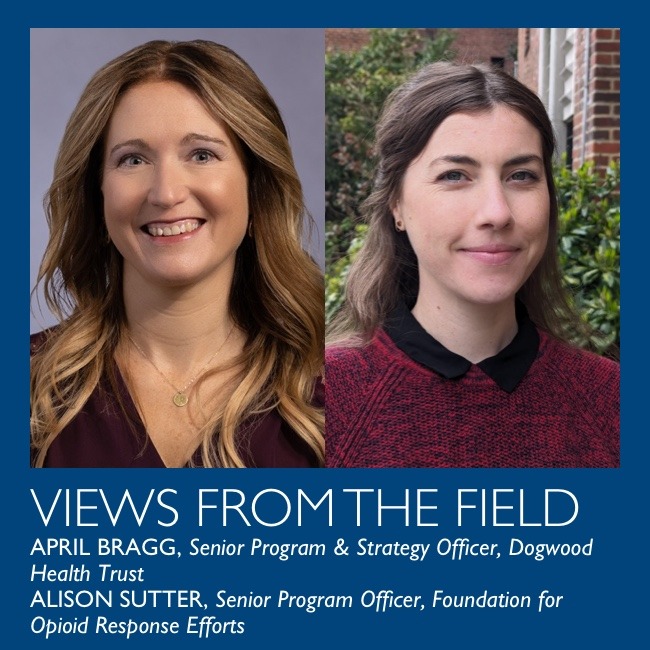
Post-Overdose Response Teams: A Community-Based Approach to Public Safety
Recent changes in the federal policy landscape have created new questions for communities working to address substance use disorder (SUD), mental health needs, and housing instability. In this evolving environment, philanthropy, in collaboration with community-based organizations and local governments, has an important role to play in supporting evidence-based responses to overdose and mental health emergencies that improve access to care, strengthen community wellbeing, and uplift public health while avoiding unnecessary criminal legal outcomes.
GIH Health Policy Update Newsletter
The Latest
An Exclusive Resource for Funding Partners
The Health Policy Update is a newsletter produced in collaboration with Leavitt Partners and Trust for America’s Health. Drawing on GIH’s policy priorities outlined in our policy agenda and our strategic objective of increasing our policy and advocacy presence, the Health Policy Update provides GIH Funding Partners with a range of federal health policy news.

Building a Collaborative Vision of the Future
Today, over 840 funders and thought leaders, representing 440 organizations, gathered in New Orleans for the largest Annual Conference on Health Philanthropy ever. Conference attendees started the day with site visits around the Crescent City and newcomer and networking lunches, rooting the week ahead in connections with the New Orleans community and each other.

Forging Partnerships for a Better Tomorrow at the Grantmakers In Health Annual Conference
The Grantmakers In Health Annual Conference pre-conference sessions kicked off today in New Orleans, a city rich in resilience and spirit. Nearly 20 years since Hurricane Katrina, we gather to be inspired by the partnerships that supported communities two decades ago, and the ones that we are forging for the road ahead.

Infosheet: Key Provisions in the House-passed Reconciliation Bill—H.R. 1, the ‘One Big Beautiful Bill Act’
An infosheet provides analysis of key health, philanthropy, and nonprofit provisions in H.R. 1, the budget reconciliation bill passed by the U.S. House of Representatives on May 22, 2025. Changes include an estimated $715 billion reduction in federal Medicaid spending including work requirements, new eligibility requirements to the Affordable Care Act that will reduce access to the ACA’s Advanced Premium Tax Credits, $300 billion in reductions to Supplemental Nutrition Assistance Program (SNAP) benefits, an excise tax on foundations, and new authority for the Secretary of the Treasury to remove the tax-exempt status of nonprofits the administration deems as “terrorist support organizations.”
DOJ Announces Guidance on White Collar Enforcement Priorities and Corporate Cooperation
This resource provides an overview of Department of Justice (DOJ) changes to white collar enforcement priorities.
Trump Administration Announces False Claims Act Investigation Into Harvard
This resource provides an overview of the administration’s False Claims Act investigation into Harvard regarding alleged fraud in its admissions process.

From Recovery to Resilience: Investing in Collaborative Infrastructure for Health and Equity
After the 2018 Camp Fire – the most destructive and deadly wildfire in California’s history – the California Accountable Communities for Health Initiative (CACHI) understood that the community needed more than programming to recover. In response, the region’s Accountable Community for Health (ACH) was created – a community-rooted, cross-sector collaborative that invests in local leadership to shift systems, influence policy, and address both long-standing inequities and urgent crises.