

NJ SNIP: Supporting Behavioral Health Access Through Trust-based Grantmaking
Amid shifting federal health care funding, grants that enable health care safety net entities to respond to the changing landscape can unlock immense value. This form of grantmaking puts daily program-related decisions in the hands of people doing the work, allowing organizations to develop and sustain staff positions, workflows, and programs that reflect their priorities.

Leaning Into Radical Collaboration Will Advance Your Focused Mission
At this year’s GIH annual conference, I found myself surrounded by hundreds of philanthropic leaders deeply committed to improving the health and well-being of their communities. Again and again, I met funders whose work was grounded in a particular place, population, or issue. These funders know their communities intimately. They understand local history, relationships, and the needs of their communities. Their focus is one of their greatest strengths.
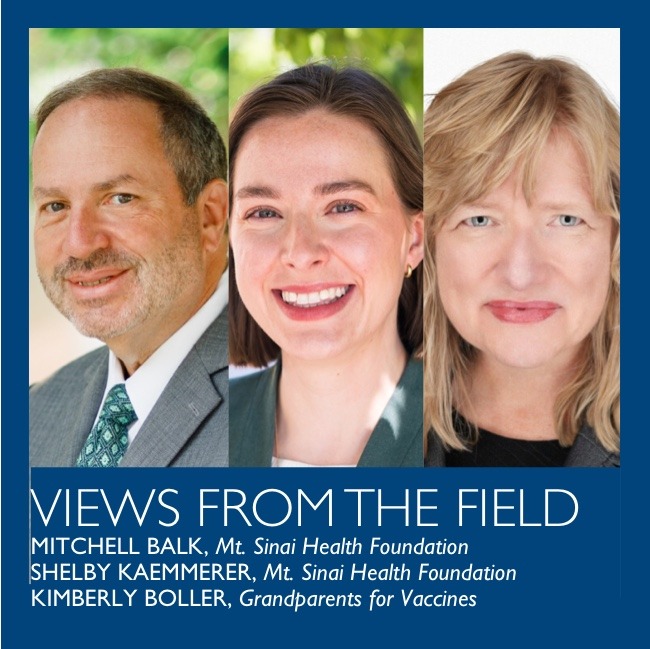
Changing the Vaccine Conversation Before It’s Too Late—What Can Philanthropy Do?
In July 2026, the United States reached a grim milestone when the number of confirmed cases of measles exceeded the total for all of 2025. On August 10, 2026, the White House issued an executive order directing changes to the federal childhood vaccine schedule and categories, and calls for availability of separate measles, mumps, and rubella vaccines. The science has not changed, but the new framework could significantly slow down the delivery of protective immunizations from these serious diseases.

Community Focused Strategies to Improve Health in West Baltimore
For far too long, residents of west Baltimore have faced continuous uphill battles to access basic amenities, services, jobs, and quality of life. Racism, redlining, eminent domain, disinvestment, school closures, poverty, violent crime, chronic health conditions, failed affordable housing, and the outmigration of businesses and residents have left behind vacant housing and dilapidated commercial corridors. These challenges result in a 17-year difference in life expectancy between residents of west Baltimore neighborhoods compared to other parts of the city.
GIH Health Policy Update Newsletter
An Exclusive Resource for Funding Partners
The Health Policy Update is a newsletter produced in collaboration with Leavitt Partners and Trust for America’s Health. Drawing on GIH’s policy priorities outlined in our policy agenda and our strategic objective of increasing our policy and advocacy presence, the Health Policy Update provides GIH Funding Partners with a range of federal health policy news.

Forging Partnerships for a Better Tomorrow at the Grantmakers In Health Annual Conference
The Grantmakers In Health Annual Conference pre-conference sessions kicked off today in New Orleans, a city rich in resilience and spirit. Nearly 20 years since Hurricane Katrina, we gather to be inspired by the partnerships that supported communities two decades ago, and the ones that we are forging for the road ahead.
Infosheet: Key Provisions in the House-passed Reconciliation Bill—H.R. 1, the ‘One Big Beautiful Bill Act’
An infosheet provides analysis of key health, philanthropy, and nonprofit provisions in H.R. 1, the budget reconciliation bill passed by the U.S. House of Representatives on May 22, 2025. Changes include an estimated $715 billion reduction in federal Medicaid spending including work requirements, new eligibility requirements to the Affordable Care Act that will reduce access to the ACA’s Advanced Premium Tax Credits, $300 billion in reductions to Supplemental Nutrition Assistance Program (SNAP) benefits, an excise tax on foundations, and new authority for the Secretary of the Treasury to remove the tax-exempt status of nonprofits the administration deems as “terrorist support organizations.”
DOJ Announces Guidance on White Collar Enforcement Priorities and Corporate Cooperation
This resource provides an overview of Department of Justice (DOJ) changes to white collar enforcement priorities.
Trump Administration Announces False Claims Act Investigation Into Harvard
This resource provides an overview of the administration’s False Claims Act investigation into Harvard regarding alleged fraud in its admissions process.
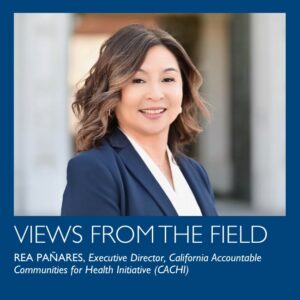
From Recovery to Resilience: Investing in Collaborative Infrastructure for Health and Equity
After the 2018 Camp Fire – the most destructive and deadly wildfire in California’s history – the California Accountable Communities for Health Initiative (CACHI) understood that the community needed more than programming to recover. In response, the region’s Accountable Community for Health (ACH) was created – a community-rooted, cross-sector collaborative that invests in local leadership to shift systems, influence policy, and address both long-standing inequities and urgent crises.
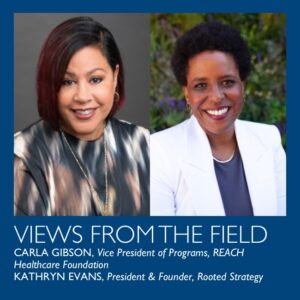
Broken Triangle: A Framework for Reparative Philanthropic Relationships
Traditional philanthropic practices have often created imbalanced power dynamics and barriers for Black-led, Black-serving organizations. When the REACH Healthcare Foundation performed a portfolio review in 2018 that revealed this same exclusion within the foundation’s grantmaking investments, REACH committed to reshaping their funding approach, which aims to repair previously neglected —and in some cases, damaged —relationships.