
Expiring Federal Health Program Authorizations
This resource provides an overview of federal health programs whose authorizations have expired or are set to expire. As Congress considers whether and how to reauthorize these programs, funders have an opportunity to understand what is at stake and help inform policymakers about those affected by potential changes or inaction. It explains how the congressional authorization and appropriations processes shape program funding, and highlights opportunities for funders to inform policymakers about community needs, program impact, and priorities for reauthorization or continued funding.
Select Legal Challenges Relevant to Health Funders in 2026
This resource highlights key court cases that could affect health funders, their communities, and their partners. It focuses on legal challenges to changes in federal programs and policies implemented by the current Administration. The brief also highlights significant cases related to health funders’ priorities. Understanding these cases can help funders anticipate changes in federal policy, assess potential implications, and identify opportunities to support or protect health programs and services.
2026 Terrance Keenan Institute Fellows Named
GIH is delighted to announce the 2026 Terrance Keenan Institute for Emerging Leaders in Health Philanthropy class of fellows.
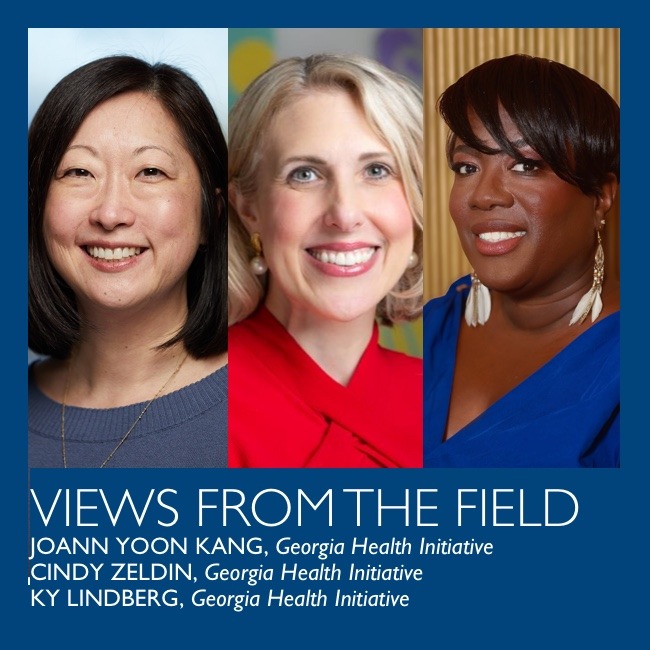
Elevating Community Priorities to Shape Georgia’s Health Policy Agenda
Georgia stands at a pivotal moment that will shape the direction of health policy in our state. With an open governor’s race in 2026, along with other open seats, we’re on the cusp of significant political transition. While new leadership introduces uncertainty, it also creates opportunity. This moment opens the door for nonpartisan, nonprofit, private foundations like our team at Georgia Health Initiative to play a constructive role in elevating community priorities to shape a health policy agenda designed to work for all Georgians.
GIH Health Policy Update Newsletter
The Latest
An Exclusive Resource for Funding Partners
The Health Policy Update is a newsletter produced in collaboration with Leavitt Partners and Trust for America’s Health. Drawing on GIH’s policy priorities outlined in our policy agenda and our strategic objective of increasing our policy and advocacy presence, the Health Policy Update provides GIH Funding Partners with a range of federal health policy news.
Board Service: From in Perpetuity to Term Limits
Twenty-five years ago in 1985, The Health Foundation
of Greater Indianapolis was created with proceeds
from the sale of MetroHealth, one of the first
statewide, staff-model Health Maintenance Organizations
(HMOs). As an independent, not-for-profit grantmaker, the
foundation has been, and is still, dedicated to preserving and
enhancing the physical, mental, and social health of the
Greater Indianapolis community.
Building the Community Health Worker Field through Partnership and Innovation
Minnesota is home to the country’s largest Somali and
second-largest Hmong populations and has significant numbers of immigrants from Central and
South America, Asia, Africa, and Europe. It is also home to the
largest urban population of Native Americans. With many
cultures come many different beliefs on health and illness, and
treatment and prevention options.
Giving Voice to Oral Health in Kansas: Benefits of Long-Term Commitment
Someone recently used the term philanthropy du jour,
and it was not meant as a positive appellation. As a field,
we increasingly see longevity as virtue whether it comes
under the guise of general operating support, capacity building, or place-based or strategic grantmaking. The work of the
United Methodist Health Ministry Fund in a single field –
oral health – began in late 1998. My reflections attempt to
capture the results of this extended $11-million initiative.
Foundation Collaboration: Partnering to Improve Young Children’s Oral Health
Dental disease is the single most common chronic childhood disease and is so widespread and the health effects so significant that the U.S. Surgeon General has classified dental disease as a silent epidemic (HHS 2000).
It Takes Many Villages to Create a Public Health Improvement Plan
Public health has gained attention in Colorado over the last four years as a result of a partnership that includes health foundations, the Colorado School of Public Health, the state legislature, and state and local health agencies.
Paid Sick Days: A Health Policy for Everyone
When the H1N1 pandemic broke out, the Centers for Disease Control and Prevention urged sick people to stay home. Unfortunately, for many Americans, staying home meant losing income, losing a good shift, or worse, losing their job.