
GIH Joins Amicus Brief Opposing New Citizenship Verification Requirements
GIH joined organizations filing an amicus brief for the case brought by NY and other states seeking to stop the administration’s attempt to expand citizenship verification requirements under the Personal Responsibility and Work Opportunity Reconciliation Act of 1996 for programs administered by the Departments of Health and Human Services, Agriculture, Education, Housing and Urban Development, Labor, and Justice.

Remembering Patricia Mathews, Founding President and CEO of Northern Virginia Health Foundation
Grantmakers In Health (GIH) is saddened to learn of the recent passing of Patricia Mathews, a longtime fixture in health philanthropy and a former member of the GIH board of directors. Please join us in celebrating Patricia Mathews’ memory, as well as her many contributions to the field of health philanthropy and GIH.
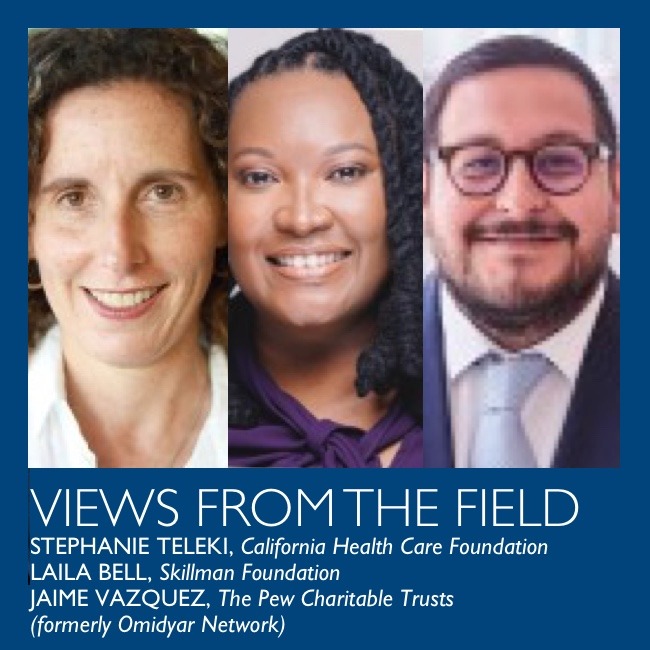
Responsible Exits: Insights from Three Funders
Grantmakers In Health’s Maya Schane spoke with Stephanie Teleki of The California Health Care Foundation, Laila Bell of The Skillman Foundation, and Jaime Vazquez of The Pew Charitable Trusts about their recently published article in The Foundation Review, “When Shift Happens: Navigating Toward a Framework for Responsible Philanthropic Exits.”
GIH Health Policy Update Newsletter
The Latest
An Exclusive Resource for Funding Partners
The Health Policy Update is a newsletter produced in collaboration with Leavitt Partnersi and Trust for America’s Health. Drawing on GIH’s policy priorities outlined in our policy agenda and our strategic objective of increasing our policy and advocacy presence, the Health Policy Update provides GIH Funding Partners with a range of federal health policy news.
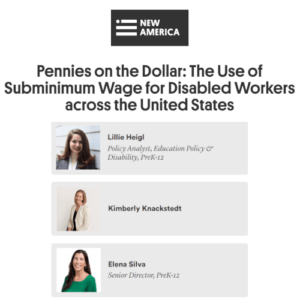
New America Report Examines Subminimum Wage for Disabled Workers
Under the Fair Labor Standards Act, employers are allowed to pay disabled workers less than the federal minimum wage, which has significant impacts on these workers’ health and well-being. A report from New America examines, state by state, the policies that drive the use or elimination of the subminimum wage, as well as the programs each state provides to more comprehensively support individuals with disabilities as they seek meaningful employment and fair wages.

Supporting Communities Recovering from Hurricanes Helene and Milton
Grantmakers In Health (GIH) is saddened by the devastation wrought by Hurricane Helene in communities across the southeastern United States, affecting many of our Funding Partners and the people they serve. However, we are heartened to see the strong show of support from philanthropy, government, businesses, and individuals to help those affected by the storm recover.
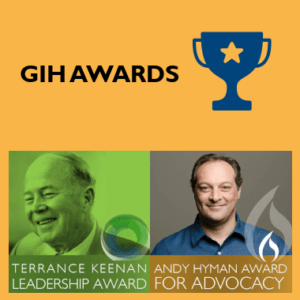
Grantmakers In Health Seeks Nominations for 2025 Leadership and Advocacy Awards
Grantmakers In Health is pleased to announce a call for nominations for both its Andy Hyman Award for Advocacy and Terrance Keenan Leadership Award in Health Philanthropy.
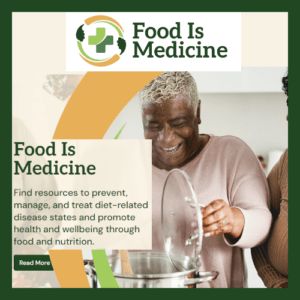
HHS Launches New Food is Medicine Virtual Toolkit
The Toolkit was developed in response to the National Strategy on Hunger, Nutrition, and Health and to support communities design and implement effective Food is Medicine interventions.
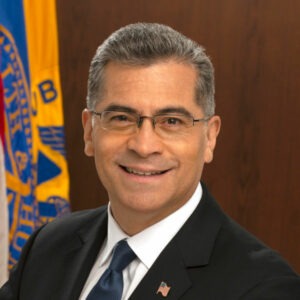
Biden-Harris Administration Announces $75 Million Investment in Rural Health Care
The Health Resources and Services Administration (HRSA), an agency of the U.S. Department of Health and Human Services (HHS), announced nearly $75 million to support health care services in rural America. Funding will launch new opioid treatment and recovery services in rural communities, strengthen maternal health care in the South, and help rural hospitals stay open.

Developing an Equitable Nonprofit Ecosystem: A New Funding Framework for Emerging, BIPOC-Led Grantees
In philanthropy, it is standard due diligence practice to vet potential grantees on their list of current, past, and future funders as a way to mitigate our perceived risk. However, this approach can put many emerging, grassroots, and BIPOC-led organizations out of contention for initial funding. The John Muir Community Health Fund has shifted the way we fundamentally see risk, and instead, have embraced the opportunity to fund emerging organizations that address social determinants of health by providing monetary support, capacity building, and ultimately a proof of concept that propels grantees to long-term sustainability.