
Healing Takes Practice: Reaching People Is Only the Beginning
Violence is increasingly understood as a public health problem. That shift has changed the way communities respond—moving the conversation beyond policing and criminal justice and toward prevention, intervention, and the conditions that put people at risk. But treating violence as a health problem also requires us to reckon with trauma.
We Didn’t Stop: Leading with Purpose When the System Stepped Back
The notice came the way these things now tend to come: abruptly, in writing, and without a transition plan. In April 2025, Public Health AmeriCorps programs were terminated nationally alongside about 900 other AmeriCorps programs. Funding halted. AmeriCorps service members who had built their careers and households around a year of community health service were left waiting for answers no one could give them. Organizations across the country scrambled.
GIH Health Policy Update Newsletter
An Exclusive Resource for Funding Partners
The Health Policy Update is a newsletter produced in collaboration with Leavitt Partners and Trust for America’s Health. Drawing on GIH’s policy priorities outlined in our policy agenda and our strategic objective of increasing our policy and advocacy presence, the Health Policy Update provides GIH Funding Partners with a range of federal health policy news.
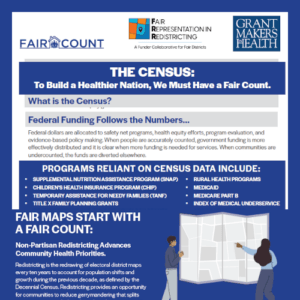
To Build a Healthier Nation, We Must Have a Fair Count
Every decade, the Census Bureau fulfills a constitutionally-mandated count of every person living in the
United States. Data derived from the Decennial Census and the ongoing American Community Survey form the statistical backbone for public health, hospitals, insurance, and dozens of federal and other government programs. This data is also an important tool for funder decision-making. For funders focused on health equity, quality data is needed to provide a better understanding of health disparities and the advancement of health equity goals.
Grantmakers In Health’s Partnership with Grantmakers In Aging Highlighted in Inside Philanthropy Interview
Grantmakers In Health’s ongoing partnership with Grantmaking In Aging (GIA) advocating for the renewal of the Older Americans Act (OAA) was featured in a July 19, 2024 Inside Philanthropy interview with GIA CEO Lindsay A. Goldman. In her comments, Goldman discussed the partnership’s accomplishments and why the OAA is important to funders: “We launched an…
Grantmakers in Health and Grantmakers In Aging Release Feedback on Draft Legislation to Reauthorize the Older Americans Act
On July 18, 2024, Grantmakers In Health (GIH) and Grantmakers In Aging (GIA) responded to a request for feedback from the Senate Committee on Health, Education, Labor and Pensions (HELP) on the discussion draft to reauthorize the Older Americans Act (OAA). In their letter to the committee, GIH and GIA applauded the inclusion of the…
2024 Terrance Keenan Institute Fellows Named
GIH is delighted to announce the 2024 Terrance Keenan Institute for Emerging Leaders in Health Philanthropy class of fellows.
Help Shape Next Year’s Grantmakers In Health Annual Conference
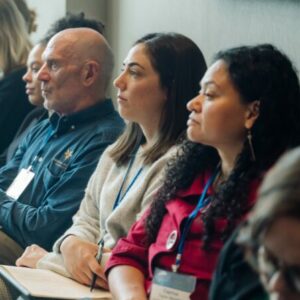
Grantmakers In Health (GIH) is seeking volunteers to serve on our 2025 Annual Conference Proposal Review Committee. Committee member feedback is a critical way for GIH to ensure that the annual conference agenda includes high quality, engaging sessions that reflect the interests of the health philanthropy field.

Building Stronger Early Childhood Systems: Reflections from Western Montana
What happened when a regional health foundation team embarked on a road trip and drank 600 cups of coffee with their neighbors? They discovered that Western Montanans were tired of band-aid solutions and frustrated with interventions that always seemed to arrive too late. People wanted to focus on prevention to address problems at their roots. They hoped to see more collaboration between organizations and across sectors and emphasized that solutions should be locally born and cultivated, focusing especially on kids in their earliest years.