
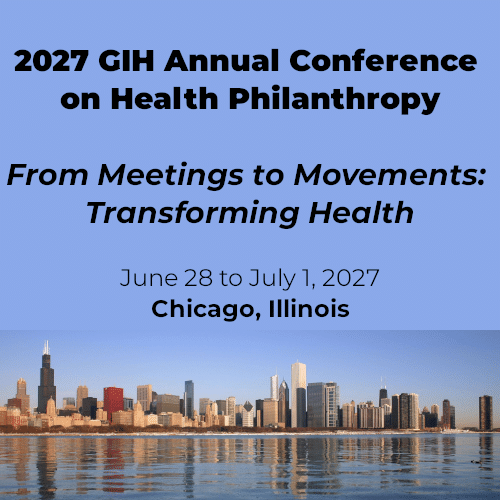
Submit a Session Proposal for the 2027 GIH Annual Conference on Health Philanthropy
We invite you to submit a session proposal for the 2027 Grantmakers In Health (GIH) Annual Conference on Health Philanthropy, From Meetings to Movements: Transforming Health, which will be held in person in Chicago, Illinois, from June 28 to July 1, 2027. From Meetings to Movements: Transforming Health Forty-five years ago, a small group of…
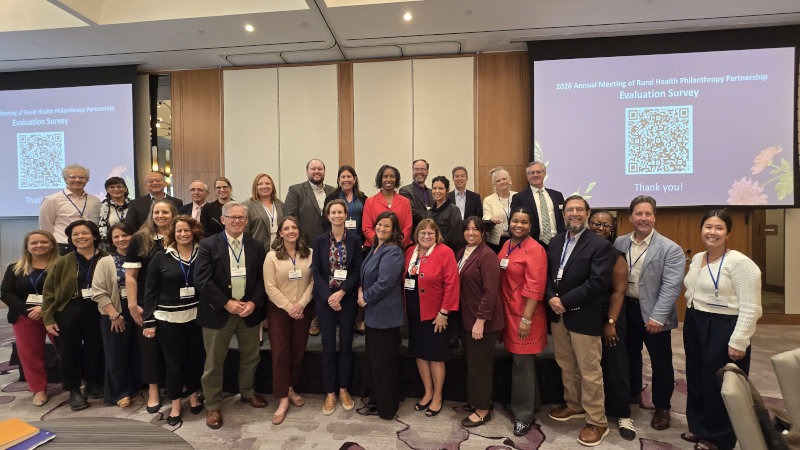
Make Connections to Create a Movement for Rural Health
On Thursday, September 24, the Annual Meeting of the Rural Health Philanthropy Partnership kicked off in downtown Bethesda, MD. Selected highlights from the convening’s first day setting the stage for a full day of sessions and networking opportunities centered on how collaboration can build on progress already underway in rural and tribal communities, including rural health transformation efforts.

NJ SNIP: Supporting Behavioral Health Access Through Trust-based Grantmaking
Amid shifting federal health care funding, grants that enable health care safety net entities to respond to the changing landscape can unlock immense value. This form of grantmaking puts daily program-related decisions in the hands of people doing the work, allowing organizations to develop and sustain staff positions, workflows, and programs that reflect their priorities.

Leaning Into Radical Collaboration Will Advance Your Focused Mission
At this year’s GIH annual conference, I found myself surrounded by hundreds of philanthropic leaders deeply committed to improving the health and well-being of their communities. Again and again, I met funders whose work was grounded in a particular place, population, or issue. These funders know their communities intimately. They understand local history, relationships, and the needs of their communities. Their focus is one of their greatest strengths.
GIH Health Policy Update Newsletter
An Exclusive Resource for Funding Partners
The Health Policy Update is a newsletter produced in collaboration with Leavitt Partners and Trust for America’s Health. Drawing on GIH’s policy priorities outlined in our policy agenda and our strategic objective of increasing our policy and advocacy presence, the Health Policy Update provides GIH Funding Partners with a range of federal health policy news.

Want to See Lasting Systemic Change and Transformation to Build Health Equity? Invest in Power Building
Despite a commitment to transformation, equity, and rebalancing the scales of justice, philanthropy often operates in ways that undermine its very purpose. Historically, the philanthropic field has taken a siloed and narrow approach to change, offering investments in short-term funding cycles and attempting to create change from the top down.

Health Philanthropy Impacting the Health and Well-Being of Family Caregivers
More than 53 million Americans—21 percent of the US population—are caregivers for loved ones who are older adults or adults living with chronic, disabling, or serious health conditions. Increasingly, the US health and long-term care systems rely on family caregivers. In 2017, family caregivers in the US provided a staggering 80 percent of long-term care, valued at $470 billion, and in 2021, 38 million family caregivers spent 36 billion hours caring for older adults, amounting to an estimated $600 billion in unpaid caregiving.
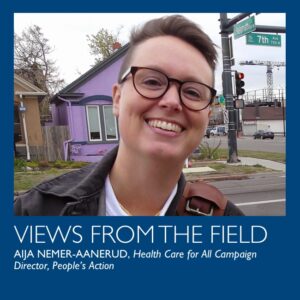
As More Americans Gain Health Care Coverage, Advocates Fight for Higher-Quality Insurance
People’s Action and our allies fought hard to win health care for millions through the Affordable Care Act and Medicaid expansion. 91 percent of Americans now have health insurance, even though there is still work to do to ensure everyone can get coverage, particularly immigrants and those living in holdout non-expansion states.

Philanthropy’s Role in Equitable Medi-Cal Expansion
California has more people enrolled in Medicaid than any other state—almost 15 million of 93 million enrollees nationwide, and the state’s efforts to equitably address the enrollment churn make it worth watching. When the pause on Medicaid redeterminations ended in April, up to 3 million Medi-Cal enrollees, California’s program, were at risk of losing coverage. Most at risk are those often eligible but inconsistently enrolled in Medi-Cal—if at all. Many of these individuals are from poorly served communities who often experience longstanding discrimination in accessing health care. They commonly live in extremely rural areas and lack access to the internet and transportation; have unstable housing; are reluctant to enroll due to their immigration status; and have limited English proficiency, live with a physical disability, or have behavioral health needs. If Medi-Cal is to be a true driver for health equity, we need to close the enrollment gap in these communities.


The Blue Cross Blue Shield of Massachusetts Foundation: July 2023
The Blue Cross Blue Shield of Massachusetts Foundation announced a call for proposals for its Special Initiatives grant program. In addition, the foundation is now recruiting applicants for the 12th cohort of emerging leaders in the health leadership program that begins this fall.