
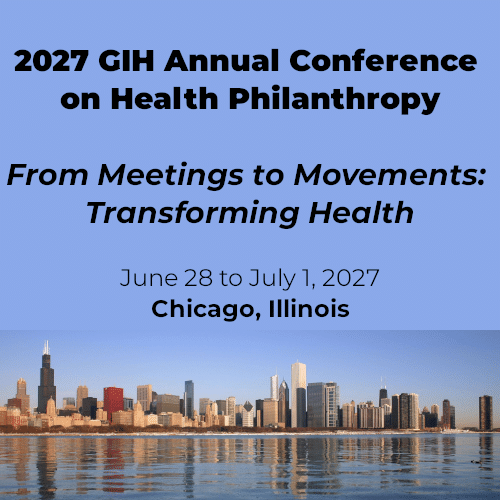
Submit a Session Proposal for the 2027 GIH Annual Conference on Health Philanthropy
We invite you to submit a session proposal for the 2027 Grantmakers In Health (GIH) Annual Conference on Health Philanthropy, From Meetings to Movements: Transforming Health, which will be held in person in Chicago, Illinois, from June 28 to July 1, 2027. From Meetings to Movements: Transforming Health Forty-five years ago, a small group of…
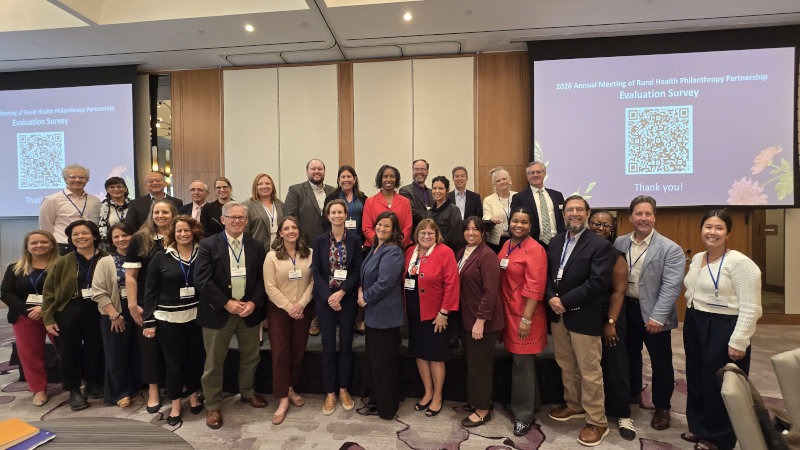
Make Connections to Create a Movement for Rural Health
On Thursday, September 24, the Annual Meeting of the Rural Health Philanthropy Partnership kicked off in downtown Bethesda, MD. Selected highlights from the convening’s first day setting the stage for a full day of sessions and networking opportunities centered on how collaboration can build on progress already underway in rural and tribal communities, including rural health transformation efforts.

NJ SNIP: Supporting Behavioral Health Access Through Trust-based Grantmaking
Amid shifting federal health care funding, grants that enable health care safety net entities to respond to the changing landscape can unlock immense value. This form of grantmaking puts daily program-related decisions in the hands of people doing the work, allowing organizations to develop and sustain staff positions, workflows, and programs that reflect their priorities.

Leaning Into Radical Collaboration Will Advance Your Focused Mission
At this year’s GIH annual conference, I found myself surrounded by hundreds of philanthropic leaders deeply committed to improving the health and well-being of their communities. Again and again, I met funders whose work was grounded in a particular place, population, or issue. These funders know their communities intimately. They understand local history, relationships, and the needs of their communities. Their focus is one of their greatest strengths.
GIH Health Policy Update Newsletter
An Exclusive Resource for Funding Partners
The Health Policy Update is a newsletter produced in collaboration with Leavitt Partners and Trust for America’s Health. Drawing on GIH’s policy priorities outlined in our policy agenda and our strategic objective of increasing our policy and advocacy presence, the Health Policy Update provides GIH Funding Partners with a range of federal health policy news.

Virtual Focus Groups to Inform GIH’s Policy and Advocacy Activities
This resource from BoardSource and the Building Movement Project offers insight and advice to boards about how to avoid pitfalls leading up to a transition and after a new leader is hired.
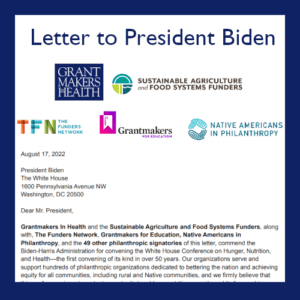
Letter to President Biden Offers Support and Recommendations for the White House Conference on Hunger, Nutrition, and Health
Organizations in philanthropy sent a letter to President Biden in support of the White House Conference on Hunger, Nutrition, and Health. This letter outlines four recommendations for the Administration and federal agencies to adopt leading up to and following the conference.

Wishing GIH’s Vice President a Fond Farewell
It is with a mix of joy and sadness that we announce that after 18 years Osula Evadne Rushing, Vice President for Program and Strategy at Grantmakers In Health, is leaving to rejoin the Kaiser Family Foundation (KFF) as Senior Vice President for Strategic Engagement.

Reflections on the 2022 GIH Annual Conference and the Road Ahead
It was so wonderful to see everyone in Miami at the 2022 Grantmakers In Health Annual Conference, especially those who joined us for the first time, and to learn more about the work you are doing to achieve better health for all through better philanthropy. The conference occurred at an important moment for our country. As Admiral Rachel Levine, U.S. Assistant Secretary for Health, said during our strategy session on advancing LGBTQ health equity “even after decades of social progress, the most vulnerable among us continue to suffer.” The conference provided an opportunity for us to reconnect, to reflect on the considerable health challenges facing the United States, and to learn and grow together as we explore and share solutions.

Lessons from a Long Season of Disaster Response
By the time this article is published, we’ll be marking several anniversaries of devastating natural disasters in Louisiana, all of which arrived late in summer. Hurricanes Katrina and Rita infamously decimated the Southern Louisiana area in 2005. Fifteen years later, in the span of just two consecutive summers, Hurricanes Laura, Delta, Zeta, and Ida battered a weary state still mired in the thick of COVID-19.

Activating the Potential of Residents to Lead Community Transformation, Collaboratively
In 2019, the Virginia-based Danville Regional Foundation (DRF) set a new strategic vision—to help more people believe in the transformation of the region and embrace their role in achieving it. A region formerly dominated by tobacco and textiles, the Dan River Region has made great strides toward reinvention. DRF recognized that increasing collaboration and building the civic capacity of the region would be critical to its economic transformation.