
Thirty-nine Funders Join GIH in Support of Health Professionals
Grantmakers In Health (GIH) is urging funders to sign on to our comment letter on this proposed rule by Friday, February 27. Your voice matters—the Department of Education must consider all comments submitted before finalizing the rule.
Collaborative Comment Letter to the Department of Education in Support of Health Professionals
Grantmakers In Health (GIH) is urging funders to sign on to our comment letter on this proposed rule by Friday, February 27. Your voice matters—the Department of Education must consider all comments submitted before finalizing the rule.
39 Funders Collaborate on Comment Letter in Support of Health Professionals
The U.S. Department of Education recently published a proposed rule that would narrow the definition of which graduate programs qualify as “professional degrees” for federal student loan purposes, affecting how much students in certain health fields may borrow. Finalizing this rule will result in reduced access to care (especially in rural and other underserved communities), by making graduate education less affordable, disrupting health workforce pipelines, and creating obstacles for students to enter essential health and human-services professions.

Blue Cross Blue Shield of Massachusetts: October 2025
This new report “Behavioral Health Professional Licensure in Massachusetts: Existing Barriers and Opportunities to Advance Diversity in the Workforce” documents the licensing requirements for behavioral health providers in Massachusetts, describes the barriers to licensure for clinicians from underrepresented populations, and outlines potential solutions.
CareQuest Institute for Oral Health: July 2025
A new comprehensive white paper and collection of use cases, co-authored by CareQuest Institute for Oral Health and 19 academic institutions, explores interprofessional education (IPE) in health care, with a particular focus on oral health. The authors find that IPE is essential to foster collaborative, patient-centered health care.

Supporting Community Health Workers to Achieve Their Full Potential: What Role Can Philanthropy Play?
Community Health Workers (CHWs)—frontline public health professionals who have a unique and trusted relationship with the communities they serve—have proven their ability to help create just, equitable, and thriving communities. As a CHW for over a decade and a CHW ally for over 35 years, we have never witnessed a time of greater interest and investment in the CHW workforce. Amidst a rapidly changing CHW funding landscape, the philanthropic community has an important role to play in assuring that CHWs are able to make an optimum contribution to communities and to the health system.
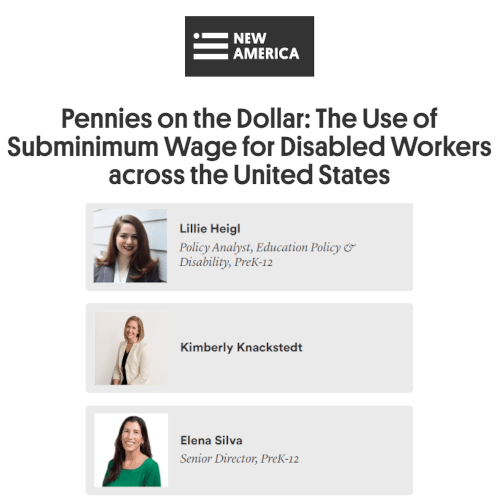
New America Report Examines Subminimum Wage for Disabled Workers
Under the Fair Labor Standards Act, employers are allowed to pay disabled workers less than the federal minimum wage, which has significant impacts on these workers’ health and well-being. A report from New America examines, state by state, the policies that drive the use or elimination of the subminimum wage, as well as the programs each state provides to more comprehensively support individuals with disabilities as they seek meaningful employment and fair wages.
The Commonwealth Fund: September 2024
This brief reports on responses from community health centers leaders who were surveyed about care delivery, technology, workforce, and more. Findings highlight critical staff shortages amid rising demand for care and limited resources.

Foundation for Opioid Response Efforts: July 2024
The Opioid Crisis Innovation Challenge marks an expansion of FORE’s Innovation Program, which was launched in 2022 to support projects that combine strategies from diverse fields and engage multidisciplinary teams in tackling some of the most intractable problems associated with the nation’s opioid-related addiction and poisoning crisis.
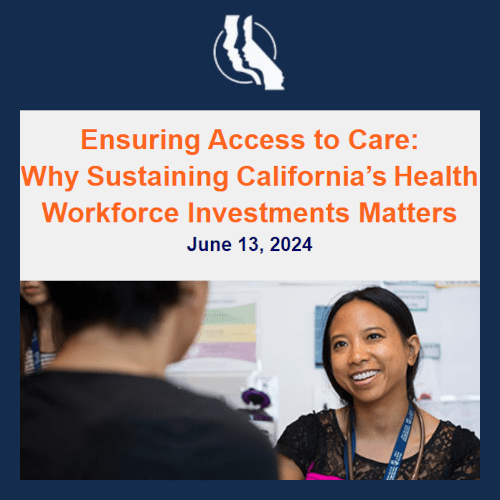
Ensuring Access to Care: Why Sustaining California’s Health Workforce Investments Matters
California’s shortage of health workers threatens people’s ability to access the care they need to live healthy lives. In response, state policymakers have taken significant steps over the past five years to expand and diversify the health workforce by funding various programs to recruit, educate, train, and retain health workers. However, as the state deals with substantial budget challenges, it is critical that these investments be sustained.