
NJ SNIP: Supporting Behavioral Health Access Through Trust-based Grantmaking
Amid shifting federal health care funding, grants that enable health care safety net entities to respond to the changing landscape can unlock immense value. This form of grantmaking puts daily program-related decisions in the hands of people doing the work, allowing organizations to develop and sustain staff positions, workflows, and programs that reflect their priorities.

Leaning Into Radical Collaboration Will Advance Your Focused Mission
At this year’s GIH annual conference, I found myself surrounded by hundreds of philanthropic leaders deeply committed to improving the health and well-being of their communities. Again and again, I met funders whose work was grounded in a particular place, population, or issue. These funders know their communities intimately. They understand local history, relationships, and the needs of their communities. Their focus is one of their greatest strengths.
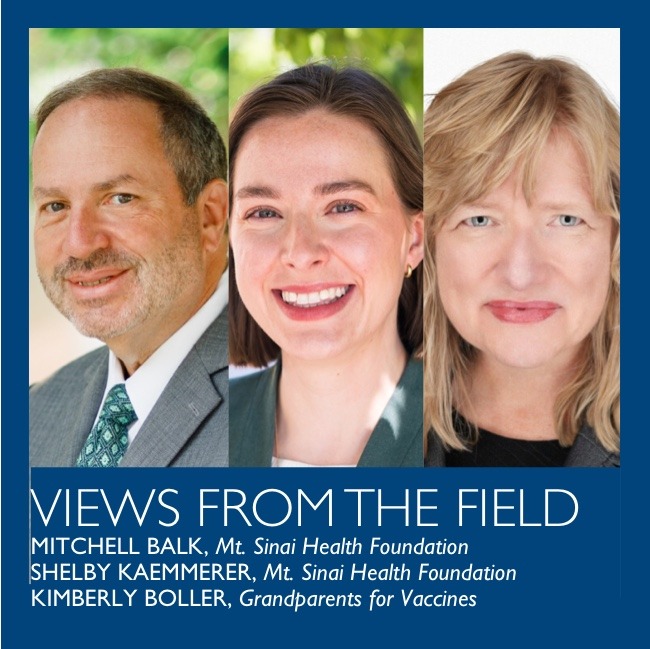
Changing the Vaccine Conversation Before It’s Too Late—What Can Philanthropy Do?
In July 2026, the United States reached a grim milestone when the number of confirmed cases of measles exceeded the total for all of 2025. On August 10, 2026, the White House issued an executive order directing changes to the federal childhood vaccine schedule and categories, and calls for availability of separate measles, mumps, and rubella vaccines. The science has not changed, but the new framework could significantly slow down the delivery of protective immunizations from these serious diseases.

Community Focused Strategies to Improve Health in West Baltimore
For far too long, residents of west Baltimore have faced continuous uphill battles to access basic amenities, services, jobs, and quality of life. Racism, redlining, eminent domain, disinvestment, school closures, poverty, violent crime, chronic health conditions, failed affordable housing, and the outmigration of businesses and residents have left behind vacant housing and dilapidated commercial corridors. These challenges result in a 17-year difference in life expectancy between residents of west Baltimore neighborhoods compared to other parts of the city.
GIH Health Policy Update Newsletter
An Exclusive Resource for Funding Partners
The Health Policy Update is a newsletter produced in collaboration with Leavitt Partners and Trust for America’s Health. Drawing on GIH’s policy priorities outlined in our policy agenda and our strategic objective of increasing our policy and advocacy presence, the Health Policy Update provides GIH Funding Partners with a range of federal health policy news.

Strategies for Building Confidence in the COVID-19 Vaccines
This rapid expert consultation describes a variety of public engagement and communication strategies that can be implemented at the national, state, and local levels to change patterns of interaction with the public, address hesitancy about the vaccines, and build trust.
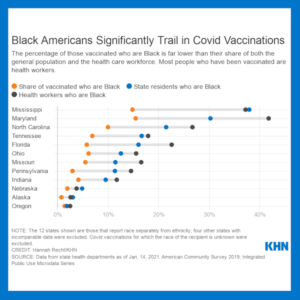
Black Americans Are Getting Vaccinated at Lower Rates Than White Americans
A new KHN analysis finds that in the 16 states that have released data by race, white residents are being vaccinated at significantly higher rates than Black residents.
Health, Equity, and Race during COVID-19
New findings from a national, ongoing poll show that the pandemic has not demonstrably shifted views on the connection between race and health among those most affected by COVID-19, despite communities of color and those with lower incomes being hit the hardest.
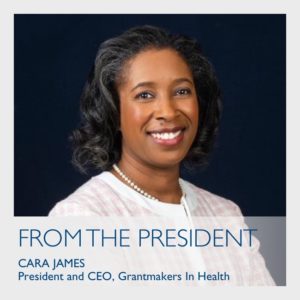
Mistrust Is the Biggest Health Crisis Facing the United States Today
Events over the last year put a spotlight on the significant health, economic, and social disparities in our country. In the few days that have elapsed in 2021, that spotlight has focused in on the division our country faces, fueled by mistrust.
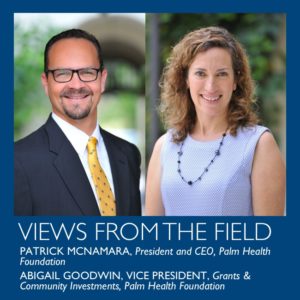
Transforming Communities Through the Social Determinants of Health
Six years ago, Palm Health Foundation made a risky decision. Dissatisfied with the short-term gains of traditional responsive grantmaking, we launched the Healthier Together initiative in an effort to forge a deeper connection to community through the social determinants of health.