
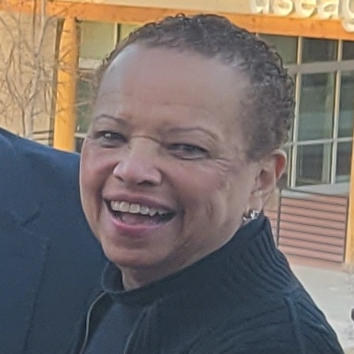
Remembering Patricia Mathews, Founding President and CEO of Northern Virginia Health Foundation
Grantmakers In Health (GIH) is saddened to learn of the recent passing of Patricia Mathews, a longtime fixture in health philanthropy and a former member of the GIH board of directors. Please join us in celebrating Patricia Mathews’ memory, as well as her many contributions to the field of health philanthropy and GIH.
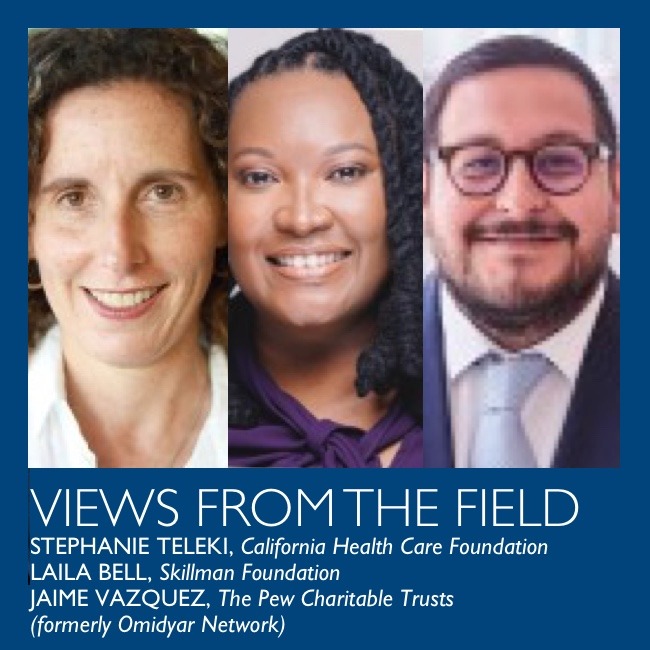
Responsible Exits: Insights from Three Funders
Grantmakers In Health’s Maya Schane spoke with Stephanie Teleki of The California Health Care Foundation, Laila Bell of The Skillman Foundation, and Jaime Vazquez of The Pew Charitable Trusts about their recently published article in The Foundation Review, “When Shift Happens: Navigating Toward a Framework for Responsible Philanthropic Exits.”

The Keys to Successful Collaboration Between a State-based Health Foundation and a National Funder Collaborative
Discussions about firearms in the US are often focused on urban gun violence and mass shootings. But firearm injury and death is a public health crisis that touches every community—urban and rural, red states and blue—and it intersects with issues many health funders care about: mental health, suicide prevention, and health equity.
GIH Health Policy Update Newsletter
The Latest
An Exclusive Resource for Funding Partners
The Health Policy Update is a newsletter produced in collaboration with Leavitt Partnersi and Trust for America’s Health. Drawing on GIH’s policy priorities outlined in our policy agenda and our strategic objective of increasing our policy and advocacy presence, the Health Policy Update provides GIH Funding Partners with a range of federal health policy news.

Strengthening a National Field of Practice for Climate, Health, and Equity: Learning What it Takes
When The Kresge Foundation’s Climate Change, Health and Equity (CCHE) initiative launched in 2018, community power mobilization was integral because too often the people closest to viable climate resilience solutions were excluded from decisionmaking. Since then, the leadership of CCHE’s community-based, health practitioner, and health institution partners has underscored the significance of community power to transform climate policy and public health practice.

Notes from the Journey: Going Beyond Words to Advancing Health Equity
In the weeks since the 2023 Grantmakers In Health conference in Minneapolis, where we gathered as a community of grantmakers seeking to advance health equity, I have been reminded often of the inspiring and encouraging conversations we had by an envelope of Post-It Notes sitting on my desk. These notes make me smile. They make me feel connected. And their messages motivate me to continue the journey from health to health equity for the long haul.

Terrance Keenan Institute Alumni Reflect on How COVID-19 Changed Grantmaking
Foundations play a vital role in the nonprofit sector, funding everything from safety net services to social innovation. Like many businesses, philanthropic organizations altered their ways of doing business in response to the COVID-19 pandemic. The health sector, including hospitals and other health care settings along with public health organizations, were deeply affected by the magnitude of illness and the polarization of the pandemic response. To understand exactly how the business of health grantmaking shifted during COVID-19, Jennifer Chubinski and Allen Smart conducted in-depth interviews with health foundation leaders from around the country to learn what changed in their grantmaking strategies and practices.

The Kids Are Okay: Lessons Learned from a Youth-Led Participatory Grantmaking Program
The Natrona Collective Health Trust (NCHT) was created in October 2020 after the sale of our community’s standalone nonprofit hospital to a regional hospital system. As Wyoming’s first health conversion foundation, NCHT uses trust-based philanthropy and systems change advocacy to advance the mental well-being of our community’s young people. During an extensive strategic planning process, we found that at both our community and state levels, there is insufficient infrastructure to address mental and behavioral health needs, which perpetuates health disparities and high incidences of childhood trauma.

The SCAN Foundation: September 2023
The SCAN Foundation published a report analyzing 2014-2020 Health and Retirement Study (HRS) data. The analysis found racial inequities in telehealth, access to care, and health status during the first year of the pandemic. In 2020, non-Hispanic Black and Hispanic adults over 50 experienced worse self-reported health status, used less telehealth, delayed care more, and were less likely to have their care preferences considered compared to their white counterparts.
KFF: September 2023
KFF released three reports analyzing Medicare Advantage’s impact on enrollment, benefits and cost-sharing, and bonus payments. One report found that “federal spending on bonus payments to insurance companies that offer Medicare Advantage plans” will be at least $12.8 billion, around 30 percent more than in 2022 and more than four times the spending in 2015.