
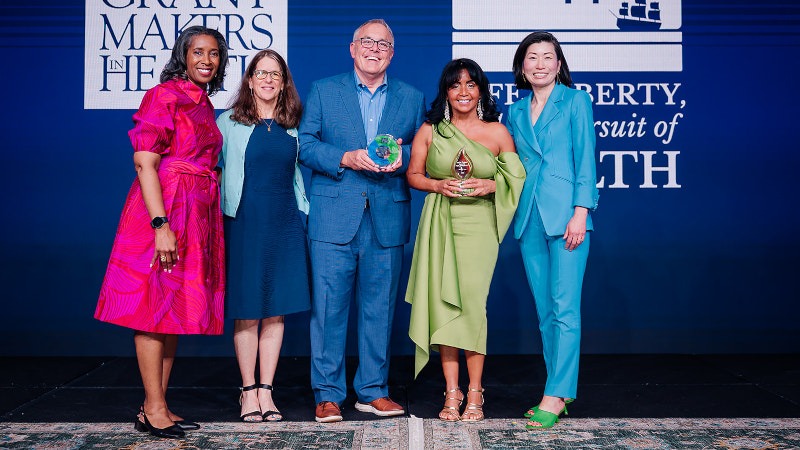
Getting in Formation: Working Together to Build Healthy Communities
From breakout sessions to quick takes and wellness activities to two inspiring plenary sessions, every corner during day two of the Grantmakers In Health (GIH) Annual Conference on Health Philanthropy, Life, Liberty, and the Pursuit of Health was filled with conversation and connection. The day’s agenda focused on how funders can find and use their voices to stand up in this moment of change, including doubling down on their values; taking bigger, bolder risks alongside grantees; and seeking partnerships spanning the private and public sectors.
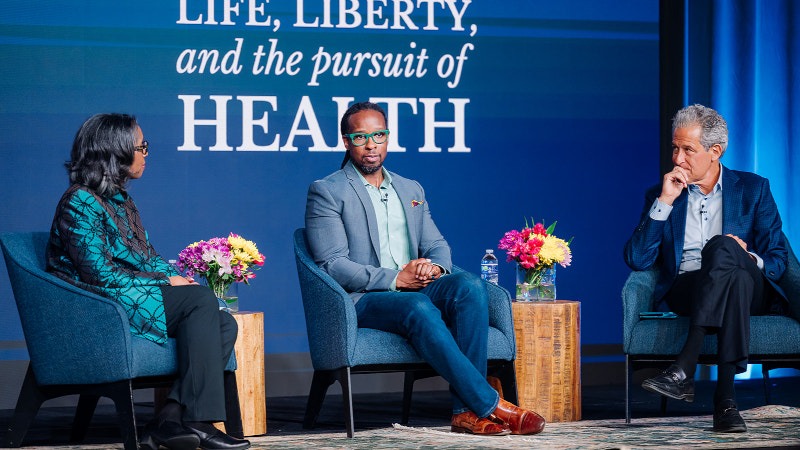
Life, Liberty, and the Pursuit of Health in Action
Life, Liberty, and the Pursuit of Health is more than this year’s Annual Conference on Health Philanthropy theme; it is the foundation for every planned session, unexpected learning moment, and conversation in Baltimore from June 8-11. The pre-conference kicked off with a range of discussions centered on the theme, including the state of Medicaid after H.R. 1, the connection between democracy and better health outcomes, and collaborations in public health funding.
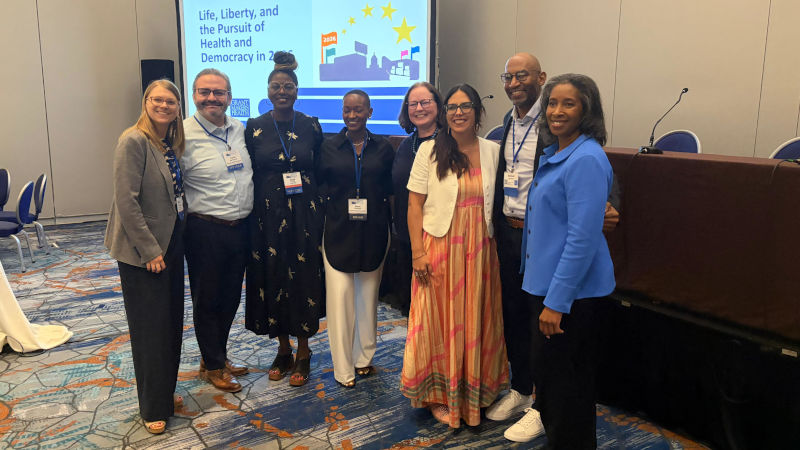
Health Philanthropy Working at the Intersections Between Critical Issues
Life, Liberty, and the Pursuit of Health is more than this year’s Annual Conference on Health Philanthropy theme; it is the foundation for every planned session, unexpected learning moment, and conversation in Baltimore from June 8-11. The pre-conference kicked off with a range of discussions centered on the theme, including the state of Medicaid after H.R. 1, the connection between democracy and better health outcomes, and collaborations in public health funding.
GIH Health Policy Update Newsletter
The Latest
An Exclusive Resource for Funding Partners
The Health Policy Update is a newsletter produced in collaboration with Leavitt Partners and Trust for America’s Health. Drawing on GIH’s policy priorities outlined in our policy agenda and our strategic objective of increasing our policy and advocacy presence, the Health Policy Update provides GIH Funding Partners with a range of federal health policy news.
Feeding Hearts and Minds through Collective Action and Strong Partnerships
Grantmakers In Health began 2023 by announcing an ambitious set of health policy priorities supporting four key goals—to advance health equity and social justice, to expand health care access and improve quality of care, to improve population health, and to promote community engagement and empowerment.
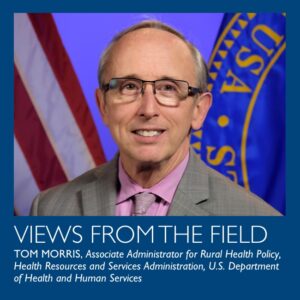
National Rural Health Day Provides an Opportunity for Philanthropy to Engage and Support Underserved Communities
For anyone with an interest in rural health, clear your calendar on November 16th and help celebrate National Rural Health Day, a day to celebrate and lift up the work of doctors, nurses, clinics, hospitals, and other stakeholders working in our rural communities.

Q&A: Bringing an Australian Perspective to American Health Philanthropy
Traveling thousands of miles from Melbourne to Minneapolis, Lauren Monaghan of The Ian Potter Foundation attended the 2023 GIH Annual Conference on Health Philanthropy to learn more about the American public health philanthropy sector at the country’s largest gathering of health funders.
Lessons from an Equity Toolkit Workshop: Facilitator Perspective on Participatory Engagement
The Blue Shield of California Foundation is a long-time multisector collaborative funder with a health equity focus. Increasingly, we find that multisector collaboratives are a powerful vehicle to change systems toward racial equity. We heard from our partners and grantees a strong need for tools and resources that provide several outcomes: to establish equity at the collaborative level, to outline an arc of learning to help place a collaborative on an equity spectrum, and to provide tools to help collaboratives move deeper into equity. To support this work, the Equity in Collaboration Toolkit was developed in partnership with Cristobal Consulting. Its goal is to help multisector collaboratives see where they are taking concrete actions to center equity—and where they are not—through an embedded equity assessment.an embedded equity assessment.

Foundation for Opioid Response Efforts: October 2023
The Foundation for Opioid Response Efforts released the 5 Years of Accelerating Solutions report that outlines the foundation’s initial years of impactful grantmaking. The foundation has awarded 100 grants totaling $39 million across the U.S. to organizations and initiatives combatting the opioid crisis.