

Upcoming Events
Past Events
Explore Health Equity and Social Justice Topics
Recent Items - Climate and Environmental Health









Latest Resources

Children’s Environmental Health Day: Actions Needed Now to Protect Our Children’s Health
It has been over a decade since the World Health Organization raised the alarm that chronic diseases—including cardiovascular, cancer, diabetes, obesity, and metabolic syndrome—are rapidly becoming an epidemic in developed nations, and increasingly, in developing nations. Escalating rates of neurocognitive, metabolic, autoimmune, and cardiovascular diseases cannot be solely attributed to lifestyle, genetics, and nutrition. Prenatal, early life, and ongoing exposures, along with bio-accumulative toxicants, are playing a large role in the increased incidence of chronic disease. In fact, we need only look at the statistics to see that chronic disease rates in children are on the rise, and this can often be linked to toxic exposures.
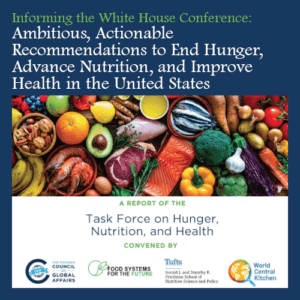
Task Force Releases Report to Inform White House Conference
Authored by the Task Force on Hunger, Nutrition, and Health, “Ambitious, Actionable Recommendations to End Hunger, Advance Nutrition, and Improve Health in the United States” offers policy recommendations and actions to advance the goals of the White House Conference on Hunger, Nutrition, and Health to end hunger, improve nutrition, and reduce diet-related diseases in the United States by 2030.
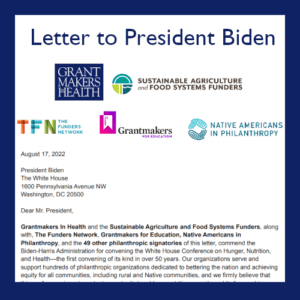
Letter to President Biden Offers Support and Recommendations for the White House Conference on Hunger, Nutrition, and Health
Organizations in philanthropy sent a letter to President Biden in support of the White House Conference on Hunger, Nutrition, and Health. This letter outlines four recommendations for the Administration and federal agencies to adopt leading up to and following the conference.

Achieving Racial Justice and Health Equity Through Housing Justice
Having a stable, safe, and affordable place to call home impacts our ability to be healthy. But because America’s foundational housing policies and systems intentionally excluded Black, Indigenous, and other people of color, far too many people in our nation are at risk of poorer health because a home is out of reach.

New York Health Foundation: August 2022
Funding is available through a New York Health Foundation (NYHealth) Request for Proposals (RFP): Sponsoring Conference Participation in Support of Healthy Food, Healthy Lives; Consumer Empowerment; and Veterans’ Health.
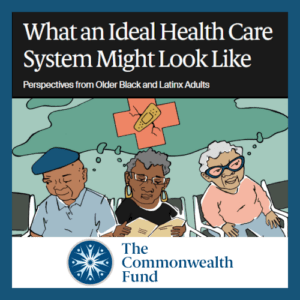
What an Ideal Health Care System Might Look Like: Perspectives from Older Black and Latinx Adults
A new research publication from The Commonwealth Fund, “What an Ideal Health Care System Might Look Like: Perspectives from Older Black and Latinx Adults,” examines what health care should do to better respect people’s identities, health needs, and preferences.
Reports and Publications

GIH Bulletin: January/February 2026
One year ago, as we were just one month into the new administration, I wrote that “At a moment when so much has been described as ‘unprecedented,’ and so much of what we value is being attacked, we need to ask ourselves as individuals, organizations, and a field, what do we stand for? What values do we hold, and what will we do and say to defend them?” Today, the answers to these questions are needed more urgently than ever.

GIH Bulletin: November/December 2025
GIH President and CEO, Cara V. James, delivered these remarks on Protecting the Freedom to Give at the closing of the 2025 Health Policy Exchange, in Arlington, Virginia.
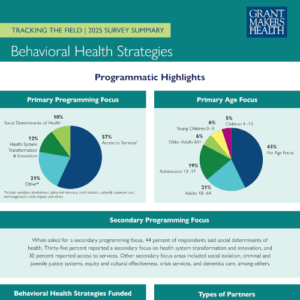
Behavioral Health Strategies
GIH conducted a survey in late 2024 on funder engagement in behavioral health. This fact sheet, based on a sample of 139 health funders, summarizes the current trends, gaps, successes and challenges for funders. It also highlights philanthropy’s continued commitment to behavioral health while also signaling concern about the upcoming funding environment.