
Upcoming Events
Past Events
Explore Health Equity and Social Justice Topics
Recent Items - Climate and Environmental Health







Latest Resources

GIH Joins Amicus Brief Opposing New Citizenship Verification Requirements
GIH joined organizations filing an amicus brief for the case brought by NY and other states seeking to stop the administration’s attempt to expand citizenship verification requirements under the Personal Responsibility and Work Opportunity Reconciliation Act of 1996 for programs administered by the Departments of Health and Human Services, Agriculture, Education, Housing and Urban Development, Labor, and Justice.
Funders Together for Housing Justice: March 2026
A new publication has been released: Caring Collectively: How Health Funders Can Step into the Movement for Housing Justice to End Homelessness. It is designed to support how health-focused foundations can engage in housing justice work in ways that align with their existing priorities.
39 Funders Collaborate on Comment Letter in Support of Health Professionals
The U.S. Department of Education recently published a proposed rule that would narrow the definition of which graduate programs qualify as “professional degrees” for federal student loan purposes, affecting how much students in certain health fields may borrow. Finalizing this rule will result in reduced access to care (especially in rural and other underserved communities), by making graduate education less affordable, disrupting health workforce pipelines, and creating obstacles for students to enter essential health and human-services professions.

What Do We Stand For?
One year ago, as we were just one month into the new administration, I wrote that “At a moment when so much has been described as ‘unprecedented,’ and so much of what we value is being attacked, we need to ask ourselves as individuals, organizations, and a field, what do we stand for? What values do we hold, and what will we do and say to defend them?” Today, the answers to these questions are needed more urgently than ever.

Medicaid and Community Violence: Pathways to Sustainable Care
American cities are witnessing historic declines in gun violence. In recent years, cities like Baltimore, Philadelphia, and Chicago have all seen precipitous drops in homicides, with some reaching multi-decade record lows (Washington Post 2025). While there are many causes of this decline, experts in the field point to community violence intervention as driving the trend.
Blue Cross Blue Shield of Massachusetts Foundation: January 2026
Blue Cross Blue Shield of Massachusetts Foundation released a chart pack which provides an overview of the public coverage programs in Massachusetts, explains the key Medicaid and Marketplace provisions in H.R.1, and elevates what is known about how these provisions will impact the coverage landscape and the health care delivery system in Massachusetts.
Reports and Publications
Improving Data on Race and Ethnicity: A Roadmap to Measure and Advance Health Equity
The second of two reports, Improving Data on Race and Ethnicity: A Roadmap to Measure and Advance Health Equity, provides more details about race and ethnicity data collection in federally administered health programs and an expanded list of recommendations for improving the data. The recommendations consider actions for states and the private sector as well as actions for the federal government.
Federal Action Is Needed to Improve Race and Ethnicity Data in Health Programs
Grantmakers In Health, in collaboration with the National Committee for Quality Assurance, interviewed a variety of stakeholders across the country, representing all levels of the health system. Federal Action Is Needed to Improve Race and Ethnicity Data in Health Programs, identifies tangible actions to help improve the completeness, accuracy, and usability of race and ethnicity data.
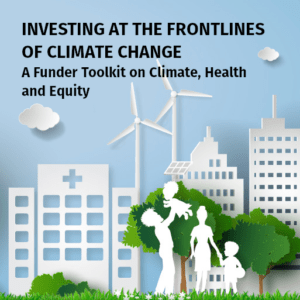
Funder Toolkit on Climate, Health, and Equity
To help health funders meet this critical moment, GIH partnered with seven philanthropy support organizations to develop a funder toolkit on climate, health, and equity. The toolkit offers an overview of the current funding landscape, hubs of collaboration, and resources available by issue focus, geographical region, and impacted populations.