
A New Path for Philanthropy: Supporting Oral Health Through Community Partnerships
Good nutrition is essential to good oral as well as overall health. A community-based organization in central Washington state called APOYO shares this belief with Arcora Foundation. Beyond food and nutrition services, the organization has long supported immigrant and Latinx families with culturally relevant outreach, advocacy, and resource navigation. But during the summer of 2025, their ability to support communities was in jeopardy.
Welcoming and Belonging: Drivers for Equity and Growth
More than a decade ago, leadership at REACH Healthcare Foundation began exploring how a community would function if it truly embraced welcoming and belonging for immigrant and refugee populations. The mid-sized Midwest philanthropic foundation sought to invest in a plan to reveal, then address, the systemic barriers impacting Kansas City’s efforts of inclusion for all members of the community.
Healing Takes Practice: Reaching People Is Only the Beginning
Violence is increasingly understood as a public health problem. That shift has changed the way communities respond—moving the conversation beyond policing and criminal justice and toward prevention, intervention, and the conditions that put people at risk. But treating violence as a health problem also requires us to reckon with trauma.
We Didn’t Stop: Leading with Purpose When the System Stepped Back
The notice came the way these things now tend to come: abruptly, in writing, and without a transition plan. In April 2025, Public Health AmeriCorps programs were terminated nationally alongside about 900 other AmeriCorps programs. Funding halted. AmeriCorps service members who had built their careers and households around a year of community health service were left waiting for answers no one could give them. Organizations across the country scrambled.
GIH Health Policy Update Newsletter
An Exclusive Resource for Funding Partners
The Health Policy Update is a newsletter produced in collaboration with Leavitt Partners and Trust for America’s Health. Drawing on GIH’s policy priorities outlined in our policy agenda and our strategic objective of increasing our policy and advocacy presence, the Health Policy Update provides GIH Funding Partners with a range of federal health policy news.
2025 GIH Strategic Plan
IntroductionExecutive SummaryOrganizational BackgroundMission & ValuesEnvironmental Scan2025 StrategyKey Actions and Indicators of SuccessConclusion
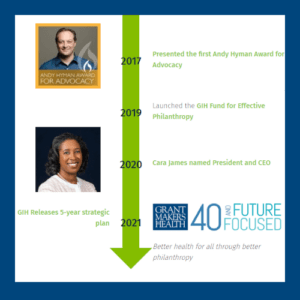
GIH’s History
For 40 years, Grantmakers In Health has been a nonprofit, educational organization dedicated to helping trustees and staff at foundations and corporate giving programs improve the health of all people.
40 Years and Future-Focused: Announcing GIH’s New Strategic Plan
As we approach our 40th year of supporting philanthropy—we at GIH have been reflecting on how the field is evolving, what is needed to achieve better health, and what our role in this work can be. We’ve asked for guidance on what we do well and where we can improve. And we’ve reflected on your feedback, reaffirmed our mission and values, and identified intended outcomes. The result is our new five-year strategic plan.
Sustaining Changes in Foundation Practices
A new report from the Center for Effective Philanthropy explores how foundation practices have shifted in the last 18 months and whether those changes will be sustained in the future. Foundations Respond to Crisis: Lasting Change? documents shifts in how foundations identify applicants, reductions in administrative burdens for grantees, increases in unrestricted funding, and new efforts to advance racial equity.

Freedom to Thrive: How Health Funders Can Support Transgender Communities
Despite well-documented disparities in health and well-being, according to Funders for LGBTQ Issues, for every $100 awarded by U.S. foundations in 2018, only 4 cents directly supported transgender communities. GIH Program Director Ann Rodgers sat down with Kris Hayashi and Alexander Lee to learn more about how health funders can support transgender communities.

The Time is Now: A Call for Philanthropic Engagement in the Implementation of the New 988 Mental Health Crisis Hotline
The Sozosei Foundation believes that 988 provides a once in a lifetime philanthropic opportunity to create the mental health and crisis response services that, frankly, have never been properly resourced. We believe that this will help to decriminalize mental illness and significantly move the needle on our overarching goal of eliminating the use of jails and prisons for the diagnosis and treatment of mental illness.