

GIH Joins Amicus Brief Opposing New Citizenship Verification Requirements
GIH joined organizations filing an amicus brief for the case brought by NY and other states seeking to stop the administration’s attempt to expand citizenship verification requirements under the Personal Responsibility and Work Opportunity Reconciliation Act of 1996 for programs administered by the Departments of Health and Human Services, Agriculture, Education, Housing and Urban Development, Labor, and Justice.

Remembering Patricia Mathews, Founding President and CEO of Northern Virginia Health Foundation
Grantmakers In Health (GIH) is saddened to learn of the recent passing of Patricia Mathews, a longtime fixture in health philanthropy and a former member of the GIH board of directors. Please join us in celebrating Patricia Mathews’ memory, as well as her many contributions to the field of health philanthropy and GIH.

Responsible Exits: Insights from Three Funders
Grantmakers In Health’s Maya Schane spoke with Stephanie Teleki of The California Health Care Foundation, Laila Bell of The Skillman Foundation, and Jaime Vazquez of The Pew Charitable Trusts about their recently published article in The Foundation Review, “When Shift Happens: Navigating Toward a Framework for Responsible Philanthropic Exits.”
GIH Health Policy Update Newsletter
The Latest
An Exclusive Resource for Funding Partners
The Health Policy Update is a newsletter produced in collaboration with Leavitt Partnersi and Trust for America’s Health. Drawing on GIH’s policy priorities outlined in our policy agenda and our strategic objective of increasing our policy and advocacy presence, the Health Policy Update provides GIH Funding Partners with a range of federal health policy news.


Merck Foundation: December 2024
Merck Foundation has launched a new initiative – the Collaborative for Equity in Cardiac Care to advance equitable access to high-quality, culturally responsive cardiac care for people living with heart conditions in underserved United States communities. The foundation is committing $17 million over five years to support the development and implementation of innovative, comprehensive programs for cardiac health care across the country as well as promote cross-sectoral collaborations to address barriers to care associated with social drivers of health.

The Pew Charitable Trusts: December 2024
In the Speak Up MO report, residents’ top responses identified several priorities for improving health, including expanding health care coverage or implementing universal health care, lowering health care costs, and addressing the cost of living.

Philanthropy @ Work – Grants and Programs – December 2024
The latest on grants and programs from the field.
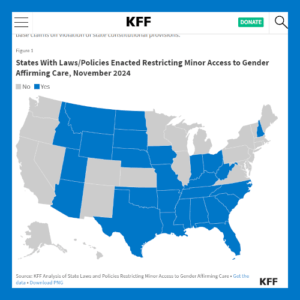
Youth Access to Gender Affirming Care at the Supreme Court: What to Know
Ahead of December 4 arguments in a Supreme Court case (U.S. v. Skrmetti) challenging the constitutionality of Tennessee restrictions for gender affirming care for minors, KFF explores the background of the case and potential rulings.