
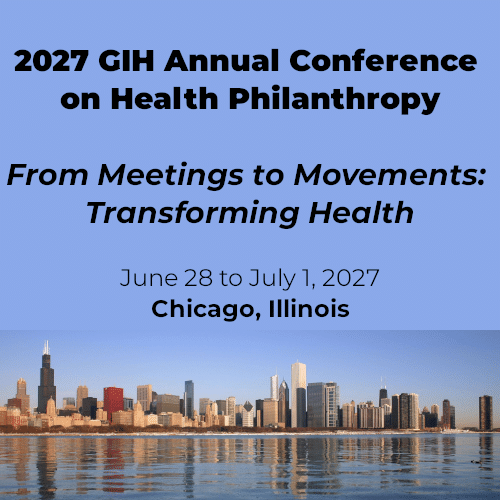
Submit a Session Proposal for the 2027 GIH Annual Conference on Health Philanthropy
We invite you to submit a session proposal for the 2027 Grantmakers In Health (GIH) Annual Conference on Health Philanthropy, From Meetings to Movements: Transforming Health, which will be held in person in Chicago, Illinois, from June 28 to July 1, 2027. From Meetings to Movements: Transforming Health Forty-five years ago, a small group of…
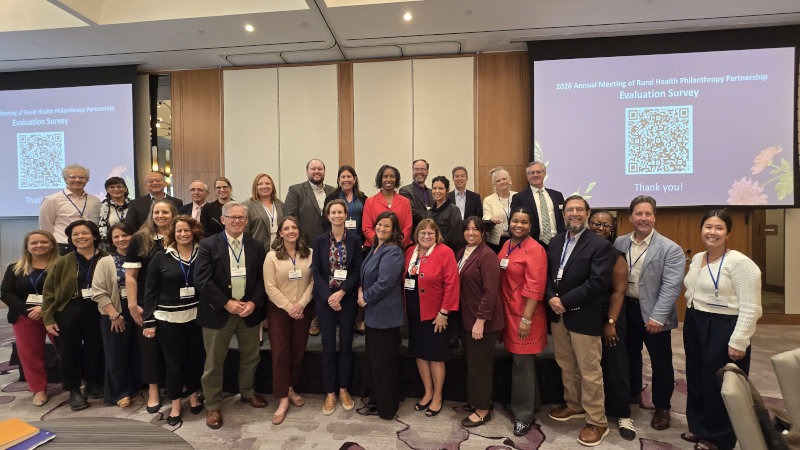
Make Connections to Create a Movement for Rural Health
On Thursday, September 24, the Annual Meeting of the Rural Health Philanthropy Partnership kicked off in downtown Bethesda, MD. Selected highlights from the convening’s first day setting the stage for a full day of sessions and networking opportunities centered on how collaboration can build on progress already underway in rural and tribal communities, including rural health transformation efforts.

NJ SNIP: Supporting Behavioral Health Access Through Trust-based Grantmaking
Amid shifting federal health care funding, grants that enable health care safety net entities to respond to the changing landscape can unlock immense value. This form of grantmaking puts daily program-related decisions in the hands of people doing the work, allowing organizations to develop and sustain staff positions, workflows, and programs that reflect their priorities.

Leaning Into Radical Collaboration Will Advance Your Focused Mission
At this year’s GIH annual conference, I found myself surrounded by hundreds of philanthropic leaders deeply committed to improving the health and well-being of their communities. Again and again, I met funders whose work was grounded in a particular place, population, or issue. These funders know their communities intimately. They understand local history, relationships, and the needs of their communities. Their focus is one of their greatest strengths.
GIH Health Policy Update Newsletter
An Exclusive Resource for Funding Partners
The Health Policy Update is a newsletter produced in collaboration with Leavitt Partners and Trust for America’s Health. Drawing on GIH’s policy priorities outlined in our policy agenda and our strategic objective of increasing our policy and advocacy presence, the Health Policy Update provides GIH Funding Partners with a range of federal health policy news.

Connecting Mental Health and Wealth in North Carolina
Mental health and wealth are inextricably linked, influencing each other bidirectionally. While many factors contribute to mental health, we know from the social determinants of health that the most foundational are socioeconomic, including income, wealth, and safe neighborhoods. Asset Funders Network defines wealth in an assets-to-debt ratio.

A Compass of Indispensable Leadership Attributes to Guide Health Philanthropy
Trends in leadership are changing—just take the Terrance Keenan Institute as an example. When the program started in 2010, it focused on general leadership tactics with topics that ranged from leveraging resources and building partnerships to board dynamics. Since then, the Institute’s curriculum has moved towards a recognition that leaders possess individual strengths that can be embraced to make our organizations and the broader field of health philanthropy more effective.


NY Health Foundation: January 2024
Although New York has one of the lowest veteran suicide rates in the nation, suicide remains a persistent challenge. Recent data shows that the rate has remained stubbornly high over the last 10 years despite numerous federal, State, and local investments in prevention efforts. A new NYHealth Foundation snapshot shows trends from 2012–2021, using the latest available data.
The Blue Cross Blue Shield Foundation of Massachusetts: January 2024
Blue Cross Blue Shield Foundation of Massachusetts partnered with Manatt Health to develop a vision, framework, and proposed statewide Health Equity Action Plan that offers an organizing structure, process, and set of practical steps for collectively achieving a racially and ethnically equitable health care delivery system in Massachusetts.
Blue Shield of California Foundation: January 2024
Lack of paid family caregiving and medical leave policy at the national level makes the United States a global outlier. In the absence of a national guarantee, more than a dozen states have passed and implemented necessary paid family and medical leave.