Healing Takes Practice: Reaching People Is Only the Beginning
Violence is increasingly understood as a public health problem. That shift has changed the way communities respond—moving the conversation beyond policing and criminal justice and toward prevention, intervention, and the conditions that put people at risk. But treating violence as a health problem also requires us to reckon with trauma.
We Didn’t Stop: Leading with Purpose When the System Stepped Back
The notice came the way these things now tend to come: abruptly, in writing, and without a transition plan. In April 2025, Public Health AmeriCorps programs were terminated nationally alongside about 900 other AmeriCorps programs. Funding halted. AmeriCorps service members who had built their careers and households around a year of community health service were left waiting for answers no one could give them. Organizations across the country scrambled.
GIH Health Policy Update Newsletter
An Exclusive Resource for Funding Partners
The Health Policy Update is a newsletter produced in collaboration with Leavitt Partners and Trust for America’s Health. Drawing on GIH’s policy priorities outlined in our policy agenda and our strategic objective of increasing our policy and advocacy presence, the Health Policy Update provides GIH Funding Partners with a range of federal health policy news.
Birth Equity Funders’ Summit: 2022 Report
The 2022 Birth Equity Funders’ Summit brought together over 100 funders in person and 35 virtually to reflect on the role of philanthropy in reducing racial disparities in birth outcomes and identify opportunities to better collaborate and align in service of this goal. This report serves as an overview of the event, as well as offers key takeaways and practical recommendations for funders.
We Can’t Fix What We Don’t Measure: Why the Youth Risk Behavior Survey is Critical
In 2021, 1 in 6 high school students was electronically bullied or bullied at school. That same year, 22 percent of high school students, and 45 percent of students who identified as LGBTQ+, seriously considered attempting suicide. We know this information because of the Youth Risk Behavior Survey, which along with other state and local surveys, comprises the Youth Risk Behavior Surveillance System.

Exploring the Impact of Vaccine Equity Grants in Rural Communities of Color
The Rx Foundation launched a rapid response Vaccine Equity grant program in March 2021 as it became clear that communities had unequal access to newly available COVID-19 vaccines. The goal was to fund organizations that were positioned to improve access to vaccines for groups marginalized by or unable to access existing systems and to do outreach and have conversations with people about their vaccine concerns and questions.
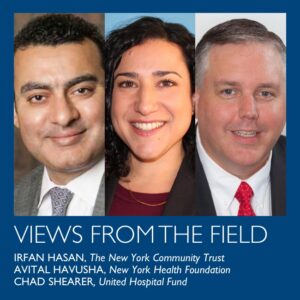
New York State Foundations Working Together to Preserve Health Insurance Coverage for Millions of New Yorkers
In March 2020, the United States declared a public health emergency and enacted historic COVID-19 relief legislation. It increased Medicaid funding to states contingent on several conditions, including a “continuous enrollment” requirement that prohibited states from terminating Medicaid enrollees’ coverage until after the public health emergency had ended. How well this worked is a rare silver lining of the pandemic: an estimated 20.2 million people gained coverage since March 2020, and the uninsured rate dropped across the country.