
Explore Access and Quality Topics





Latest Resources
Paid Sick Days: A Health Policy for Everyone
When the H1N1 pandemic broke out, the Centers for Disease Control and Prevention urged sick people to stay home. Unfortunately, for many Americans, staying home meant losing income, losing a good shift, or worse, losing their job.
Integrative Medicine Offers Opportunity for Shared Learning and Collaboration
There is growing interest in the field known as integrative medicine. A 2007 national survey by the Centers for Disease Control and Prevention found that 38.3 percent of all adults, up from 36 percent in 2002, accessed some form of complementary and alternative medicine through visits to acupuncturists, chiropractors, massage therapists, among others.
Shifting Paradigms in Promoting Oral Health for Young Children
Tooth decay remains the single most prevalent chronic disease of America’s children, affecting 44 percent by age six (Dye et al. 2007). Grantmakers, government, and the professions have long focused energy and resources on getting children into dental care to repair the ravages of this preventable disease and to eliminate associated pain and infection.
Ensuring the Health of America’s Children: Progress and Opportunities
Behind the headlines of a weakened U.S. economy and rising unemployment are two related developments: the transformation of health care coverage into an issue of real salience to working families and the middle class, and the ways in which states have crafted, and will continue to craft, an effective response.
A Foundation Helps Launch a FQHC
For the past decade, free-market thinking has all but dominated the national discussion of health care. New kinds of coverage have resulted, including health savings accounts, along with new players in delivery, like the urgi-care clinics at Wal-Mart.
Nurse-Managed Health Centers
Safety-net providers are an essential source of health care for vulnerable populations, including the uninsured, the underinsured, and undocumented immigrants. Cuts in Medicaid funding further threaten this already fragile infrastructure. Policymakers, advocates, and foundations can all play a role in shoring up safety net providers.
Publications and Reports
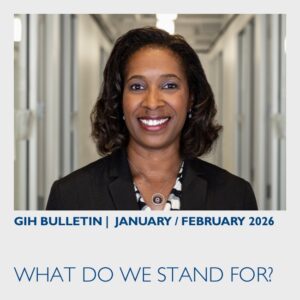
GIH Bulletin: January/February 2026
One year ago, as we were just one month into the new administration, I wrote that “At a moment when so much has been described as ‘unprecedented,’ and so much of what we value is being attacked, we need to ask ourselves as individuals, organizations, and a field, what do we stand for? What values do we hold, and what will we do and say to defend them?” Today, the answers to these questions are needed more urgently than ever.
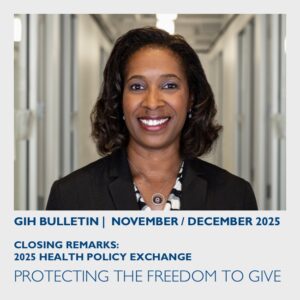
GIH Bulletin: November/December 2025
GIH President and CEO, Cara V. James, delivered these remarks on Protecting the Freedom to Give at the closing of the 2025 Health Policy Exchange, in Arlington, Virginia.
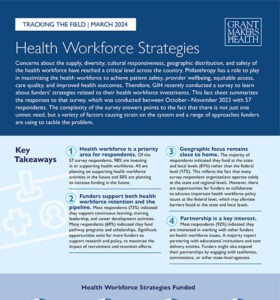
2024 Survey Summary: Health Workforce Strategies
Concerns about the supply, diversity, cultural responsiveness, geographic distribution, and safety of the health workforce have reached a critical level across the country. Philanthropy has a role to play in maximizing the health workforce to achieve patient safety, provider well-being, equitable access, care quality, and improved health outcomes. Therefore, GIH recently conducted a survey to learn about funders’ strategies related to their health workforce investments.