

Upcoming Events
Past Events
Explore Health Equity and Social Justice Topics
Recent Items - Climate and Environmental Health








Latest Resources
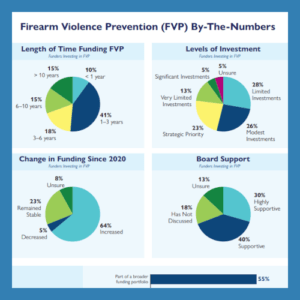
New Grantmakers In Health Survey Finds a Significant Growth in Firearm Violence Prevention Investments Among Health Funders
Washington, DC, March 14, 2025—At a time when firearm violence is a leading cause of death for children and teens, a new Grantmakers In Health survey of health funding organizations found that philanthropic investments in firearm violence prevention are growing in terms of both the number of funders supporting this work and the dollar amounts…

Maternal Health in American Indian/Alaska Native Communities: Challenges, Opportunities, and Pathways Forward
Maternal health is a cornerstone of any community’s well-being, yet American Indian and Alaska Native (AI/AN) women face disproportionate challenges in achieving safe and healthy pregnancies. Historical inequities, systemic barriers, and the enduring effects of colonization have resulted in significant maternal health disparities within Native communities. However, these same communities are also sources of resilience, creativity, and innovation. Maternal health programs aimed at centering community in tradition, culture, and resiliency can offer unique, cross-sectoral solutions to complex systemic health barriers for AI/AN families.

Pottstown Area Health and Wellness Foundation: March 2025
The Pottstown Area Health and Wellness Foundation’s Spring 2025 grantmaking cycle opened March 1, 2025. All grant applications are submitted through AkoyaGo, the foundation’s grants portal. The foundation no longer requires a letter of intent for grant applications.
What Do We Stand For?
At a moment when so much has been described as “unprecedented”, and so much of what we value is being attacked, we need to ask ourselves as individuals, organizations, and a field, what do we stand for? What values do we hold, and what will we do and say to defend them?
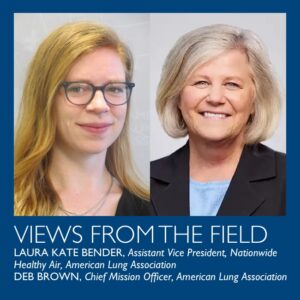
The Health Sector is a Critical Voice in Climate Advocacy
Founded 120 years ago, the American Lung Association is the leading organization working to save lives by improving lung health and preventing lung disease through research, education, and advocacy. Central to our work is a mission imperative to champion clean air for all. We work tirelessly to protect public health from air pollution to ensure that all people have air that is safe and healthy to breathe, including through advocacy to address climate change and advance clean air policy at every level of government.

Let’s Take Courageous Steps Together in 2025
At the Kate B. Reynolds Charitable Trust, this has been a challenging year for North Carolina, where we live and work. Hurricane Helene devastated the western part of NC and the surrounding region, and we endured an election that divided our state and nation.
We also know that we are not alone facing the challenges of 2024 and those we will take on in 2025. Many of us in the Grantmakers In Health (GIH) community are wondering how to persevere through these uncertain times. At the Trust, we acknowledge the heaviness of the moment—because we anticipate policy changes that will negatively impact people who are already being left behind.
Reports and Publications

GIH Bulletin: January/February 2026
One year ago, as we were just one month into the new administration, I wrote that “At a moment when so much has been described as ‘unprecedented,’ and so much of what we value is being attacked, we need to ask ourselves as individuals, organizations, and a field, what do we stand for? What values do we hold, and what will we do and say to defend them?” Today, the answers to these questions are needed more urgently than ever.
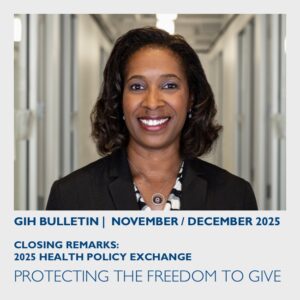
GIH Bulletin: November/December 2025
GIH President and CEO, Cara V. James, delivered these remarks on Protecting the Freedom to Give at the closing of the 2025 Health Policy Exchange, in Arlington, Virginia.
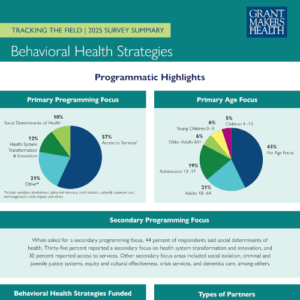
Behavioral Health Strategies
GIH conducted a survey in late 2024 on funder engagement in behavioral health. This fact sheet, based on a sample of 139 health funders, summarizes the current trends, gaps, successes and challenges for funders. It also highlights philanthropy’s continued commitment to behavioral health while also signaling concern about the upcoming funding environment.