
Upcoming Events
Past Events
Explore Health Equity and Social Justice Topics
Recent Items - Climate and Environmental Health










Latest Resources

Ending Girls’ Incarceration in California is Possible When We Listen to Young People and Invest in Their Healing
The United States leads the world in incarceration rates of women and girls—we account for only 4 percent of the world’s population of women and girls but 30 percent of women held in prison and jails. Many girls are incarcerated not because they pose a threat to the public but because of concerns for their own safety in the community—such as abusive home environments. California incarcerates more girls than any state other than Texas and can lead the way on ending girls’ incarceration nationwide.

Safeguarding Health Care Access for Transgender Communities
For decades, LGBTQ+ Americans have been at the forefront of powerful movements championing the freedom for all individuals to be themselves and pursue their dreams. This grassroots organizing has led to unprecedented public support for LGBTQ+ equality and increased visibility for transgender people within our society. However, despite growing acceptance, a dangerous political backlash threatens the progress made in securing health care access for transgender communities.
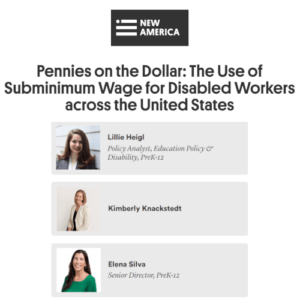
New America Report Examines Subminimum Wage for Disabled Workers
Under the Fair Labor Standards Act, employers are allowed to pay disabled workers less than the federal minimum wage, which has significant impacts on these workers’ health and well-being. A report from New America examines, state by state, the policies that drive the use or elimination of the subminimum wage, as well as the programs each state provides to more comprehensively support individuals with disabilities as they seek meaningful employment and fair wages.
HHS Launches New Food is Medicine Virtual Toolkit
The Toolkit was developed in response to the National Strategy on Hunger, Nutrition, and Health and to support communities design and implement effective Food is Medicine interventions.

Advancing Health Equity and Fostering Collaboration through Black Maternal and Child Health Initiatives
When basic social needs go unmet, they become the principal drivers of health disparities. Recognizing this, the Health Foundation of South Florida has been advancing a collaborative approach that brings together health systems and community-based organizations and paves the way for implementing promising social interventions. Through this approach, the Health Foundation seeks to drive improved health outcomes and greater coordination to address unmet health-related social needs within clinical care settings.
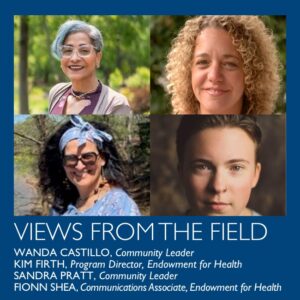
Building Strong Foundations: Addressing the Needs of Diverse Families in New Hampshire
When families have the conditions they need to thrive, children thrive. In 2020, the Endowment for Health, Child Trends, and people in communities across New Hampshire began work that would become the Early Childhood Equity Movement (ECEM). Research in this movement is paving the way for greater equity in family services, services like early care, education, and health care. All families should have access to these services. Too many do not.
Reports and Publications

GIH Bulletin: January/February 2026
One year ago, as we were just one month into the new administration, I wrote that “At a moment when so much has been described as ‘unprecedented,’ and so much of what we value is being attacked, we need to ask ourselves as individuals, organizations, and a field, what do we stand for? What values do we hold, and what will we do and say to defend them?” Today, the answers to these questions are needed more urgently than ever.

GIH Bulletin: November/December 2025
GIH President and CEO, Cara V. James, delivered these remarks on Protecting the Freedom to Give at the closing of the 2025 Health Policy Exchange, in Arlington, Virginia.
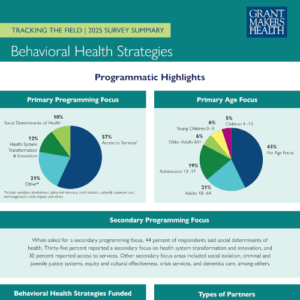
Behavioral Health Strategies
GIH conducted a survey in late 2024 on funder engagement in behavioral health. This fact sheet, based on a sample of 139 health funders, summarizes the current trends, gaps, successes and challenges for funders. It also highlights philanthropy’s continued commitment to behavioral health while also signaling concern about the upcoming funding environment.