
Healing Takes Practice: Reaching People Is Only the Beginning
Violence is increasingly understood as a public health problem. That shift has changed the way communities respond—moving the conversation beyond policing and criminal justice and toward prevention, intervention, and the conditions that put people at risk. But treating violence as a health problem also requires us to reckon with trauma.
We Didn’t Stop: Leading with Purpose When the System Stepped Back
The notice came the way these things now tend to come: abruptly, in writing, and without a transition plan. In April 2025, Public Health AmeriCorps programs were terminated nationally alongside about 900 other AmeriCorps programs. Funding halted. AmeriCorps service members who had built their careers and households around a year of community health service were left waiting for answers no one could give them. Organizations across the country scrambled.
GIH Health Policy Update Newsletter
An Exclusive Resource for Funding Partners
The Health Policy Update is a newsletter produced in collaboration with Leavitt Partners and Trust for America’s Health. Drawing on GIH’s policy priorities outlined in our policy agenda and our strategic objective of increasing our policy and advocacy presence, the Health Policy Update provides GIH Funding Partners with a range of federal health policy news.
HHS and Surgeon General Announce New Initiatives to Improve Maternal Health
The U.S. Department of Health and Human Services (HHS) released a new Action Plan to improve maternal health outcomes and reduce disparities that put Black, American Indian and Alaska Native women at increased risk of experiencing fatal complications in pregnancy, childbirth, and during the postpartum period.
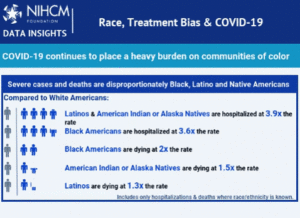
Race, Treatment Bias, and COVID-19
This new infographic from NIHCM Foundation explores the history of racial bias and discrimination in health care and during the pandemic, outlines short-term strategies to narrow disparities from COVID-19 and respond to vaccine hesitancy, and highlights long-term strategies to address systemic racism and improve health outcomes.
Poll: A New National Conversation About Covid-19 is Urgently Needed
A new poll by pollster Frank Luntz and the de Beaumont Foundation examines attitudes regarding COVID-19 and explores preferred words, sentences, phrases, and attributes Americans need to hear to change their behavior and stop the spread of the coronavirus pandemic.
Moving Ahead Together: A Framework for Integrating HIV/AIDS and Aging Services
More than half of the 1.2 million people living with HIV in the U.S. are 50 or older. By 2030, that figure is estimated to rise to 70-percent. This new Grantmakers In Aging (GIA) report offers a detailed set of recommendations for bringing health care (HIV, geriatrics, primary, and specialty care), behavioral health care, psychosocial support, and social services into closer cooperation.
States Are Getting Ready to Distribute COVID-19 Vaccines. What Do Their Plans Tell Us So Far?
KFF has released an issue brief reviewing the preliminary vaccine distribution plans submitted to the U.S. Centers for Disease Control and Prevention by the states and the District of Columbia.