Explore Access and Quality Topics






Latest Resources

What We Heard When We Asked—and Why It Matters for Health Philanthropy Now
Over the past year, volatility and uncertainty have become defining features of the nonprofit landscape. Federal and state policy shifts, the cancelation of critical federal funding, delayed reimbursements, the unwinding of pandemic-era supports, and rising operating costs are converging. For many nonprofits, these pressures are no longer episodic; they shape everyday decisions about staffing, services, and sustainability.
Thirty-nine Funders Join GIH in Support of Health Professionals
Grantmakers In Health (GIH) is urging funders to sign on to our comment letter on this proposed rule by Friday, February 27. Your voice matters—the Department of Education must consider all comments submitted before finalizing the rule.

What Do We Stand For?
One year ago, as we were just one month into the new administration, I wrote that “At a moment when so much has been described as ‘unprecedented,’ and so much of what we value is being attacked, we need to ask ourselves as individuals, organizations, and a field, what do we stand for? What values do we hold, and what will we do and say to defend them?” Today, the answers to these questions are needed more urgently than ever.
Georgia Health Initiative: January 2026
The Georgia Health Initiative recently released the second annual edition of Insights on Medicaid in Georgia: Data & Trend Analyses, which provides an updated, comprehensive view of Georgia’s Medicaid program. It offers easily digestible information designed to educate and inform state decision-makers, non-profit organizations, health care providers, and other stakeholders engaged in health coverage.
Blue Cross Blue Shield of Massachusetts Foundation: January 2026
Blue Cross Blue Shield of Massachusetts Foundation released a chart pack which provides an overview of the public coverage programs in Massachusetts, explains the key Medicaid and Marketplace provisions in H.R.1, and elevates what is known about how these provisions will impact the coverage landscape and the health care delivery system in Massachusetts.

Roles for Philanthropy as Medicaid Changes Take Effect
For those of us who have worked toward health equity, who have spent the past few years building toward incremental gains and pushing for larger change, the events of this year can feel like one big backslide. At times, it’s overwhelming. Yet this is not the time to get bogged down by the size of the challenge or by analysis paralysis. From where I sit, I see five roles that philanthropy can play in the rollout of changes to Medicaid.
Publications and Reports
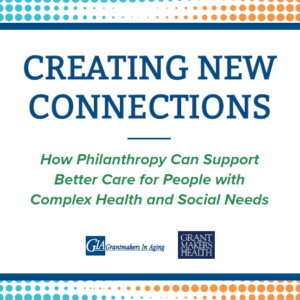
Creating New Connections: How Philanthropy Can Support Better Care for People with Complex Health and Social Needs
By presenting a range of approaches, large and small, this report can assist funders of all types and sizes to view their work through the lens of complex care.

Funder Strategies to Support Oral Health Care Access and Equity
Stark inequities in oral health care access and outcomes reflect the United States’ deepest societal divides and overarching social justice concerns. Health philanthropy is among the sectors aspiring to accelerate change and drive upstream solutions in a period of increasing vulnerability for communities heavily impacted by the downstream effects of oral health disparities.
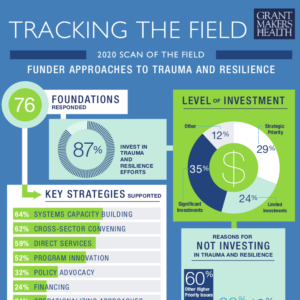
Trauma and Resilience Funding Infographic
To better understand how philanthropic organizations are supporting work related to trauma and resilience, GIH surveyed its Funding Partners in February 2020. The survey results have been compiled into a summary infographic that details primary focus areas, key strategies, and challenges and opportunities in the field.