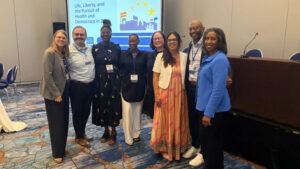

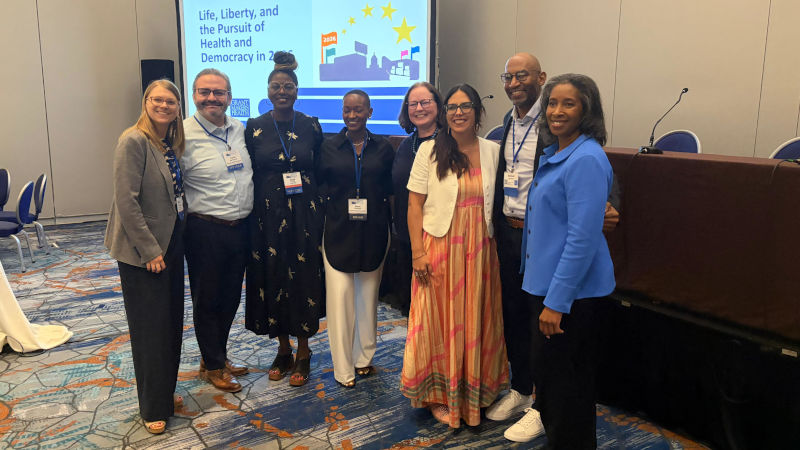
“The trials we are going through now are the foundation of how we move forward. It hinges on trust and a sense of community.” – Meena Seshamani, Secretary, Maryland Department of Health
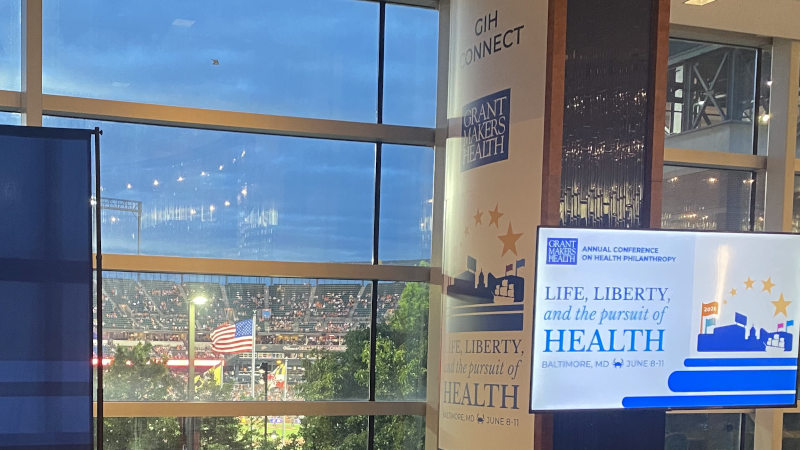
Life, Liberty, and the Pursuit of Health is more than this year’s Annual Conference on Health Philanthropy theme; it is the foundation for every planned session, unexpected learning moment, and conversation in Baltimore from June 8-11. The pre-conference kicked off with a range of discussions centered on the theme, including the state of Medicaid after H.R. 1, the connection between democracy and better health outcomes, and collaborations in public health funding.
The throughline across all pre-conference sessions was the need to work at the intersections of critical issues when funding health. To build trust across communities, funders must look beyond specific issue areas and consider the points where health and democracy, health and food, and health and community converge. Read on to learn more about the themes elevated in the pre-conference session, “Medicaid in a Post-H.R. 1 World.”
Passed in July 2025, H.R. 1 is now entering its implementation phase, with significant implications for state operations and budgets—particularly for changes to Medicaid and SNAP programs. In the pre-conference session “Medicaid in a Post-H.R. 1 World,” presenters, panelists, and over 100 attendees explored the landscape of federal changes, state-level decisionmaking, and community impact.
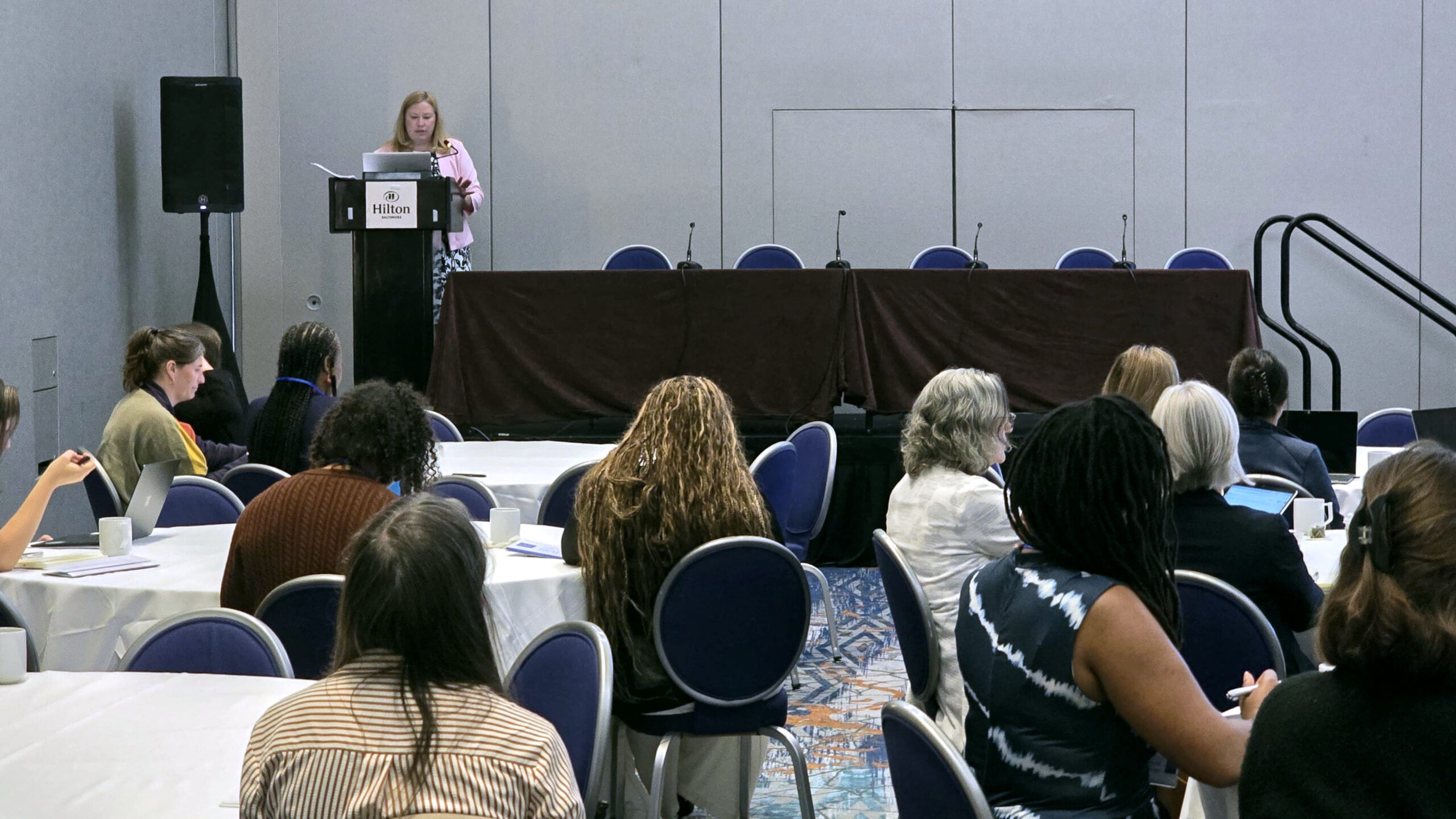
The session began with Sara Singleton, Principal at Leavitt Partners, presenting the effects of H.R. 1 on Medicaid, the Supplemental Nutrition Assistance Program (SNAP), and the Children’s Health Insurance Program (CHIP); insights on the Medicaid Community Engagement Interim Final Rule; and the implications for philanthropy. As Singleton shared, the impact of H.R. 1 will be profound for the 68 million Americans covered by Medicaid. The Congressional Budget Office (CBO) estimates that federal spending will be reduced by $990 billion over the next 10 years for Medicaid and CHIP. For SNAP, CBO estimates federal spending will be reduced by nearly $187 billion over the same timeframe. According to Singleton, these numbers will drive much of what happens to individuals and communities as H.R. 1 is implemented.
The Medicaid work and community engagement requirements have gotten the majority of attention as focus has shifted to implementation. Key requirements include:
- 80 hours per month of work, community engagement, or school
- Start date: December 31, 2026
Singleton shared that the Centers for Medicare & Medicaid Services’ Medicaid Community Engagement Interim Final Rule (IFR) has set a high bar for states seeking a good-faith exemption, underscoring the challenges ahead.
To help address H.R. 1 and its effects, Singleton suggested that funders consider:
- Leveraging lessons learned from Medicaid’s unwinding period to manage the present challenges and what lies ahead;
- Supporting community organizations with investments in capacity and resilience; and
- Using data to understand needs, assess impact, and inform decisions.
As the session turned to its first panel discussion, Tiffany Donelson, President and CEO of the Connecticut Health Foundation and a GIH board member, moderated a substantive question and answer session with Meena Seshamani, Secretary at the Maryland Department of Health, and Marvin Figueroa,Secretary of Health and Human Resources for the Commonwealth of Virginia. When asked how each panelist is preparing to implement H.R. 1, Secretary Seshamani touched on trying to leverage strong, homegrown systems in Maryland to help reduce the number of people who could lose coverage simply because they might not make it through the system. Secretary Figueroa discussed the urgency with which they are working to establish governance and decisionmaking structures and inventory the technology they do have to support the implementation of the regulation.
Both Secretary Seshamani and Secretary Figueroa spoke of the important role that funders can play in supporting state implementation of H.R. 1, including:
- Supporting opportunities for convening: Create spaces for connections across state health departments and funders, consumer groups, agencies, media, and more.
- Investments in documentation of harm: Conduct and disseminate research alongside implementation to understand the impact of the law. Funders need to invest in research and evaluation, especially in a moment when data is being challenged.
- Funding communications, outreach, and health navigators: Help people understand the changes to federal law and the ways their states are working to help them secure and sustain coverage by activating trusted messengers. While states have the messages and programs, funders have the relationships and resources to activate the messengers who can disseminate critical updates.
The second panel of the session focused on the community impact of H.R. 1, bringing together leaders at the intersection of health and human services. Radha Muthiah, President and CEO of Capital Area Food Bank; Deepak Madala, Director of the Center for Healthy Communities and Enroll Virginia, Virginia Poverty Law Center; and Vincent DeMarco, President of Maryland Health Care for All and GIH Andy Hyman Award for Advocacy recipient; outlined their key concerns for their communities as H.R. 1 rolls out, along with bright spots to instill hope.
Each speaker raised the cumulative effects of H.R. 1, with Muthiah noting recent research that suggests households will lose up to $187 per month in SNAP benefits, equaling about 40 fewer meals per household. Panelists also mentioned the rising fear among immigrant families of meeting in person, leading to essential expansions in telehealth and partnerships with local trusted organizations and messengers.
They all indicated that there are bright spots for funders to keep in mind, including:
- Staying true to values, goals, and trusted partners: Double down on people you are already working with, rather than recreating infrastructure or reinventing the wheel. DeMarco mentioned that Maryland Health Care for All is not backing away from its long-held goal of 0 percent uninsured in Maryland and encourages others to hold steady with the partnerships that work and the goals that drive momentum.
- Finding inspiration in partnerships: Trusted messengers and community coalitions can push back on misleading claims and incorrect information circulating in communities.
- Rethinking work requirements together: Many across the sector are coming together to discuss how to certify volunteers to meet the work and community engagement requirements. Collaborations can yield new models to work through the administrative burden of these requirements.
- Working at the intersections: Funders have an opportunity to think bigger. This is the time to foster cross-sector collaboration between health and other, perhaps unexpected, issue areas.
Between panels and after the session, attendees were already putting these recommendations into practice by sharing their stories, finding new connections, and asking big questions of themselves and each other. The topics, conversations, and creative thinking in this pre-conference session set a strong tone for the conference, which officially kicks off on Tuesday, June 9.
Fun Fact:
The world’s first dental school, the University of Maryland School of Dentistry, was founded in Baltimore in 1840.
Follow all the conference activities on GIH socials and the official GIH Annual Conference app.
Facebook | LinkedIn | Instagram | Conference App