
“We cannot have healthy communities if we don’t have a healthy democracy.” – Cara V. James
The 2026 Grantmakers In Health (GIH) Annual Conference on Health Philanthropy, Life, Liberty, and the Pursuit of Health, is officially underway in Charm City!
It was a full day of activity for our 700+ conference attendees. From an engaging plenary session to thoughtful panel discussions and insightful quick takes, the day provided ample opportunity to learn, connect, and grow. As participants buzzed around our sun-drenched conference center, a maker and sponsor market in the middle of the conference provided a chance to browse local artisanal goods and learn more from our mission-aligned partners between sessions. The day ended with Maryland crabcakes and a dinner in the grand hallway overlooking Camden Yards.
Read on to learn more about the range of topics covered at day one of the GIH Annual Conference.
Spotlight on Plenaries
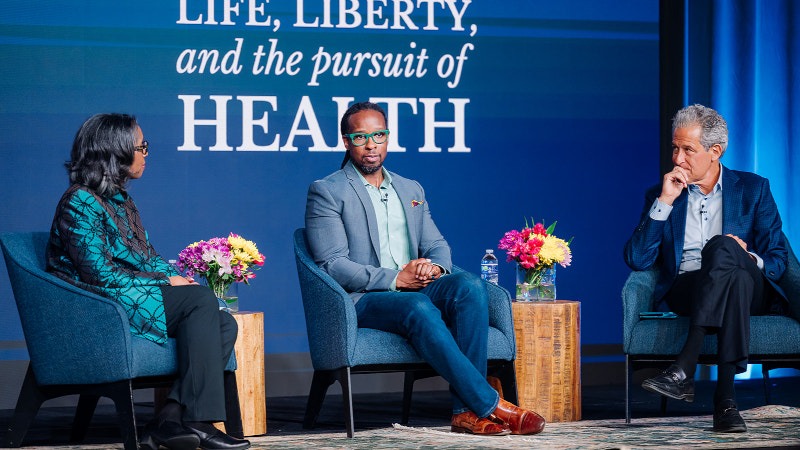
Life, Liberty, and the Pursuit of Health focused on the critical relationship between democracy and health, featuring reflections from Cara V. James, President and CEO of GIH; a rousing keynote from Joseline A. Peña-Melnyk, the Speaker of the House of Maryland’s General Assembly on how personal experience has informed health policy in Maryland; and a rich conversation and Q&A with author and historian Ibram X. Kendi and Robert Wood Johnson Foundation (RWJF) President and CEO Richard Besser. James welcomed attendees with a note of gratitude for those who traveled from all over the country to learn, connect, and grow with GIH this week. She emphasized that she is entering this year’s conference with hope because, in the room, she saw funders with immense courage, creativity, and compassion—and the potential for greater impact.
However, she acknowledged that what drives health philanthropy today may not feel so hopeful, including the consistent attacks on immigrant and transgender communities, threats to public health infrastructure, and continued demolition of the social safety net. Threats to health are also intertwined with unrelenting efforts to undermine democracy, from civic participation and civil rights to free and fair elections. Attendees were encouraged to take note of the intersection of health and democracy throughout the conference, because, as James implored, “we cannot have healthy communities if we don’t have a healthy democracy.”
Given these conditions, James pressed attendees to consider how they are showing up in this work. She recommended a commitment to a greater vision, one where everyone has a chance to thrive. She already sees this vision coming to life in communities around the country that are exercising their right to vote and assemble and to stand up for their neighbors—emphasizing that “moments of disruption can create moments of clarity.”
Most importantly, she stated that no single foundation or sector can solve the country’s issues alone. She encouraged radical collaboration rooted in mutual success. This type of collaboration requires funders to tell the truth, listen to the truth, and build the trust necessary to do difficult work. Throughout the conference and beyond, James asked attendees to look for collaborations that prioritize solutions and relationships. Her plenary keynote illustrated how collaboration can help develop new, creative programs and policies that lead to healthier outcomes.
The keynote speaker, Joseline A. Peña-Melnyk, is the first immigrant Speaker of the House of the Maryland General Assembly and the second woman to hold the position. Peña-Melnyk began with a reflection on legacy for the funders and advocates in the room, sharing a saying she often thinks about: “You don’t die when you are cremated or when you’re buried; you die when the last deed you perform on earth has been forgotten.”
Peña-Melnyk’s 20 years on the Maryland legislature’s Health and Government Operations Committee, including four years as Chair, were substantial. During her tenure, Maryland was one of the first states to create its own health exchange and expand Medicaid. These efforts reduced the number of uninsured people in the state by more than 50 percent, with many securing insurance for the first time. Additionally, Maryland’s Easy Enrollment Health Insurance program allowed people to sign up for coverage through their tax filing, and more than 70,000 people took advantage of it.
She remarked that these initiatives were intentionally developed in collaboration, with creativity at the forefront. As one of the most diverse states in the nation, Peña-Melnyk emphasized Maryland’s respect for all people, stating, “everyone is welcome in our tent.” Yet, when it comes to improving the quality, accessibility, and affordability of the health care system, there is always more to do. She emphasized that having leadership that reflects the community, particularly women and people of color, matters to informed and innovative policy.
As someone who immigrated to the U.S. and received Medicaid, she is well-positioned to make inroads in addressing health disparities. Recently, she has used her experience as an immigrant to ensure that Maryland is meeting the moment. As James shared in her opening remarks, we must imagine a future where everyone has what they need to thrive, and Peña-Melnyk is doing that.
Peña-Melnyk ended her remarks with a powerful statement of collaboration. “For all of us who believe that health care is a right, not a privilege, let’s stand together. Let us work together to make life better. Let’s have each other’s backs.”
After a standing ovation for Peña-Melnyk’s keynote, James introduced a conversation to expand on the day’s plenary themes. Speakers Richard Besser, President and CEO of RWJF, and Dr. Ibram X. Kendi, Director of the Institute for Advanced Study at Howard University, explored their personal and professional insights on the overlap between democracy and health. They shared that this moment is urgent, with Besser calling it a “battle for the future of our nation,” and Kendi saying the foundation of public health is being challenged.
Kendi added that we are in an existential moment, in which we must understand what will happen if we do not resist. Besser noted that grantees are putting themselves at risk every day and asked how funders are doing the same. While RWJF did not expect to invest as much as they have in a healthy democracy, Besser and the RWJF team have come to learn that democracy and health are not mutually exclusive. With support from Kendi’s research and scholarship, the Foundation has stayed true to its mission to dismantle the biggest barriers to health, one of which is structural racism.
Kendi emphasized the critical role of power-sharing in funder-grantee relationships, noting that people in the U.S. must recognize that power is more important than privilege. Kendi imagines a world in which the funders in the room can more audaciously support communities in building power. Besser then shared that funders may start to live more boldly by:
- Speaking out loudly and often;
- Using all the resources available and funding at increased levels;
- Supporting community organizing;
- Creating a compelling vision that resonates with people;
- Acting with urgency; and
- Modeling behaviors you want to see from other funders.
Coming full circle to Peña-Melnyk’s call to consider legacy and what we leave behind, Kendi shared, “I want to be remembered as someone who loved humanity and had the audacity to say there is nothing wrong with Black people and other groups of people. I want to be remembered as one of the people who was able to help us abolish racism.” Besser shared that he wanted his work with RWJF to be remembered as tenacious leadership and for making material shifts toward ending structural racism. From the opening keynote to vibrant conversation, this introduction to Life, Liberty, and the Pursuit of Health inspired attendees to consider what they can do now to ensure better health for all in the years ahead.
Meeting Communities Where They Are
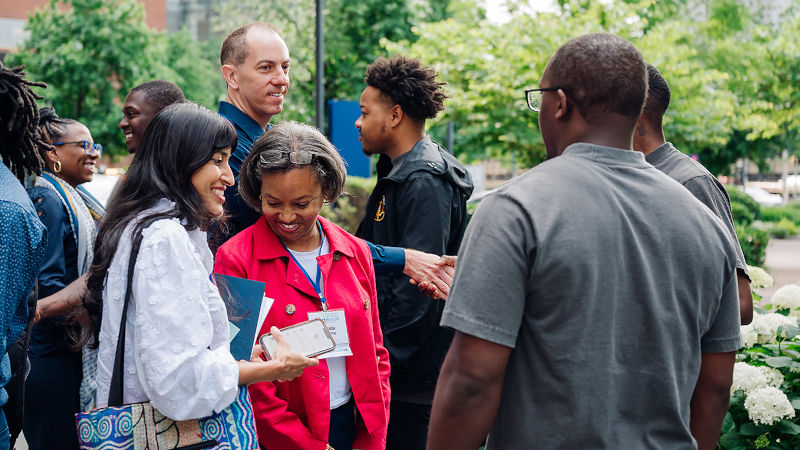
Dozens of GIH Annual Conference attendees lined up early this morning to explore the University of Maryland’s mobile health initiative, parked just outside the Baltimore Hilton Inner Harbor. It’s a familiar start to the day for both the TEAMS Community Health Initiative, part of the University of Maryland Golisano Children’s Hospital, and the UMMC Mobile Health Van from the University of Maryland Medical Center. They drive around West Baltimore to bring primary and preventive care directly to residents, provide resources, and support neighbors’ access to health education programs, from diabetes prevention to nutrition.
Staff who regularly circulate throughout Baltimore emphasized access as the throughline for everything they do. Their mobile vans cut through barriers to health care, including lack of transportation and the rising costs of care. Over time, this leads to deeper community trust and engagement. Attendees engaged in discussions with community health workers (CHWs) and physicians and walked through the facilities in both vans, which include examination and screening rooms, indoor and outdoor spaces for education and counseling, and their robust libraries of resources. The onsite experience helped ground attendees in the challenges of health care in our host city of Baltimore and highlighted the people and initiatives working daily to improve health knowledge and address disparities. For mobile health initiatives, staff encouraged funders to continue earmarking dollars for their specific issue areas, while also considering the unexpected costs of delivering accessible health care. The long-term and daily operations, like driver payments and funding additional CHWs, are what most require sustained funding.
Newcomers Lunch
Newcomers to GIH gathered for lunch amid a busy conference schedule. The session began with a warm welcome from Cara V. James, GIH President and CEO and Qiana Thomason, GIH Board Chair and President and CEO of Health Forward Foundation. They greeted a room of nearly 80 attendees, many of whom are attending the annual conference for the first time.
The hour-long gathering provided an opportunity to hear tips on making the most out of the conference, meet other attendees, and learn more about what GIH partnership can do for Funding Partners. Jill Shumann, GIH Vice President for Programming, started by highlighting the 2026-2028 guiding priorities, including:
- Maintaining a partner-centric approach;
- Exercising leadership and influence through policy and legal advocacy;
- Fostering connections and collaboration with and across health philanthropy;
- Positioning the section and ourselves to communicate health philanthropy’s value; and
- Achieving continuous improvement through operational excellence.
The presentation also provided an overview of the ways GIH provides value to its Funding Partners through convenings, publications, strategic guidance, learning communities, and advocacy. Shumann also introduced several key program staff and directors at GIH.
Cecilia Amor Kramer, GIH Director of Development, talked about GIH’s network of Funding Partners and the ways GIH helps the funding community learn, connect, and grow. This also included a snapshot of 249 Funding Partner organizations located across the United States. Tips for making the most of partnership include signing up for GIH announcements on the website, submitting an article for an upcoming publication, following GIH on social media, or suggesting an upcoming event. The session ended with a fun game of bingo, with attendees finding colleagues in the room who matched descriptors on a bingo board. Popular squares included finding someone from a national foundation, a program officer, and someone from your region of the country. All attendees were able to check off the “meet a trustee” square, thanks to the opening from GIH Board Chair Qiana Thomason.
Funder Strategies and Experiences with Legal Advocacy
Funder Strategies and Experiences with Legal Advocacy was an interactive session moderated by GIH President and CEO Cara V.James. Speakers explored how legal advocacy can be a powerful tool for advancing equitable access to Medicaid, SNAP, vaccines, and civil rights protections. Mara Youdelman, Managing Director of Federal Advocacy at the National Health Law Program, started by outlining opportunities to engage in legal advocacy. These examples included:
- Promoting story collection;
- Tracking opportunities to engage in legal advocacy;
- Funding legal advocacy organizations;
- Supporting signature gathering and efforts related to ballot initiatives;
- Signing letters drafted by other organizations; and
- Submitting administrative comments and amicus briefs in litigation.
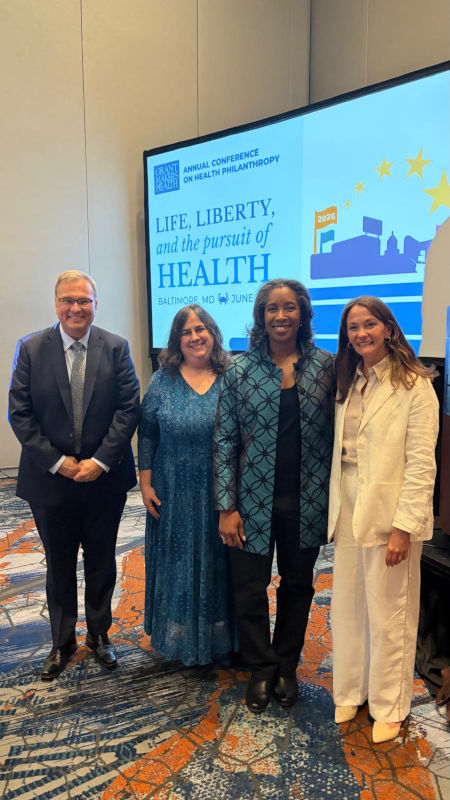
Joel McElvain, Senior Legal Advisor of Democracy Forward, and Katy DeBriere, Senior Attorney of the National Health Law Program, clarified what activities are most successful and strategic and highlighted the most pressing legal issues shaping these policy areas today. While sweeping changes are occurring at the federal level, the panel discussed important limitations of executive orders at the state and local levels.
Speakers also looked ahead to emerging developments through 2026 and discussed how funders can prepare and engage effectively by supporting legal advocacy. Ongoing attacks on DEI, affirmative action, immigrants’ rights, scientific advancements, LGBTQ+ rights, and more provided an even greater sense of urgency to the conversation.
The session included perspectives from funders actively supporting this work, as well as small-group discussions to help participants identify opportunities for action and collaboration.
Building Healthy, Equitable, and Inclusive Rural Communities
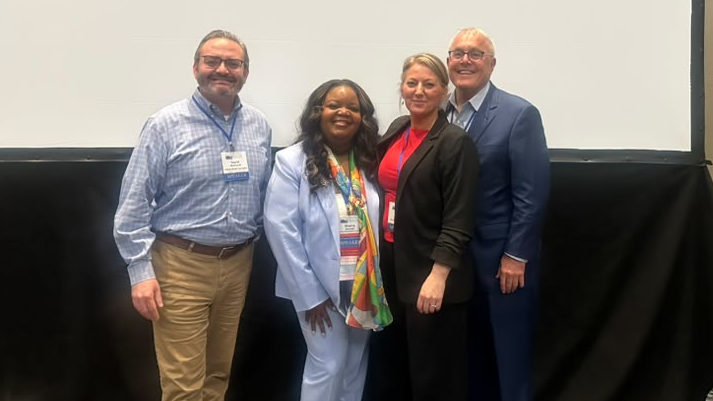
“Rural is having a moment,” noted Mark Constantine, Senior Vice President of Community Investment at Dogwood Health Trust, at the start of this session. With increased federal and state funding in the mix and growing philanthropic interest, there is a real opportunity to make a difference in rural health. Inspired by a community of practice supported by Grantmakers In Health and the Brookings Institution, the panelists shared insights from their travels across the country on economic development, health equity, and funding in rural communities.
Panelists Tuleah Palmer, President and CEO of the Blandin Foundation; David Martinez III, Director of the Vitalyst Health Foundation; and Sherra Bennett, Senior Program Officer at the Winthrop Rockefeller Foundation; provided context on why rural communities matter to them as funders. They spoke about the need to respond to the moment with more coordination. Rural is not just a local issue; it also impacts the national landscape.
Martinez shared that small grants can be truly transformative in a rural context, and Bennett remarked that many of the system challenges across all areas the working group visited were the same. Funding rural health has wider implications for American resilience, infrastructure, and innovation. We must ask why rural areas were underinvested in the first place and commit to reframing rural as an imperative, not just a trend.
Throughout the session, panelists suggested that funders who are ready to invest in rural regions should:
- Understand the area’s context: Determine who has benefited from the systems and who has not. Lean into the issues of race, place, and class in rural areas, but be wary of mission creep. Instead, fund the organizations that are already exploring and navigating these issues.
- Remember that rural is not a monolith: Rural communities differ, but many share a common identity and legacy. While many rural communities share similar systemic issues, each place still requires a tailored approach.
- Start with the “doers”: Include the right people at the table by engaging in a series of conversations, and always ask: who is not in this room, but should be?
- Don’t go at it alone: Join a community of practice, connect with peers, and find other place-based funders who you can dial up anytime for brainstorming, conversation, and innovation.
- Be transparent: Trust and consistency are critical to forming relationships. Make the time commitment and regularly check in, which requires blocking that time and not letting those connections fall to the bottom of a to-do list. Make sure the Board is committed to this place-based, lasting work so you can be clear with the community.
- Fund capital and expedite the process: Fund equipment to diversify revenue streams, support IT infrastructure, and make sure hospitals can stay open. Locate community foundations to support funding capital. Local program officers are ready to collaborate. Working together helps build the infrastructure and ecosystem to sustain the work even when national strategy shifts.
At one point, Bennett asked, “how do we ensure that rural health is not just having a moment, but is creating a milestone?” Based on the session, funders are key to capitalizing on this moment and turning it into a milestone effort of investing in rural communities. This session is supported by Dogwood Health Trust and the Robert Wood Johnson Foundation.
Reimagining Family Planning Beyond the Crisis
In Texas, access to family planning has been defined by shifting laws. Every Body Texas, the nation’s largest federally funded family planning organization, has become a steady force amid this turbulence. Kristie Bardell, Chief Executive Officer of Every Body Texas, led a quick take that outlined ways funders can move from responding in a state of crisis to planning for a continuum of care.
At the start of the session, a poll of the room revealed the following:
- What words come to mind when you hear about family planning? Respondents shared birth control, contraceptives, choice, autonomy, health, and more.
- What policy or political factors do you think are impacting the delivery of family planning services? Respondents shared Christian nationalism, misogyny, abortion restrictions, immigration enforcement, and more.
- What sectors or partner collaborations could strengthen family planning access? Respondents shared democracy, telemedicine, community health workers, education, and more.
Every Body Texas supports more than 150 clinics and 191,000 clients statewide via Title X, many of whom are underinsured or uninsured. As a result, they encourage funders to reframe their role from funding services to sustaining systems. Examples include shifting reactive funding to proactive investment, shifting compliance-driven support to partnership, and shifting short-term grants to long-term resilience. By centering grantees, elevating new narratives, and testing bold funding models, Every Body Texas is protecting access while reframing the conversation around family planning.
Transforming Lives Through Trust, Investment, and Latina Upward Mobility
Barbara Orozco-Valdivia, Vice President of Programs & Community Partnerships at Alliance Healthcare Foundation, and Daniela Perez, Chief Executive Officer at MANA de San Diego, spoke about the importance of culturally responsive program design through their initiative, the Latina Upward Mobility Initiative (LUMI). The program, launched by MANA with support from Alliance Healthcare Foundation, was designed to empower low-income Latina mothers through Guaranteed Basic Income (GBI) and holistic wraparound services.
Orozco-Valdivia shared that LUMI integrated several factors she always considers as a funder: community-centered leadership, trust-based partnerships, and systems-focused investment. At the Alliance Healthcare Foundation, they do not see their work as grantmaking, but rather as an investment in community. Orozco-Valdivia also made an important point: ceding the floor primarily to MANA as a model of sharing space and distributing power equitably is a way her organization truly lives its values.
Perez went on to share more about the MANA programs that were important sources of inspiration for LUMI, including the Hermanitas Program for first-generation youth in 7th-12th grade and the Latina Success Continuum, which has reached over 2,000 leaders in San Diego. LUMI recruits mothers of children from the Hermanitas Program to create a throughline across all of MANA’s work and build a culture of belonging and support. LUMI combines a guaranteed $500 per month direct investment for six months with support like career and financial development workshops and bilingual one-to-one case management to tailor goals, with the ultimate objective of building the financial and social stability that allows families to thrive.
Through the program, both Perez and Orozco-Valdivia learned that:
- When you trust the community and give people the resources, path, and support, they will achieve their goals.
- Funders can support the sustainability and scalability of programs, advocating for additional funding and making connections.
- You cannot keep successful programs in a silo. Consider replicating programs with other populations and encourage other funders to share impactful programs with their grantees.
To date, four participants have gained new jobs or had their salaries increase; 100 percent participated in financial education workshops; 85 percent reported educational advancement; and 100 percent showed increased financial stability due to the GBI.
Fun Fact: Baltimore has more public statues and monuments per capita than any other U.S. city.
Reporting from the 2026 Annual Conference on Health Philanthropy
Follow all the conference activities on GIH socials and the official GIH Annual Conference app.
Facebook | LinkedIn | Instagram | Conference App