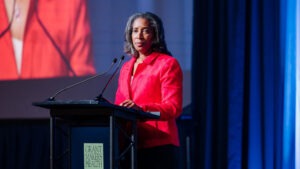

Cara V. James, President and CEO of Grantmakers In Health, closed out the final day of the 2026 Grantmakers In Health Annual Conference with a nod to her opening remarks: “We the people can chart a new direction.”
While this moment is existential, overwhelming, and at times existential for health philanthropy, it also presents an immense opportunity. We can take inspiration from the people who united 250 years ago to work together in the service of a greater vision: a nation of the people, by the people, and for the people.
Every conference session and plenary challenged funders to consider what we need to do to cast a new vision for the future. James encouraged conference attendees to ask this question: When you look down the line, perhaps at the Grantmakers In Health conference in 2056, what will you be able to say you did today?
As several conference speakers suggested, funders can start by working across sectors and taking risks so that those on the frontlines do not have to bear the weight of change alone. Importantly, mobilizing and organizing is not new. James suggested that attendees continue to nurture connections and new relationships formed at the conference, as well as relationships with peers and leaders they have admired or worked with over the last few years, because “relationships are a vital ingredient to this work.”
How Can I Reach You? Building Trust Through Communication to Enable Change
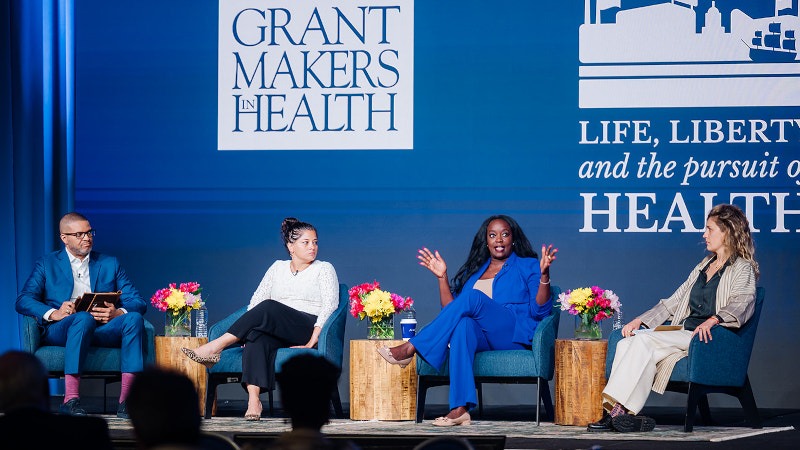
How can I reach you? This is an existential question but also a practical one for health philanthropy. Building connections between funders and grantees, grantees and communities, and among funder peers is essential to creating impact. Yet reaching others has grown harder as communities have become more siloed and insulated, and social media algorithms drive frustration and outrage rather than genuine connection and understanding. The final plenary of the 2026 annual conference—“How Can I Reach You? Building Trust Through Communication to Enable Change”—brought together award-winning storytellers, organizers, and advocates to explore how communication can build trust across real and perceived divides.
What Does Communication Mean to You?
Communication is about clarity, but the term itself can have different meanings to different people. To open the session, moderator Allyn Brooks-LaSure, Chief Communications Officer & Vice President of Communications at the Robert Wood Johnson Foundation, asked each panelist to share how they define communication:
- Brinda Adhikari, Co-Host and Co-Creator of the Why Should I Trust You? podcast shared that communication is engaging in a two-way dialogue to learn from others.
- Ashley Allison, Founder and CEO of Watering Hole Media and Publisher of The Root, doubled down on Adhikari’s assessment. For Allison, communication is about talking with people, not at them.
- Danielle Lee Tomson, Research Manager at the Center for an Informed Public at the University of Washington, said that communication is the expression and reception of one’s stakes and desires.
Opening Dialogue by Listening
Two-way communication starts with understanding who you are talking to and what may prevent them from hearing you. Panelists agreed that getting to know your community in advance—their likes, dislikes, hobbies, backgrounds—can help you understand their perspective and prepare for a more complex, nuanced conversation.
Adhikari’s podcast brings people who mistrust systems into conversation with public health professionals. She launches every recording session with a conversation to get to know her guests on a personal level before moving into a more moderated conversation. It is in these unfiltered moments that she starts to hear the stories about why someone may be distrustful of public health. She has learned that “when you don’t align on culture and values, you will not align on information. Trust is an alignment of values and culture, so someone knows ‘you will have my back.’”
Allison and Tomson similarly find a way to connect with people on an individual level before diving into politics and potentially more divisive topics. When Allison is not on air as a political commentator for CNN, she centers her conversations with colleagues and guests on their personal lives and interests, which builds trust and leads to more fruitful conversations when they are on camera. Tomson, who recently spent time with MAGA influencers for a forthcoming book, noticed a growing gap between people’s understanding of how the world works and their lived experiences. In conversations about public health, people felt that the Make America Health Again (MAHA) movement was the first to truly listen to their lived experiences with health care. People value being heard, underscoring the need for philanthropy to listen intently and intentionally before communicating.
Cutting through the Challenges of Contemporary Communications
To listen effectively, there also has to be some recognition that the communications landscape has fundamentally changed. Allison noted that no one is immune to misleading information. Misinformation and disinformation on social media are so prolific, unregulated, and speedy that “the moment we think we’re better than being susceptible to these tactics is the moment when we’re most vulnerable.”
Tomson noted that institutions often feel the need to project facts, expertise, and authority through more traditional channels such as press releases to counter the rush of false claims on social media. Instead of “doing it right” according to outdated communications standards, institutions need to speak clearly and conversationally on the channels where information is circulating. People may not always have a stake in the message being communicated, so keeping messages on the platforms where people are while speaking plainly without jargon can support better connections and lead to greater investment in the message.
Adhikari similarly recognized that traditional communications methods that may have worked in the past would not work for her podcast. She shared that people often ask her to produce segments on current trending topics, like misinformation, equity, and democracy. For her, these are terms, not stories. To get to the raw and real stories that shape people’s decisions, she gathers groups of people who care about an issue.
Panelists said that funders need to understand the communications landscape, be willing to play by new communications rules, and constantly adapt their language to what people want, need, and are willing to listen to. Allison recommended adopting a “public service mindset,” which requires constant openness to communication and a willingness to adapt language to reach a wider audience.
Finding Your ‘Why’ to Communicate More Effectively
Communication is personal, and it is about the stories that shape our understanding of the world. Brooks-LaSure asked each panelist to share what drives them to bridge divides through communication.
- For Adhikari, her own immigrant story has shaped her approach to communication. She loves the United States and has a deep passion for understanding its makeup, dynamics, and heart. At one point, though, she found herself actively disliking the country, which amplified her fear and frustration. Why Should I Trust You? started as a project to change that dynamic, and she declared that through this work, she is falling in love with the United States all over again.
- Allison’s “why” is rooted in living out her ancestors’ wildest dreams: “I come from a family of storytellers. This present moment is not how my story ends. It’s barely Chapter Four of the book.”
- Tomson approaches communications from a place of healing. She recognizes that the systems and stories that have gotten us to this point are broken, and that in the process of healing, we can reimagine these systems together.
Panelists said that every funder in the room needs to find their unique reason for doing the work to communicate effectively and authentically. Identifying this reason will help funders communicate and connect better with others. Panelists offered several recommendations for how philanthropy can begin building those connections today:
- Adhikari simply stated: “invest in building community, not building an audience.” She challenged funders to look beyond social media likes, clicks, and followers, and instead invest in the people who are actually building community—the ones who are taking risks and generating real impact.
- Allison said that by fundraising in some capacity throughout her career, she has learned that it is critical to collaborate and build coalitions to strengthen the ask.She recommends knowing where you are strong and where support would be valuable. For her, developing communications in coalition allows the work on the ground to thrive.
- Tomson had a similar line of thinking. “Communications is not marketing. It is a way of expressing a worldview,” she said. It’s not just communications infrastructure like media outlets and influencers, but narrative and ideas that drive change and build trust. Philanthropy needs to know what story it wants to tell to then define the audience, the need, and the intended impact.
In trying to reach people, start by listening, understanding the challenges and opportunities of today’s communications infrastructure, and defining your “why” to support communications that are clear, effective, and authentic.
Funders Respond to Anti-Trans Policies and Support Inclusive Health Care
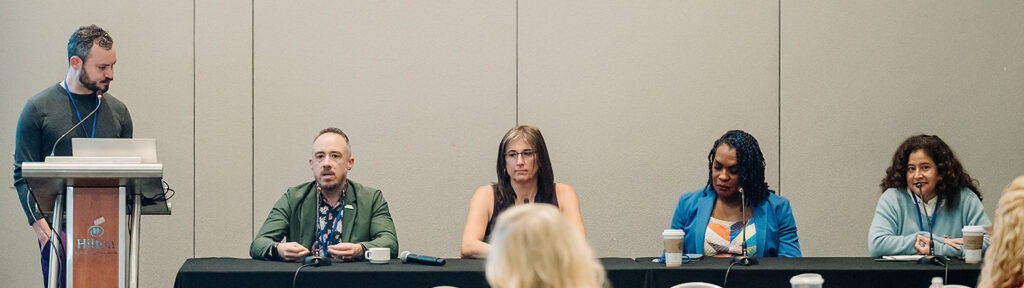
Transgender and gender expansive communities face escalating political, legal, and social barriers to health care amid a surge of anti-trans legislation and executive actions. Mike White, Program Officer of Strategic Portfolios at the Robert Wood Johnson Foundation (RWJF), the largest funder of trans health in the country, moderated a session with community and systems change leaders on community-rooted strategies for safety, belonging, and equitable access to health care.
Imara Jones, Founder and CEO of TransLash Media, asked funders to consider why they should fund trans health before considering how. People leading attacks on trans health are advancing a narrative that trans people are not deserving of care by sowing disbelief in the extensive research on trans health care and the decades of positive health impacts. The dehumanization of trans people has led many to see the needs and humanity of trans people as fake, unnecessary, and unworthy. Importantly, these attacks are intended to destabilize health care not just for trans people, but eventually for everyone.
Kellan E. Baker, Senior Advisor for Health Policy at the Movement Advancement Project (MAP), noted that many barriers shaped by our systems keep trans people from accessing health care. Like many on the panel, Baker thinks about trans health through a systems lens and believes funders must consider ways to both talk about trans people and emphasize the connection between policy and systems change.
For Allison Scott, Director of Impact and Innovation at the Campaign for Southern Equality, funders must consider trans health care today and how that can be reimagined in the future. From there, the focus should be on trans youth and on people, groups, and organizations on the frontlines, listening to the solutions that are working and what needs to be reconsidered.
Anna Castro, Principal Narrative Strategist at the Transgender Law Center, left the room with a succinct and profound statement: “fighting for trans rights is inextricable from health care in this country.” Building on that point, they discussed the resources funders can provide to bring movements that sometimes operate in silos together. They specifically mentioned the Transgender Law Center’s work with the RWJF Caregiver Narrative Cohort and the value of such a rich, multi-issue convening. For Castro, funders can treat this rupture in government funding as an entry point and a moment to call for health care for all.
Some ways funders can move from why to how include providing funding for:
- Community-based organizations that are talking to people every single day;
- Organizations that have a multi-function design: organizing, policy, and legal work;
- Digital media, especially when many community-based organizations have retreated from the digital landscape, but YouTube and TikTok are where many people are getting their medical and health information;
- Broad-based organizing and narrative infrastructure;
- Direct connection of trans people to health care services; and
- Direct engagement with disinformation and amplifying the actual lives of trans people in media and in policy to show our shared humanity.
The panelists agreed that funders need to play a role in shifting the perception of trans health care and be clear that what affects a marginalized group has implications for all. The takeaway is that when funders support systems that work for marginalized people, those systems improve for everyone.
The Climate Prescription: Why Healthy Funders Can No Longer Look Away
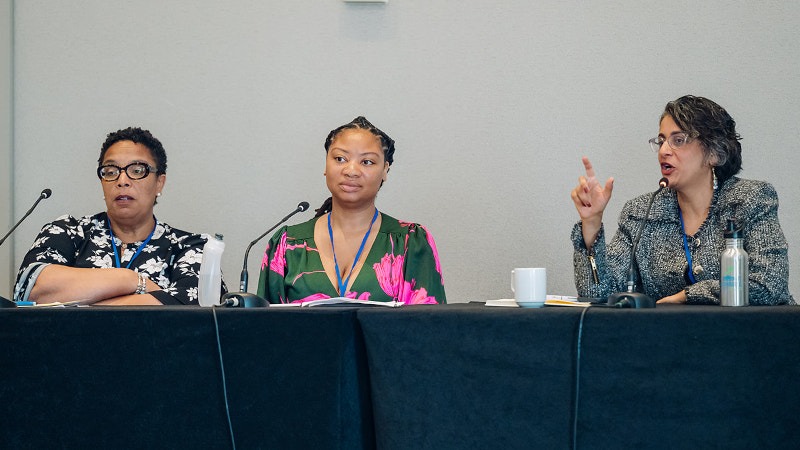
Arpita Jindani, Senior Program Director at Grantmakers In Health, kicked off the session, The Climate Prescription: Why Health Funders Can No Longer Look Away by posing two questions to the audience. First, Jindani asked how many of those in attendance included the word “climate” in some way on their organization’s website. Less than one-third of the audience members raised their hands. She followed by asking how many in attendance had experienced climate impacts at their organization, to which nearly half of the audience raised their hands.
Framing the Challenge
With this baseline established, Jindani turned the program over to Dr. Lisa Patel,Pediatrician and Executive Director at the Medical Society Consortium on Climate and Health. Patel shared key insights about the magnitude, severity, and specific consequences of climate change on health that funders need to be aware of. She noted that when it comes to climate change, every part of the body is affected at every life stage, underscoring that it will leave no organ untouched or life unchanged. According to the Environmental Protection Agency, for instance, there is a projected 4-11 percent increase in childhood asthma cases due to climate-driven changes in air quality. Each environmental hazard affects the United States’ health system through increased utilization, which puts pressure on a system already under strain from cuts to programs like Medicaid. In her own practice, she is observing an increase in cases of heat illness and asthma.
However, there are signs of hope emerging that funders need to know and be curious about. Patel pointed to examples of coalition building, community organizing, and advocacy for renewable energy as activities that can have a meaningful impact on climate-related health challenges. Lisa Brody, Chief Operations Officer and General Counsel at the Foundation for a Healthy St. Petersburg, shared how philanthropy played a huge role in relief and recovery efforts when her community of St. Petersburg, Florida experienced the back-to-back consequences of Hurricane Helen (category 4) and Hurricane Milton (category 3). Her foundation collaborated across sectors between the two storms with the Hometown Haulers program that expedited the clean-up process by hiring citizens with vehicles to haul away debris, which provided much needed income for people whose jobs were impacted by the storms.
Sunni Hutton, Co-director at Sow Joy Peoples Fund, discussed the the local response to an EF3 tornado that tore across her community in St. Louis last May. The storm carved a nearly 23-mile path, nearly a mile wide, hitting North St. Louis with full force, an area historically under-resourced and which has endured decades of environmental racism, land speculation, and systemic disinvestment. The tornado destroyed homes, took out power, and left families vulnerable in the rising heat. It was a moment that revealed the disastrous consequences of climate disasters colliding with historic inequality. Fortunately, the organizing networks built over decades in this region—dating back to civil rights struggles, housing fights, and environmental justice campaigns—became the foundation for how the community responded. These organizing networks are an essential aspect of community resilience, and they need funding support to carry out their work. In St. Louis, much of this work remains undone with 2,000 homes in the community still considered to be hazardous.
What can philanthropy do?
Discussions on how philanthropy can get involved included:
- Helping mutual aid efforts and community organizing with sustained support. The investments need to be in organizing communities and strengthening people’s connections to each other so they can respond in the moment;
- Considering investments in weatherizing homes to withstand new climate realities;
- Being more intentional about listening to those involved in the food system, because they are often involved in immediately responding during times of crisis;
- Supporting capacity building and business continuity planning; and
Recognizing that trust-based philanthropy is an important approach to deepening relationships and supporting communities.
Remaining Data-Driven When Data Disappears
Meghan Maury-Fox, Project Director at Funders for the Future of Public Data, kicked off Remaining Data-Driven When Data Disappear by outlining major changes shaping the federal data landscape. Research studies have been paused, key datasets have been removed from public access, equity-related questions have been eliminated, data confidentiality has been compromised, and tools used by non-experts to process data have been removed. To date, between 3,000 and 4,000 datasets have been removed from public access, and thousands more have been altered, with the largest sources being the U.S. Agency for International Development (USAID), the Office of Management and Budget, and the Department of Health and Human Services. This may just be the tip of the iceberg, as some data and funding changes are not being put out for public comment, and information about data loss is still being uncovered every day.
Colin Planalp, Associate Director for Emerging Health Policy Issues at the University of Minnesota, shared how he and his team have begun investigating how these changes are already affecting states, particularly around policymaking, and what states can do to mitigate the risks of data loss. Planalp and his team have engaged in a series of conversations with researchers, state data analysts, funders, advocates, former federal officials, and civil servants. For many, these changes have immediate effects on informed decisionmaking and equitable resource allocation, as well as long-term implications for public trust and data quality.
Ninez Ponce, Director of the UCLA Center for Health Policy Research, has worked for years to create an inclusive data system by nurturing relationships with dozens of funders for the California Health Interview Survey (CHIS). Instead of having to do a round of funding or a “bake sale” every few years, she maintains a diverse funder portfolio so that when a funder exits, the annual survey can continue without disruption. Now, she is specifically seeking funding for disappearing data, especially around sexual orientation and detailed race and ethnicity data that honors different identities of people in California.
Karuna Sridharan Chibber, Evaluation & Learning Officer at The David & Lucile Packard Foundation, is a public health researcher who “grew up” on datasets and has long recognized that the United States and funders need a data strategy. When she saw the “acute shocks” to federal data loss in 2025, Chibber knew her foundation needed a data strategy moving forward. By speaking with peer funders who were leading the way, she was able to make the case that data evidence is core to how change happens. Now, Chibber notes that “chronic data destruction” has begun. The challenge is not just saving the data that has been lost but also preserving and building the massive data infrastructure—expertise, relationships, and institutions—that allows data to be connected.
Panelists agreed that there are several actions for funders to take now:
- Recognize that data is essential to health equity: you cannot get to health equity, where everyone has the opportunity to live their best possible life, or address policy, if you do not have the tools of measurement.
- Strengthen local and state capacity: panelists suggested funding grassroots organizations to support and build their capacity to collect, own, and distribute data. Additionally, they recommend supporting state data officers and helping them share their best practices with local jurisdictions.
- Build on existing infrastructure: consider adding modules to an existing survey rather than spending far more to create a new one.
- Fund flexibility: being able to pivot is key in this moment. Don’t fund a single initiative with many guardrails; instead, give grantees the space to shift their surveys, staffing, or capacity needs.
- Be forward-thinking: philanthropy has a real platform to bring together stakeholders to reform the data system for the future. There were flaws in the prior system, so this is an opportunity to learn and grow that must be taken.
Other opportunities for funding included multistate coordination, state-level workforce investment, legal infrastructure, and community data literacy. Panelists agreed that this is a moment for funders to be entrepreneurial: think big while also leveraging existing opportunities. This is not the time to compromise or backtrack.
Opportunities to Advance Healthy Aging Policies
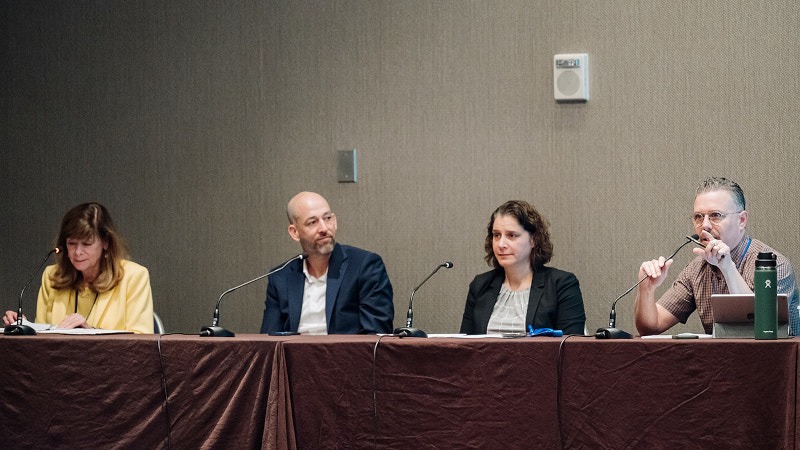
Jonathan Cohen,Professor of Clinical Population and Public Health Sciences at the University of Southern California, opened the session Opportunities to Advance Healthy Aging Policies by challenging the perception that those over the age of 65 do not need the attention of funders because of the existence of robust programs like Medicare. With escalating attacks on budgets and programs that older Americans rely on, the need is not only present but growing. With that context, the session explored three questions with panelists Alison Barkoff, Hirsh Health Law & Policy Associate Professor and Director of the Hirsh Health Law and Policy Program at the George Washington University Milken Institute School of Public Health; Sandy Markwood, CEO of USAging; and Kevin Prindiville,Executive Director at Justice In Aging.
Policy Awareness
The first question the panel explored laid out the policy landscape components funders need to know right now. Barkoff shared that the primary policy issue is attacks on Medicaid, particularly cuts and changes that will affect home and community-based services and people’s ability to age in place. She also underscored the perilous state of the nation’s federal infrastructure to support aging as a result of recent staffing cuts in the federal government. Prindiville encouraged funders to always approach policy by asking, “what about older adults?” to ensure policy implications can be reframed through that lens. He went on to share that H.R. 1, particularly its attacks on immigrants, will limit their access to coverage, making it a high-priority need for funders. Markwood also drew attention to the harmful effects of H.R. 1 and encouraged funders to understand how the reductions to the Supplemental Nutrition Assistance Program (SNAP) will be felt at a time when one in four older adults are malnourished in the United States.
Funder Priorities
With the second panel question, the focus shifted to how funders can prioritize their philanthropy in the current environment. Markwood encouraged funders to prioritize support for caregiving, noting that one in four caregivers report feeling isolated and that 47 percent experience physical strain. From a long-term perspective, she encouraged funders to focus on investments in housing and home- and community-based services. According to Barkoff, funders should consider supporting state-based advocacy organizations or the national advocacy organizations that support their state counterparts. She also highlighted the need to fund organizations that are positioned to bring litigation in support of healthy aging issues. Prindiville pointed to prioritizing the defensive Medicare work to help with responding to attacks and changes at the federal level, as well as investments in the creation of a true long-term care system in the United States.
Opportunities for Collaboration
The panel concluded with strong agreement on the importance of connecting data collection and storytelling to advance healthy aging. Markwood went further, saying that research and the ability to use it effectively through storytelling are key components of elevating the importance of bringing social care and acute health care together. Prindiville helped bring the panel to a close by recommending that funders consider their giving in a way that contemplates how data collection will ultimately be used to tell a compelling story. Funders should understand how the research they fund will ultimately be used by advocacy partners in compelling communications and messages.
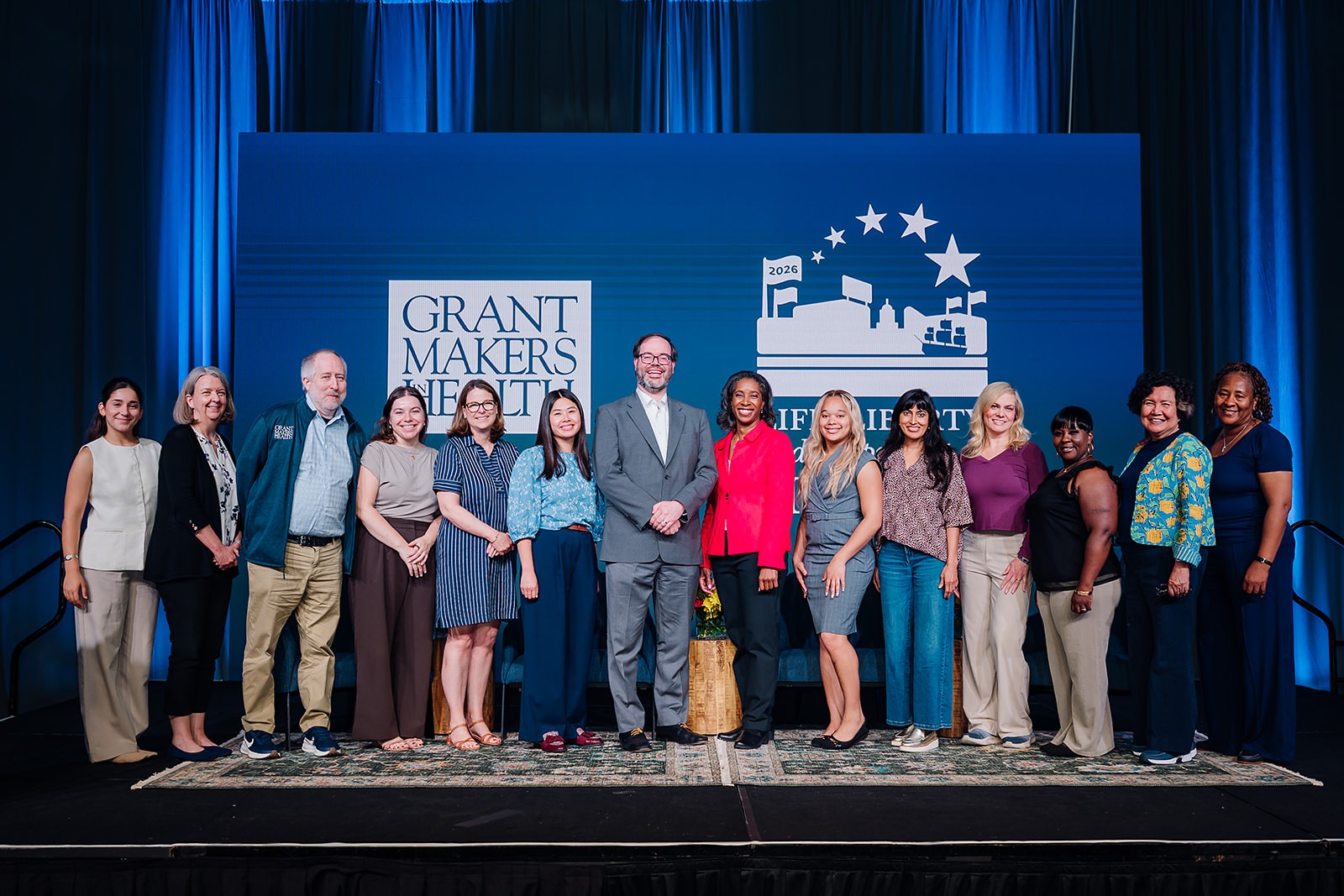
Fun Fact: Francis Scott Key wrote the “Star-Spangled Banner” after the Battle of Baltimore during the War of 1812.
Reporting from the 2026 Annual Conference on Health Philanthropy
Follow all the conference activities on GIH socials and the official GIH Annual Conference app.
Facebook | LinkedIn | Instagram | Conference App