
Upcoming Events
Explore Access and Quality Topics








Latest Resources
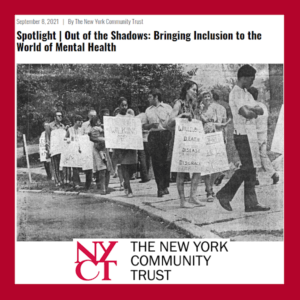
Out of the Shadows: Bringing Inclusion to the World of Mental Health
The New York Community Trust recently issued a Spotlight on Mental Health brief summarizing some of the foundation’s work to advance the behavioral health field over the years.

FORE: August 2021
FORE (Foundation for Opioid Response Efforts) will provide grant support for specific projects that aim to improve, expand, and/or scale evidence-based family-, school-, and/or community-based prevention services for children and families, particularly for those at highest risk.
Blue Cross Blue Shield of Massachusetts Foundation: August 2021
Blue Cross Blue Shield of Massachusetts Foundation announced two upcoming funding opportunities for nonprofits in Massachusetts.
New Oral Health Policy Equity Tool
A user-friendly, interactive resource, the tool is designed to help key stakeholders center equity and community engagement in oral health policy agenda-setting. It is flexible and can be used to foster important advocacy conversations or analyze a specific piece of legislation or a comprehensive policy agenda.
FORE : June 2021
This RFP targets projects which can explore and/or evaluate new “outside-the-box” ideas, bring together approaches from several diverse fields and engage multi-disciplinary, cross-sector teams to solve some of the most intractable problems with the nation’s opioid crisis.
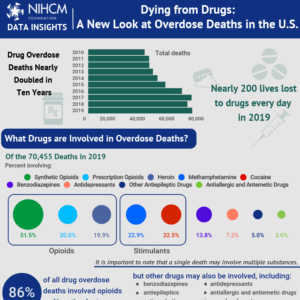
Dying from Drugs: A New Look at Overdose Deaths in the U.S.
The COVID-19 pandemic has had a devastating impact on people living with substance use disorder. The NIHCM Foundation recently released a new infographic with analysis of the latest data and trends for overdose deaths.
Publications and Reports
Rural Health Transformation Program: Opportunities for Philanthropy
This GIH issue brief is a high-level analysis of major themes as identified from initiatives and strategies in state applications, reflecting the primary foci of each state’s Rural Health Transformation (RHT) program. Based on this analysis, we offer several recommendations for grantmaker investment and action in support of RHT initiatives and, ultimately, improving the health and well-being of rural communities.
Understanding Vaccine Access in a Shifting Landscape
This Grantmakers In Health (GIH) Issue Focus provides an overview of the current vaccine policy landscape and describes how health funders can respond to threats to vaccine access.

GIH Bulletin: January/February 2026
One year ago, as we were just one month into the new administration, I wrote that “At a moment when so much has been described as ‘unprecedented,’ and so much of what we value is being attacked, we need to ask ourselves as individuals, organizations, and a field, what do we stand for? What values do we hold, and what will we do and say to defend them?” Today, the answers to these questions are needed more urgently than ever.